
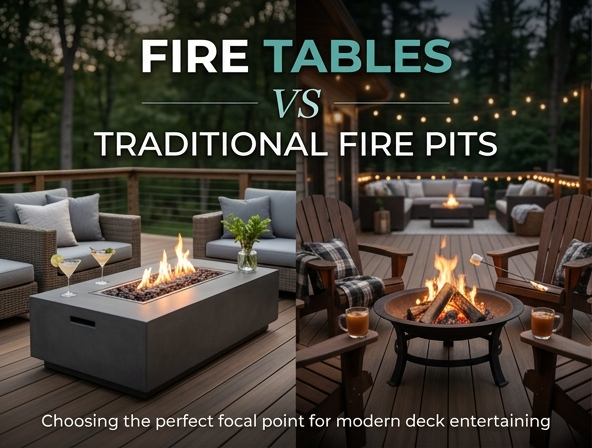
Elevating a backyard deck into an inviting entertainment hub often introduces a frustrating dilemma: how to incorporate the warmth of an open flame without compromising safety or damaging expensive decking materials. Before comparing specific heating models, homeowners must first navigate the logistical realities of deck weight capacities, structural layouts, and local clearance regulations.
Selecting the correct heating feature guarantees more than just comfort; it seamlessly extends your outdoor hosting season well into the cooler months. However, safety must remain the primary stipulation, as manufacturer warranties and municipal fire codes will dictate your fuel limitations. For instance, while a traditional wood-burning pit risks scattering sparks onto a composite Trex deck, a CSA-certified propane fire table provides a controlled, spark-free ambiance.
To help you make an informed investment, this guide analyzes fire tables versus traditional fire pits across key criteria, including safety compliance, heat output, and entertaining versatility.
Setting the Stage: Fire Features for Outdoor Deck Entertaining
As the sun dips below the horizon, the modern backyard deck transforms from a quiet daytime retreat into a vibrant hub for evening entertainment. Today's homeowners are investing heavily in creating cozy, illuminated outdoor living rooms, making fire elements a central focal point. However, this desire for a glowing hearth introduces a common dilemma: should you opt for a sleek, contemporary fire table, or is a classic, nostalgic fire pit the better choice for your outdoor deck?
Deck Safety: Weight, Heat, and Material Considerations
Introducing fire to a wooden or composite deck demands a strict focus on structural and thermal safety. Because decks are elevated structures constructed from flammable or heat-sensitive materials, placing a heavy, hot object on them poses unique challenges.
Key safety factors to evaluate include:
- Structural Weight Limits: Heavy stone or cast concrete fire pits can exceed the load-bearing capacity of standard deck framing.
- Heat Barriers: Wood and composite decking can warp, melt, or ignite without proper protection like fire mats or protective barriers.
- Fire Hazards: Floating embers from open-flame systems present an immediate risk to surrounding deck structures and furniture.
Style and Ambiance: Modern Sleekness vs. Rustic Warmth
The aesthetic appeal of your outdoor space is heavily influenced by the type of fire feature you select. Fire tables bring a modern, sophisticated flair to a deck, utilizing clean geometric lines and polished finishes that complement upscale patio furniture. They function as a striking centerpiece, creating an atmosphere reminiscent of a high-end resort lounge.
Conversely, traditional fire pits evoke a rustic campfire vibe. Their circular, low-profile designs foster a casual, intimate gathering circle where guests can sit closely. This design fits beautifully with natural wood decks and bohemian or cottage-style outdoor decor, highlighting a raw, natural aesthetic.
Fueling the Flame: Propane and Natural Gas vs. Wood-Burning
The Convenience of Gas Features
Gas-powered fire tables run on either liquid propane tanks or a dedicated natural gas line. They offer unmatched convenience, starting instantly with the push of a button and allowing users to adjust flame heights effortlessly.
The Traditional Appeal of Wood
Wood-burning fire pits rely on dry firewood. While they require effort to ignite and manage, they deliver a sensory experience that gas cannot fully replicate.
Comparing the fuel sources reveals distinct operational differences:
- Propane offers excellent portability but requires monitoring tank levels.
- Natural gas provides an endless fuel supply but requires professional line installation.
- Wood-burning generates high heat and crackling sounds but produces unpredictable smoke.
Versatility and Multi-Use Functionality
For homeowners with limited deck space, a fire feature must offer more than just warmth. Fire tables excel in versatility because their flat, wide coping stones and optional burner covers allow them to transition seamlessly into coffee tables, dining surfaces, or beverage stations during daytime hours.
Selecting a multi-functional model ensures your deck remains highly usable even when you do not need active heating.
Installation, Mobility, and Spatial Constraints
The layout and square footage of your deck will dictate which model is practical. Large, heavy fire tables require a permanent or semi-permanent location, especially if they are tied into natural gas lines. However, small propane models can be repositioned with relative ease if you like to rearrange your outdoor layout.
Traditional fire pits are often lighter and highly portable, allowing you to move them around the yard. On a tight deck, spatial constraints require careful measurement to maintain safe clearance zones around all seating areas.
Smoke, Ash, and Ongoing Maintenance
Post-entertaining cleanup can influence how often you actually use your fire feature. Gas fire tables require minimal upkeep, offering a soot-free experience that leaves no residue on your outdoor furniture.
To maintain a clean gas table, homeowners only need to follow these quick steps:
- Wipe down the exterior surfaces with mild soap.
- Keep burner ports free of debris and spider webs.
- Store the unit under a protective, weather-resistant cover when not in use.
In contrast, wood pits demand labor-intensive cleanup including scooping out cold ash, scrubbing soot, and safely disposing of charcoal remnants to prevent flare-ups.
Budgeting for Warmth: Initial Investment and Lifetime Costs
The total cost of ownership goes far beyond the price tag at checkout. Fire tables generally require a larger initial investment due to internal gas plumbing, ignition systems, and premium construction materials.
Standard wood fire pits are highly budget-friendly upfront, though long-term firewood purchases can add up over time.
Note: Always budget for hidden installation costs, such as hiring a licensed plumber to run natural gas lines to your deck.HOAs, Local Ordinances, and Fire Codes
Before purchasing any heating appliance, you must research local regulations. Many Homeowners Associations (HOAs) and municipal fire departments enforce strict rules regarding open flames on elevated wooden decks.
Gas fire tables are widely approved in urban and suburban areas because they do not emit sparks or flying embers. Conversely, wood-burning devices are often banned entirely on combustible decks due to the high risk of property damage. Always check your local fire codes to secure proper compliance and protect your home insurance policy.
The Verdict: Choosing the Perfect Companion for Your Deck
Both options offer exceptional ways to extend your outdoor season, but the right choice depends on your lifestyle. If you value absolute safety, clean-burning convenience, architectural style, and multi-functional design, a gas fire table is the clear winner for elevated deck entertaining.
If you prioritize the nostalgic crackle of real logs, high heat output, and a budget-friendly price, a traditional fire pit is a great option-provided you install it on a safe, ground-level patio adjacent to your deck rather than directly on wooden planks.
Assess your deck layout, check your local codes, and select the fire feature that will become the heart of your evening gatherings.

Leave a comment