
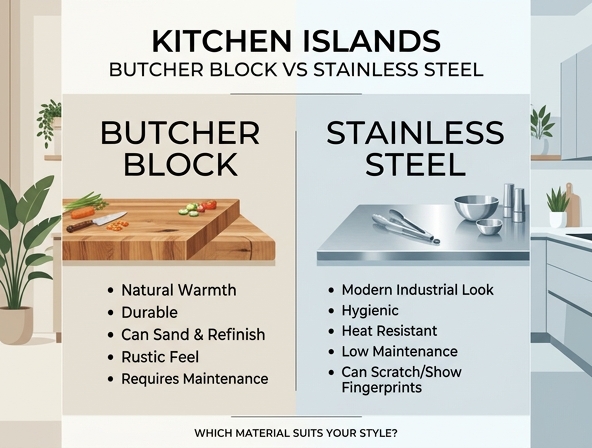
Selecting the perfect surface for your kitchen island often feels like an impossible compromise between aesthetic warmth and rugged utility. As the undisputed centerpiece of the modern home, the island serves as the ultimate multi-functional hub where culinary prep meets daily life. Choosing the right countertop material does more than just define the room's style; it directly enhances your daily cooking efficiency and safeguards your renovation investment.
However, finding the right fit requires understanding that there is no universal "best" option. Your choice must align with your specific culinary habits. For example, while a baker might require the cool, hygienic surface of stainless steel for rolling pastry dough, a home chef focused on chopping and casual entertaining may prefer the warm, self-healing qualities of a butcher block.
To help you make an informed decision, this guide compares both materials across durability, maintenance, cost, and aesthetic integration, ensuring you choose the ideal surface for your lifestyle.
Introduction: The Heart of the Kitchen Dilemma
The kitchen island has evolved into the true centerpiece of the modern home, acting as a multifunctional hub for meal preparation, casual dining, and lively conversation. Because it draws so much attention, choosing the right countertop surface for this central feature is one of the most significant design decisions a homeowner can make. The choice often comes down to a fundamental clash of styles and sensibilities: the inviting, organic warmth of natural butcher block versus the sleek, uncompromising efficiency of industrial stainless steel. Each material transforms the space in entirely different ways, creating a compelling debate for anyone designing their dream kitchen.
Understanding Butcher Block: Warmth and Character
Butcher block countertops are assembled from individual wooden strips, typically hard maples, oaks, or walnuts, bonded together to form a solid, durable surface. This construction method showcases the beautiful variation of natural wood grain and introduces an unmatched organic warmth to any kitchen environment. Beyond their tactile appeal, these surfaces bring a sense of history and character that evolves over time, making the kitchen feel more inviting, grounded, and deeply connected to nature.
Exploring Stainless Steel: Modern and Resilient
Stainless steel countertops offer a striking, professional-grade alternative that brings the efficiency of commercial culinary spaces into the residential home. Known for their sleek, industrial aesthetic, these surfaces are highly reflective, helping to bounce light around the room and make modern kitchens feel more spacious and bright. They represent a contemporary design choice that prioritizes sterile efficiency, clean lines, and a high-tech vibe that pairs seamlessly with modern appliances.
Aesthetics and Design: Cozy Cottage vs. Sleek Professional
The Warmth of Wood in Traditional Spaces
Wood surfaces excel in creating a cozy, lived-in atmosphere that anchors traditional aesthetics. Butcher block is the quintessential choice for farmhouse kitchens, rustic cottages, and bohemian designs where natural imperfections and soft textures are celebrated. It softens the hard edges of cabinetry and appliances, making the room feel more like a gathering place than a sterile work environment.
The Cool Precision of Metal in Contemporary Environments
Conversely, metal surfaces lean heavily into minimalist and ultra-modern designs. Stainless steel is a natural fit for industrial lofts, high-tech contemporary homes, and professional-style chef's kitchens. Its cool undertones and seamless integration with sinks and backsplashes create a clean, cohesive look that accentuates architectural lines and high-end luxury appliances.
Durability and Longevity: Wood Aging vs. Metal Toughness
The Vulnerabilities and Resiliency of Wood
While wood is a resilient material, it is susceptible to environmental changes and direct damage. Moisture can lead to warping or rotting if water is left standing, and hot pans placed directly on the surface will leave permanent scorch marks. However, the unique advantage of butcher block is its ability to be sanded down and refinished, allowing it to recover from deep scratches and dents, effectively resetting its lifespan.
The Indestructible Nature of Stainless Steel
Stainless steel is virtually impervious to heat, water, and staining, making it incredibly tough in a busy kitchen. You can set hot pots directly on the surface without fear of damage, and liquid spills will never penetrate the non-porous metal. Despite this toughness, steel is prone to scratching and can develop minor dents over time, creating a unique patina of wear that some homeowners love, though others may find it frustrating.
Cleaning and Maintenance: Oiling Wood vs. Polishing Steel
The Hands-On Upkeep of Natural Wood
Maintaining butcher block requires a committed, proactive approach to preserve its beauty and structural integrity.
- Regular applications of food-safe mineral oil or beeswax to prevent drying and cracking.
- Immediate cleanup of acidic liquids and moisture to avoid permanent staining.
- Gentle scraping and sanitizing with mild soap, avoiding harsh chemical cleaners.
The Straightforward Care of Stainless Steel
Stainless steel demands far less structural maintenance, but it requires daily upkeep to keep it looking pristine.
- Frequent wiping to remove fingerprints, smudges, and water spots that show easily.
- Sanitizing with simple soap and water or specialized stainless steel cleaners for a streak-free shine.
- No specialized sealing, oiling, or long-term protective treatments are ever required.
Food Prep and Functionality: Chopping Block vs. Chef's Station
The Tactile Workspace of the Butcher Block
Working directly on wood offers a quiet and soft culinary experience. Butcher block dampens the sound of clattering dishes and prep work, making for a peaceful kitchen atmosphere. It is also gentle on knife blades, although cutting directly on the wood will leave knife marks that require sanding to remove.
Wood surfaces provide a naturally forgiving, quiet canvas for home cooks who appreciate the tactile connection to raw materials.
The High-Efficiency Dynamic of Stainless Steel
Stainless steel functions as a high-performance chef's station where hygiene is paramount. Because metal is non-porous, it does not harbor bacteria, mold, or food odors, making it exceptionally sanitary. However, preparing food on steel can be noisy, and cutting directly on it will quickly dull your expensive kitchen knives.
The absolute hygienic security of steel makes it the gold standard for intensive meal prep and raw ingredient handling.
Cost and Installation: Budgeting for Your Kitchen Island
Butcher Block: Affordable and DIY-Friendly
Butcher block is generally more budget-friendly up front, with raw materials starting at a lower price point than premium metals. Furthermore, wood is highly DIY-friendly, allowing handy homeowners to cut, sand, and install the island top themselves, saving significantly on labor costs. Even when professionally installed, it remains an accessible path to a luxury look.
Stainless Steel: A Premium Professional Investment
Stainless steel countertops are a custom-fabricated product, making them a more substantial financial investment. They require professional measuring, fabrication, and installation, which drives up the initial cost. However, their unmatched longevity and resistance to damage mean they rarely need replacement, offering excellent long-term value over the decades.
Decision Matrix: Which Material Wins for Your Lifestyle?
- Choose Butcher Block if you prioritize a warm, inviting aesthetic, enjoy hands-on home maintenance, prefer a quiet prep space, and want a budget-friendly or DIY installation.
- Choose Stainless Steel if you desire a sleek, modern look, want a highly hygienic surface that stands up to extreme heat, prefer low-maintenance durability, and are willing to invest in custom professional fabrication.
- Choose Butcher Block if your kitchen style leans toward farmhouse, rustic, or traditional cozy designs.
- Choose Stainless Steel if your kitchen features a minimalist, contemporary, or industrial theme with heavy culinary usage.
Final Verdict: Making the Right Choice for Your Home
Selecting the ideal countertop for your kitchen island requires a thoughtful balance between personal style and everyday utility. By carefully weighing the warm, tactile charm of wood against the sterile, indestructible performance of metal, you can select a surface that complements your culinary habits. Designing a kitchen is an exercise in creating a space that feels like home, and the right island surface will elevate both your daily cooking experience and the visual appeal of your living space.
Embrace the material that fits your routine, and let your kitchen island become the true, functional centerpiece it was always meant to be.
Leave a comment