
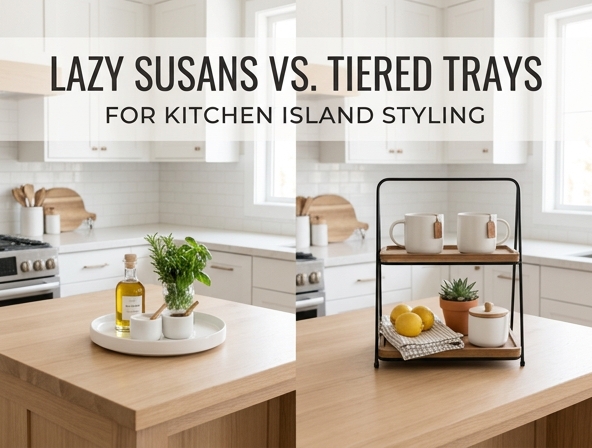
When hosting, the kitchen island often becomes a chaotic clutter of plates, cups, and decor, leaving guests feeling cramped and hosts overwhelmed. As the central gathering point of the modern home, this surface must seamlessly transition from a daily meal-prep zone into an elegant, self-serve hosting station. Mastering this spatial organization not only elevates your home's aesthetic but also grants you the freedom to engage with your guests rather than constantly managing countertop clutter.
However, successful styling requires a strategic understanding of how to balance vertical height with rotational accessibility. For instance, a poorly structured charcuterie display or a crowded cocktail station can quickly disrupt the physical flow of your gathering. To help you optimize your presentation space, this guide compares the distinct design merits of Lazy Susans and tiered trays, outlining how to choose the perfect centerpiece for your entertaining style.
Setting the Stage: The Kitchen Island as the Entertaining Hub
The modern kitchen island is no longer just a prep station; it has evolved into the absolute heart of the home during social gatherings. It is where guests naturally congregate, drinks are poured, and stories are shared. Because it commands so much attention, how you style this central zone can set the entire mood for your gathering. This brings hosts to a delightful styling dilemma: do you opt for the spinning convenience of a Lazy Susan, or do you elevate your presentation with a towering tiered tray? Choosing the right centerpiece is about balancing interactive hosting with captivating visual design.
The Case for the Lazy Susan: Seamless Functionality
For hosts who prioritize effortless interaction, the Lazy Susan is an unmatched addition to the kitchen island. Its core genius lies in its 360-degree rotation, which allows guests to access items from any side of the island without reaching across dishes or disrupting conversations. This low-profile design ensures that sightlines remain completely open across the room, fostering a connected, conversational atmosphere. Furthermore, its flat, elegant surface brings a clean and grounded aesthetic to your kitchen, making seamless usability the highlight of your culinary presentation.
Elevating Your Space: The Aesthetic Appeal of Tiered Trays
When horizontal space on your kitchen island is at a premium, tiered trays offer a brilliant solution by drawing the eye upward. These multi-level structures introduce dynamic vertical visual interest, turning everyday items or party appetizers into an elegant architectural display. By utilizing vertical height, you can showcase a variety of elements on a much smaller footprint. This design trick effectively maximizes limited horizontal space, giving your island a curated, abundant look without making the countertop feel crowded or disorganized.
Curating the Perfect Lazy Susan: Practical Styling Tips
A Lazy Susan is highly versatile, serving as an interactive station that keeps your guests engaged and well-fed. Here are a few creative ways to style your rotating tray for your next event:
- Self-Serve Taco Bar: Arrange bowls of shredded cheese, salsa, guacamole, sour cream, and jalapenos around the perimeter, with warm tortillas in the center.
- Interactive Condiment Station: Gather artisanal mustards, aiolis, relishes, and specialty salts in matching jars for a gourmet burger night.
- Wine-and-Cheese Board: Place a variety of cheeses, cured meats, crackers, and grapes around a central bottle of wine for an easily shareable spread.
Crafting the Ultimate Tiered Tray: Layering and Theme Guide
Styling a tiered tray requires a thoughtful approach to layering to ensure the display looks balanced, cohesive, and appetizing. Follow these sequential steps to build a stunning vertical display:
- Start at the bottom layer with heavier, larger items like small plates, napkins, or substantial finger foods to establish a sturdy visual base.
- Utilize the middle tier for medium-sized items such as decorative cups, themed treats, or small bowls filled with berries or nuts.
- Reserve the top tier for lightweight decorative items, a small floral arrangement, or a single signature treat that serves as the crown of the display.
Size Matters: Matching the Decor to Your Island Dimensions
The scale of your kitchen island should dictate whether a Lazy Susan or a tiered tray is the better fit for your space. Large, expansive open islands handle wide, low-profile Lazy Susans beautifully because they fill the horizontal space without overwhelming the room. Conversely, a narrow breakfast bar can easily feel cramped under a wide rotating disc, making a slim, vertical tiered tray the ideal choice to add style without stealing precious plate room.
"Selecting decor that respects the physical boundaries of your island ensures that your styling feels intentional rather than accidental."
Lazy Susan Pros and Cons: Accessibility vs. Flat Profile
Understanding the strengths and limitations of a Lazy Susan will help you decide if it aligns with your specific entertaining requirements.
- Pro: The effortless 360-degree rotation makes it incredibly easy for guests to access food from any angle.
- Pro: Its sturdy, flat surface is perfect for holding heavy items like ceramic bowls, heavy bottles, or marble boards.
- Con: It occupies a wider horizontal diameter, which can limit the remaining usable space on smaller islands.
- Con: Its low profile lacks the vertical drama and height variation that some open-concept kitchens require to look fully styled.
Tiered Tray Pros and Cons: Vertical Impact vs. Usability Limits
Tiered trays offer a highly stylized look, but they also come with a unique set of trade-offs when used for active hosting.
- Pro: Instantly adds dramatic height and visual structure, turning simple items into a design statement.
- Pro: Allows you to display a diverse selection of small items, treats, or decor within a tiny countertop footprint.
- Con: Multiple levels and intricate corners make it significantly harder to clean after serving sticky or greasy foods.
- Con: Can quickly look cluttered or chaotic if too many mismatched items are crammed onto the shelves.
- Con: Lacks any rotational function, requiring guests to walk around the island or reach over layers to grab items from the back.
Double the Style: Can You Combine Both?
If you are blessed with an exceptionally large kitchen island, you do not have to choose just one of these fantastic styling tools. You can easily integrate both a Lazy Susan and a tiered tray by establishing distinct functional zones. For example, use a flat Lazy Susan on one end as a self-serve beverage or condiment station, while placing a tiered tray on the other end to showcase desserts or seasonal decor. Maintaining physical distance between the two pieces is key to preventing visual clutter and keeping your island balanced.
The Final Verdict: Choosing Your Signature Entertaining Style
Your choice between a Lazy Susan and a tiered tray depends on your personal hosting priorities. If you value seamless guest interaction, easy sharing, and a clean, grounded look, the Lazy Susan is your perfect match. If you prefer to make a bold visual statement, maximize your surface area, and play with height and themed decor, a tiered tray will serve you best. Do not be afraid to swap them out depending on the occasion to keep your kitchen island looking fresh and inviting.

Leave a comment