
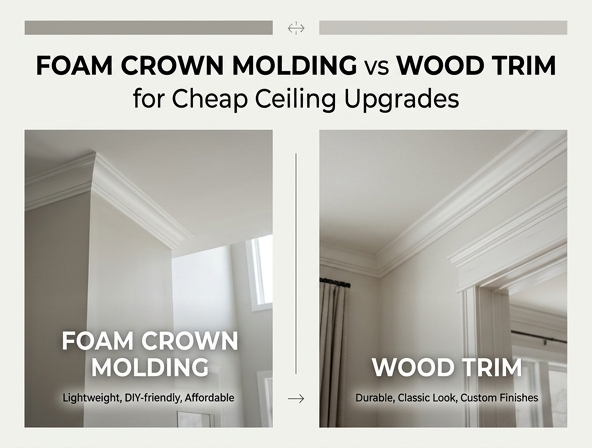
Homeowners often dream of adding classic architectural character to their spaces, but the high cost and complex installation of traditional ceiling trim can quickly stall a DIY renovation. Historically, achieving a premium look required hiring master carpenters to install heavy, expensive millwork. Today, modern manufacturing has introduced highly convincing alternatives that challenge these traditional standards.
This shift grants budget-conscious renovators the ability to achieve a high-end, luxury aesthetic at a fraction of the price. However, we must stipulate that "budget" does not mean compromising on quality; selecting the right material is key. For instance, comparing lightweight, high-density polyurethane foam against traditional solid pine or MDF wood trim reveals major differences in moisture resistance and ease of installation.
Below, we will analyze the costs, installation workflows, and long-term durability of foam versus wood to help you choose the ideal ceiling upgrade for your home.
Introduction: Elevating Your Space on a Budget
Upgrading your ceilings is one of the most effective ways to add architectural interest and character to a home. For decades, homeowners seeking this classic touch turned automatically to traditional wood trim. However, as budget-conscious design and DIY-friendly renovations rise in popularity, a modern competitor has stepped into the spotlight: foam crown molding.
This debate centers on balancing aesthetics with cost. On one side stands the historic, tactile quality of real wood, and on the other, the innovative, lightweight ease of modern polymers. Deciding between them requires a careful look at your budget, your patience for installation, and your long-term design goals. Choosing the right ceiling trim can elevate a simple room into an elegant sanctuary without breaking the bank.
The Design Impact of Crown Molding
Crown molding acts as a visual transition between the walls and the ceiling, drawing the eye upward and altering the perceived scale of a room. It can make low ceilings feel loftier and high ceilings feel more intimate and grounded. By bridging this junction, trim softens harsh angles and lends a sense of architectural completeness to any space.
Beyond aesthetics, this upgrade serves a highly practical purpose: it flawlessly hides unsightly cracks, uneven drywall seams, and paint imperfections that naturally occur where walls meet the ceiling. Investing in quality molding also delivers a strong return on investment, raising the perceived value of your home in the eyes of potential buyers who associate detailed trim work with premium craftsmanship.
Foam Crown Molding: Features, Pros, and Cons
Foam crown molding is primarily manufactured from two synthetic materials: polyurethane and polystyrene. Polyurethane is denser and mimics wood more closely, while polystyrene is highly lightweight and extremely cost-effective. Both options have revolutionized the home improvement market by offering a highly accessible alternative to traditional plaster or timber.
Before purchasing, it is important to weigh the specific benefits and drawbacks of these synthetic products:
- Lightweight Nature: These pieces are incredibly easy to handle, hold overhead, and install without heavy strain.
- Affordable Price Point: Material costs are significantly lower than premium wood species, making large-scale projects highly affordable.
- Flexibility: The material can bend slightly to accommodate walls that are not perfectly straight.
- Vulnerability to Dents: Because of its soft composition, foam can easily dent, scratch, or gouge if struck by ladders, furniture, or during transport.
Wood Trim: The Classic High-End Standard
Traditional wood trim remains the gold standard for luxury renovations, offering unmatched organic beauty and structural integrity. Homeowners typically choose between Medium-Density Fiberboard (MDF)-an engineered wood product that is pre-primed and budget-friendly-and premium solid hardwoods like oak, maple, or cherry, which showcase exquisite natural grain patterns.
This classic material carries distinct qualities that set it apart from synthetic alternatives:
- Structural Strength: Wood is highly durable and rigid, capable of spanning long distances without sagging or bending out of shape.
- Premium Aesthetics: The crisp, sharp profiles and organic weight of wood provide a high-end look that is impossible to fully replicate.
- Customization Options: Hardwoods can be stained to highlight their natural grain or painted for a flawless finish.
- Higher Overall Cost: Wood carries a much higher price tag for both the raw materials and the tools required for a professional setup.
Financial Breakdown: Upfront Material and Labor Costs
When calculating the overall budget for your ceiling upgrade, you must look past the price tag of the molding itself. While foam alternatives save money upfront, the total project cost is heavily influenced by the tools you already own and whether you choose to hire a professional carpenter. Wood requires specialized saws and nailers, whereas foam relies on simple hand tools and adhesives.
| Molding Type | Material Cost (per lin. ft.) | Required Tool Investment | Average Labor Cost |
|---|---|---|---|
| Polystyrene Foam | $1.00 - $2.50 | Minimal (Utility knife, miter box, caulk gun) | Low (Highly accessible DIY) |
| Polyurethane Foam | $2.50 - $6.00 | Low (Hand saw, miter box, adhesive) | Moderate (Easy DIY or affordable pro) |
| MDF (Engineered Wood) | $1.50 - $4.00 | Moderate (Miter saw, brad nailer, compressor) | Moderate to High (Requires precise carpentry) |
| Solid Hardwood | $6.00 - $15.00+ | High (Professional power tools, safety gear) | High (Highly recommended professional install) |
Installation Comparison: DIY Ease vs. Professional Precision
The installation processes for these two materials could not be more different. Foam is designed for quick, accessible installation, while wood requires classic woodworking techniques that demand patience, math, and precision.
- Measuring and planning the layout: Both options require careful measurements, but mistakes with foam are much cheaper to correct.
- Cutting the corners: Foam can be cut easily with a simple hand saw or even a sharp utility knife inside a plastic miter box, whereas wood requires a compound miter saw to achieve tight, clean joints.
- Securing the material to the wall: Foam moldings are adhered directly to the wall and ceiling using lightweight painter's caulk or construction adhesive, eliminating the need to locate wall studs.
- Nailing and finishing: Wood trim requires a heavy brad nailer to pierce the wood and bite deep into the wooden wall studs, followed by wood putty to fill nail holes before sanding.
Long-Term Durability and Environmental Resistance
Environmental factors like temperature fluctuations and humidity play a massive role in how well your trim holds up over the years. Wood is an organic, hygroscopic material, meaning it naturally absorbs and releases moisture from the air, causing it to swell and shrink. This movement can eventually lead to cracked paint at the joints and warped boards.
In contrast, synthetic foam is completely impervious to moisture, making it an incredibly stable choice for challenging household environments. It will not rot, support mold growth, or twist out of shape when exposed to steam or dampness.
"Using synthetic moldings in high-humidity areas prevents the inevitable warping and joint separation that plagues traditional timber profiles over time." - Professional Trim Contractor Journal
Visual Appeal: Can You Tell the Difference?
To the untrained eye looking up from a distance, high-quality polyurethane foam that has been meticulously caulked, primed, and painted can be virtually indistinguishable from painted wood trim. Once coated with a premium latex paint, the synthetic surface adopts the satin or semi-gloss texture of the paint layer, successfully mimicking its traditional counterpart. This illusion works exceptionally well on high ceilings where close physical inspection is impossible.
However, wood still holds a clear advantage when it comes to visual crispness and luxury. Real wood offers incredibly sharp, well-defined profiles and deep shadow lines that soft foam simply cannot match. If you plan to use a natural wood stain rather than paint, wood is your only viable choice, as synthetic foam must be painted to cover its plastic-like texture and protect it from yellowing.
Strategic Placement: Where Each Material Shines Best
Choosing the right material often comes down to the specific room you are renovating. You do not have to stick to just one material throughout your entire home; instead, you can strategically combine them to maximize your budget and get the best possible durability where it matters most.
Consider this quick guide when planning your next home improvement project:
- Use foam in damp bathrooms, laundry rooms, and kitchens where moisture levels are constantly changing.
- Install foam on exceptionally high ceilings, such as two-story entryways, where the installation is physically demanding and minor imperfections cannot be seen.
- Invest in wood for living rooms, dining rooms, and home offices where visitors are likely to closely admire the craftsmanship.
- Choose wood for high-traffic hallways and children's playrooms where low-hanging trim is highly prone to physical contact and impact damage.
Final Verdict: Choosing the Right Budget Ceiling Upgrade
The choice between foam crown molding and traditional wood trim depends entirely on your project scope, tool access, and patience for detail work. If you are a novice DIYer looking to complete a quick weekend project on a tight budget, synthetic foam provides an incredibly forgiving, cost-effective, and moisture-resistant solution that looks great once painted.
If you prioritize architectural authenticity, sharp structural lines, and long-term home value, investing in wood trim is the superior choice despite the higher upfront costs and steeper learning curve. Evaluating your personal skill level and your home's unique environmental demands will guide you to the perfect ceiling upgrade for your space.
Leave a comment