
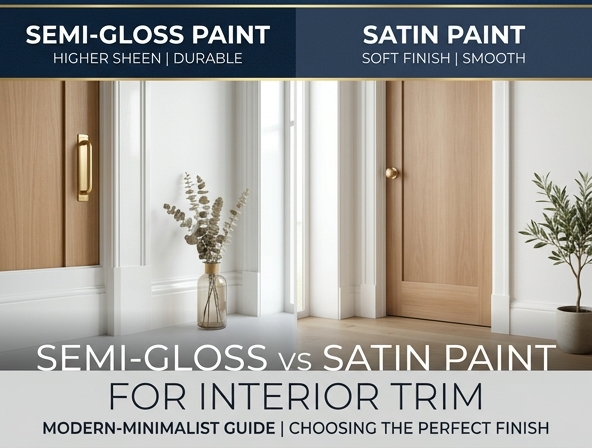
Staring at paint swatches under hardware store lighting can feel incredibly overwhelming, especially when trying to discern the subtle differences between semi-gloss and satin for your interior trim. Before choosing a can, however, one must consider how architectural woodwork frames a room; trim is not merely an accent, but the visual anchor that defines your walls. Selecting the correct sheen grants your home both elevated aesthetic depth and years of protection against daily wear. Yet, a key stipulation remains: while personal preference is important, the inherent durability and light-reflectivity of each finish must dictate its application. For example, high-traffic baseboards in a busy mudroom demand a different resilience than the delicate crown molding in a formal dining room. To simplify your decision, this guide will compare the reflectivity, maintenance requirements, and application nuances of semi-gloss and satin, ensuring you choose the ideal finish for your home.
Introduction: The Great Trim Paint Dilemma
When painting a room, most of the focus naturally goes toward selecting the perfect wall color. However, the true character of a space often relies on the architectural details that frame it. Choosing the right paint finish for interior trim, baseboards, and door casings is a critical decision that defines the room's polished look. The finish you select acts as the final frame of your design canvas, influencing both visual appeal and daily resilience.
Two top contenders dominate this decision: Satin and Semi-Gloss. While both finishes are excellent choices, they offer vastly different visual effects and performance levels. Selecting the appropriate finish impacts not only the overall look of your home but also the longevity of your paint job against daily wear and tear.
What is Satin Paint?
Satin paint is a versatile finish known for its low-to-medium sheen. It delivers a soft, pearl-like luster that sits comfortably between a matte flat finish and a vibrant gloss. Often compared to eggshell paint, satin is slightly glossier and offers a touch more reflectivity, giving interior trim a subtle, velvety depth without looking overly reflective.
This understated elegance makes satin a favorite for contemporary interiors. It absorbs more light than it reflects, which helps to create a warm, inviting atmosphere. On trim work, it provides a clean, modern aesthetic that blends seamlessly with matte or eggshell walls, offering a cohesive look that doesn't draw too much attention to individual joints or seams.
What is Semi-Gloss Paint?
Semi-gloss paint is a highly durable finish characterized by its sleek, radiant appearance. It possesses high light-reflecting properties, which give trim a bright, crisp look that instantly highlights architectural details. This finish has traditionally been the go-to standard for trim, baseboards, crown molding, and doors because of its radiant look and tough-as-nails performance.
The glossy surface of semi-gloss creates a beautiful, sharp contrast against flatter wall paints. It reflects a significant amount of light, making rooms feel slightly brighter and more energetic. This clean, reflective quality ensures that your baseboards and casings pop, defining the boundaries of your living space with classic architectural flair.
Satin vs. Semi-Gloss: Side-by-Side Comparison
| Feature | Satin Finish | Semi-Gloss Finish |
|---|---|---|
| Sheen Level | Low-to-medium luster, pearl-like | High sheen, sleek and radiant |
| Durability | Moderate to high | Very high |
| Ease of Cleaning | Good, but requires gentle wiping | Excellent, highly scrubbable |
| Hiding Imperfections | Excellent at masking minor flaws | Tends to highlight surface blemishes |
Durability and Cleanability: Which Stands Up Better?
Trim and baseboards are subjected to constant physical impact, from vacuum cleaner bumps to muddy shoes and pet scratches. Therefore, durability is a primary factor when choosing your paint finish. Both finishes offer protective qualities, but they handle daily wear differently.
- Semi-Gloss is highly moisture-resistant and stands up exceptionally well to heavy scrubbing, making it easy to wipe away tough scuffs.
- Satin provides good daily protection but can suffer from burnishing if scrubbed too aggressively over time.
- High-traffic areas with kids or pets generally benefit from the tougher seal of a semi-gloss coating.
Aesthetic Appeal: Light Reflection and Imperfections
The visual impact of your trim relies heavily on how it interacts with light. Semi-gloss paint acts almost like a mirror, bouncing light around the room. While this highlights the beautiful contours of custom woodwork, it also acts as a spotlight for any application flaws, wood knots, or uneven seams. If your prep work isn't completely flawless, semi-gloss will draw attention to those mistakes.
Conversely, satin paint absorbs a larger portion of light, casting a soft, diffused glow. This light-absorbing quality is highly forgiving, allowing it to easily hide minor wood imperfections and brush strokes. For older homes with imperfect plaster or aged trim, satin offers a much smoother, more forgiving aesthetic appeal.
Best Scenarios for Choosing Satin Trim
Satin is an excellent design choice for specific architectural styles and functional needs. Its understated quality allows the focus to remain on the overall room design rather than the trim lines.
- Modern minimalist and Scandinavian interiors where high-shine finishes can look out of place.
- Rustic or farmhouse designs featuring naturally textured or imperfect wood trim.
- Rooms with abundant natural light where semi-gloss might produce distracting, harsh glares.
- Older homes with vintage molding that has accumulated minor dents and blemishes over the decades.
Best Scenarios for Choosing Semi-Gloss Trim
Semi-gloss is the traditional favorite for a reason. Its high performance and crisp look make it the ideal option in several key household scenarios.
- High-moisture environments such as bathrooms and kitchens where steam and water splashes occur frequently.
- High-traffic pathways including hallways, entryways, and mudrooms where walls and trim are touched constantly.
- Formal dining rooms and traditional homes with detailed crown molding that deserves to be highlighted.
- Interior doors and cabinets that require a highly durable, washable surface to resist finger oil.
Pro Tips for Prepping and Painting Trim
- Clean the Surface: Wipe down the trim with a degreasing cleaner to remove dirt, oils, and hand prints.
- Sand Thoroughly: Use fine-grit sandpaper to scuff up the old finish, creating a rough surface for the new paint to grip.
- Apply Primer: Use a high-quality bonding primer, especially when transitioning between different paint bases.
- Use Quality Tools: Invest in a high-quality angled sash brush or a small foam roller to avoid leaving visible brush marks.
- Paint in Long Strokes: Maintain a wet edge and apply paint in long, smooth, continuous strokes to ensure a professional finish.
Final Verdict: Making Your Decision
Choosing between these two popular finishes comes down to a simple balance of your personal style preferences and the practical needs of your household. If your priority is a modern, understated aesthetic that hides imperfections beautifully, then satin is your ideal match. It delivers a contemporary warmth that feels sophisticated and soft.
On the other hand, if you require maximum durability, easy cleanup, and a bright contrast that showcases your woodwork, then semi-gloss is the superior option. Weighing these factors against your specific room conditions will guide you to the perfect paint finish that protects and beautifies your home for years to come.
Leave a comment