
Struggling to remove stubborn, burnt-on rings from your ceramic cooktop is a frustratingly common ritual for many home cooks. While these modern glass surfaces offer a sleek, minimalist aesthetic, they are notoriously delicate and prone to permanent micro-scratches if treated with the wrong abrasive tools or harsh chemicals.
Choosing the correct cleaning agent not only preserves your appliance's high-end finish but also saves you hours of tedious, back-breaking scrubbing. However, effective maintenance requires a crucial stipulation: different residues demand targeted chemical treatments. For instance, starchy boiled-over pasta water requires a vastly different approach than scorched milk or caramelized sugar spills.
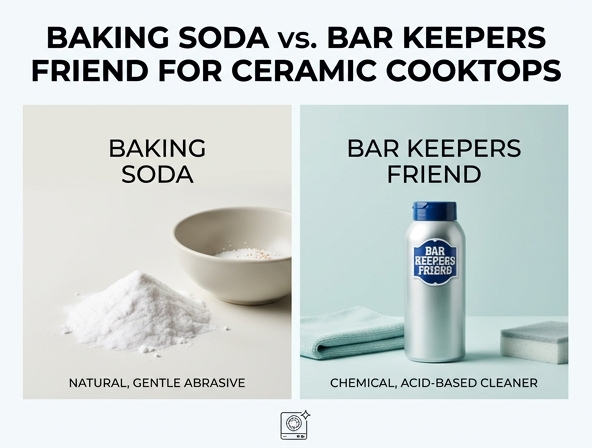
In this guide, we will compare two of the most popular cleaning contenders-natural, mildly alkaline baking soda and the acidic, micro-abrasive Bar Keepers Friend. We will evaluate their science, safety, and application methods to help you choose the ultimate solution for your kitchen.
The Battle for a Spotless Stove
A sleek, glossy ceramic cooktop serves as the modern kitchen's visual centerpiece, offering an elegant aesthetic and a seamless cooking surface. However, maintaining that pristine shine is a constant challenge for home cooks. It takes only one boiled-over pot of pasta water or a tiny splatter of oil to create a stubborn, burnt-on mess that ruins the glass surface's reflective beauty.
When daily wiping fails, homeowners face a frustrating dilemma: how to restore that brilliant luster without permanently damaging the delicate cooktop. Two primary contenders dominate the kitchen cleaning world. On one side, we have baking soda, a gentle, natural pantry staple beloved for its eco-friendly versatility. On the other side stands Bar Keepers Friend, a heavy-duty, acidic cleaning powerhouse designed to tackle the absolute worst baked-on stains. Finding the perfect balance between these two methods is the secret to a sparkling, scratch-free stove.
Why Ceramic Glass Cooktops Require Special Care
Ceramic glass cooktops are engineered to withstand extreme temperatures while maintaining a flat, even cooking surface. However, this material is physically delicate when it comes to mechanical impact and friction. Unlike metal grates on gas stoves, ceramic glass can easily suffer from microscopic scratches, which over time dull its appearance and can even compromise its structural integrity, making it prone to cracking.
Because of this vulnerability, traditional abrasive tools like steel wool, green scouring pads, and harsh abrasive cleansers must be strictly avoided. These harsh cleaning agents can leave permanent swirl marks on the glass. Protecting your investment requires chemical formulations or mild abrasives that dissolve baked-on carbon without physically gouging the glossy protective seal of the cooktop.
Baking Soda: The Gentle, Natural Household Hero
The Chemistry of Sodium Bicarbonate
Baking soda, scientifically known as sodium bicarbonate, is a mild alkali. This chemical profile makes it exceptionally effective at neutralizing and breaking down organic compounds like grease, proteins, and acidic food spills. When applied to cooktops, it targets stains at a molecular level without releasing toxic fumes or irritating the skin.
- Its fine crystalline structure provides just enough physical friction to lift light stains safely.
- It is completely biodegradable, non-toxic, and safe to use around food preparation surfaces.
- It neutralizes unpleasant burnt odors while cleaning, leaving the kitchen fresh.
Bar Keepers Friend: The Heavy-Duty Chemical Powerhouse
The Cleaning Power of Oxalic Acid
Bar Keepers Friend is a specialized cleaning agent designed for surfaces that require intense restorative action. Unlike alkaline household cleaners, this commercial formula relies on the chemical properties of oxalic acid, a naturally occurring organic compound found in plants like rhubarb and spinach.
- Oxalic Acid Cleansing: This active ingredient chemically breaks down rust, oxidized minerals, and tough hard-water deposits.
- Deep Stain Penetration: It targets severely burnt-on food residues by breaking the chemical bonds holding the carbonized crust to the glass.
- Polishing Agents: It includes micro-abrasives that work in tandem with the acid to restore a high-gloss shine.
Step-by-Step Guide: Cleaning with Baking Soda and Vinegar
- Prep the Surface: Wipe away any loose crumbs or debris from the completely cool stovetop using a dry microfiber cloth.
- Apply the Powder: Dust a generous layer of dry baking soda over all the stained or greasy areas of the ceramic glass.
- Activate with Vinegar: Lightly spray white vinegar over the baking soda layer to create a gentle, bubbling chemical reaction that loosens tough grime.
- Damp Towel Soak: Lay a warm, damp microfiber towel over the fizzing paste and let it sit undisturbed for fifteen to twenty minutes to soften carbonized food.
- Wipe and Buff: Remove the towel and use it to wipe away the loosened paste in circular motions, then buff dry with a clean microfiber cloth.
Step-by-Step Guide: Cleaning with Bar Keepers Friend
- Shake and Apply: Squirt a small amount of Bar Keepers Friend Cooktop Cleaner directly onto the cool glass surface or onto a damp cleaning pad.
- Spread Gently: Rub the product over the burnt-on rings or mineral deposits in a circular pattern, ensuring full coverage.
- Observe Wait Time: Let the formula sit on the stain for no longer than two minutes to allow the oxalic acid to break down the bond.
- Scrub Safely: Use a non-abrasive, cooktop-safe pad to gently agitate the stubborn areas, applying light pressure where needed.
- Rinse and Dry: Wipe away all cleaner residue thoroughly using a clean, wet microfiber cloth, and dry the surface to prevent streaking.
Head-to-Head Comparison: Performance, Cost, and Safety
| Category | Baking Soda and Vinegar | Bar Keepers Friend |
|---|---|---|
| Stain Removal Power | Moderate (Best for grease and light stains) | Excellent (Best for burnt-on carbon and minerals) |
| Scratch Risk | Zero Risk | Very Low (Must follow directions carefully) |
| Cost-Efficiency | Extremely High (Pennies per cleaning session) | High (Budget-friendly specialized cleaner) |
| Environmental Safety | Perfect (Fully biodegradable and non-toxic) | Good (Biodegradable but requires rinsing) |
Scrapers and Pads: Essential Tools to Pair with Your Cleaner
To safely lift heavily carbonized food rings, pairing your cleaning agent with the right tools is absolutely critical. Standard kitchen sponges often contain materials that are too rough, leading to permanent microscopic scratches that ruin the cooktop surface.
Always opt for specialized non-abrasive scrubbing pads designed explicitly for ceramic glass. For the most stubborn, three-dimensional burnt-on crusts, a specialized metal cooktop scraper held at a strict forty-five-degree angle will safely shave away the residue without harming the underlying glass.
Daily Maintenance Tips to Prevent Burnt-On Buildup
Preventing tough, baked-on stains is far easier than trying to scrub them off after days of repeated heating. Incorporating simple habits into your cooking routine will keep your ceramic surface looking brand new with very little effort.
- Wipe up spills immediately using a damp cloth as soon as the stove is cool to the touch.
- Avoid dragging heavy cookware, especially cast-iron pans, across the glass to prevent micro-abrasions and deep scratches.
- Clean the undersides of your pots and pans before cooking to prevent transferred grease from burning onto the surface.
- Keep sugar-based spills, like syrups or sauces, from cooling on the glass, as they can cause pitting when they bond with the ceramic material.
The Final Verdict: When to Use Which Cleaner
Choosing between baking soda and Bar Keepers Friend depends on the severity of the mess on your stove. For light weekly cleanups and eco-conscious daily maintenance, baking soda paired with vinegar offers a safe, chemical-free way to maintain a streak-free shine.
When dealing with severe mineral buildup, heat discoloration, or deeply carbonized burnt-on crusts, Bar Keepers Friend is the superior choice. Keeping both of these household essentials in your cabinet ensures you are always prepared to protect and preserve the beautiful glass face of your stove.
Leave a comment