
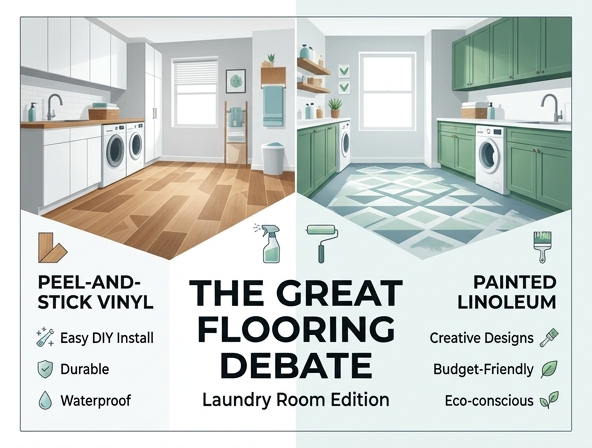
Upgrading a utility space often feels like an expensive chore, leaving many homeowners staring at stained, outdated laundry room floors because they dread the high cost of a full renovation. Before committing to costly tile or hiring contractors, it is important to recognize that high-traffic, moisture-prone zones require resilient solutions that do not demand a premium price tag.
Fortunately, achieving a clean, modern aesthetic on a budget is highly attainable. However, low-cost DIY methods require strict adherence to prep work; without proper surface cleaning, even the best budget materials will fail. For example, applying geometric stencils to painted linoleum or laying down moisture-resistant faux-slate peel-and-stick tiles both demand specific substrate conditions to ensure longevity.
In this guide, we will compare peel-and-stick vinyl and painted linoleum across durability, installation complexity, and long-term value to help you select the ideal budget flooring for your home.
Introduction: The Battle of Budget Laundry Room Flooring
The laundry room is often one of the most overlooked spaces in a home, yet it handles some of the highest daily traffic and moisture levels. When planning a budget-friendly makeover, finding a flooring solution that can withstand water spills while remaining cost-effective is a major priority. Two of the most popular contenders for this DIY transformation are peel-and-stick vinyl tiles and painted linoleum floors.
Both options promise a fresh, modern aesthetic without the heavy price tag of traditional tiling. However, selecting the right one requires balancing beauty, longevity, and resistance against leaks and damp conditions. Investing in a water-resistant and durable floor ensures your hard work survives the spin cycle and protects your subfloor from costly water damage.
Understanding Peel-and-Stick Vinyl Tiles
Peel-and-stick vinyl tiles are self-adhesive flooring planks or squares made from durable polyvinyl chloride (PVC). They represent one of the most accessible DIY flooring options on the market, especially for small utility rooms and laundry closets. The backing of each tile features a pressure-sensitive adhesive protected by a release paper, allowing homeowners to lay new flooring directly over a clean, flat surface without messy glues or heavy machinery.
This flooring type has gained massive popularity for several practical reasons:
- Adhesive Backing: No additional glue, grout, or mortar is required, drastically reducing cleanup time.
- Ease of Application: You simply measure, cut with a utility knife, peel the backing, and press the tile into place.
- Immediate Walkability: Once pressed down, the floor is ready for foot traffic and appliance placement immediately.
- Wide Range of Designs: Modern vinyl printing technology mimics high-end ceramic, cement, and wood grain styles convincingly.
Demystifying Painted Linoleum Floors
Painting existing linoleum or sheet vinyl is a creative, highly affordable way to revive an outdated floor without the hassle of tearing it up. This method involves applying specialized floor-grade paint over your existing resilient flooring to create a completely customized look. Rather than dealing with adhesive failures or thickness transitions, you leverage the structural integrity of your current floor and give it a fresh aesthetic face.
Achieving a professional-looking, durable painted finish requires a meticulous multi-step preparation and application process:
- Deep Cleaning: Scrub the linoleum to remove all traces of grease, wax, dirt, and soap scum.
- Sanding the Surface: Use medium-grit sandpaper to scuff up the glossy factory finish, creating a rough texture for the new coating to grip onto.
- Applying Primer: Roll on a high-adhesion, bonding primer designed specifically for slick surfaces.
- Base Coat Painting: Apply two coats of high-quality porch and floor enamel paint in your chosen background color.
- Stenciling: Secure a decorative stencil to the floor and use a dense foam roller to apply a contrasting color for a custom tile pattern look.
- Sealing: Finish with multiple coats of clear, water-based polyurethane to protect the painted design from scratches and water.
Cost Comparison: Upfront Expenses vs. Material Value
To accurately assess which option fits your budget, it is important to analyze not just the cost of the primary material, but also the tools and prep products needed to finish the project. While painted linoleum utilizes fewer raw materials, the cost of specialized primers and protective topcoats can quickly add up. Conversely, vinyl tiles require minimal tools, but high-quality planks carry a slightly higher upfront material cost.
| Expense Factor | Peel-and-Stick Vinyl Tiles | Painted Linoleum Floor |
|---|---|---|
| Average Material Cost | $1.50 - $4.00 per sq. ft. | $0.50 - $1.50 per sq. ft. (Paint & Primer) |
| Required Tools & Sundries | Utility knife, straight edge, floor roller | Sandpaper, painter's tape, rollers, brushes, stencils |
| Sealants / Prep Products | Adhesive primer (optional, for porous floors) | Bonding primer, floor paint, clear polyurethane sealer |
| Total Budget Estimate (100 sq. ft.) | $160 - $450 | $90 - $200 |
Installation Battle: DIY Ease and Time Commitment
The time investment and physical effort involved in these two projects vary drastically. For homeowners who want a quick weekend transformation, peel-and-stick tiles offer almost instant gratification. The layout and cutting process requires precision, but the application is physical and rapid. You can move your heavy washer and dryer back into the room immediately after the last tile is pressed down, minimizing disruption to your household routine.
On the other hand, painting linoleum is a test of patience. While the actual rolling of paint is physically easy, the required drying and curing times extend the project over several days. Each layer of primer, base paint, stencil design, and protective sealant must dry completely before the next is applied. Furthermore, most floor paints require a full 7 to 21 days to cure completely before they can withstand heavy friction or the weight of major appliances, meaning your laundry room could be out of commission for quite some time.
Durability and Moisture Resistance in a Wet Zone
Laundry rooms are highly susceptible to moisture, from minor detergent spills and high humidity during drying cycles to major washing machine hose leaks. A successful flooring material must be able to withstand pooling water without warping, peeling, or molding. Evaluating how these two options handle wet conditions is crucial for long-term satisfaction.
Peel-and-stick vinyl tiles are inherently waterproof because PVC does not absorb moisture. However, the weak point lies in the seams. If water seeps between the tiles, it can compromise the adhesive underneath, causing the corners to curl up over time. To prevent this, applying a seam sealer or installing them over a completely level subfloor is highly recommended.
Painted linoleum, when sealed with multiple coats of heavy-duty polyurethane, creates a seamless barrier that resists surface spills beautifully. However, paint is susceptible to chipping, scratching, and wearing thin under heavy friction. Sliding a heavy washing machine across a painted floor can gouge the paint layer down to the original linoleum, exposing it to moisture penetration and peeling.
Design Versatility: Aesthetics and Customization
Achieving the right look is a major driver behind any room makeover. Peel-and-stick vinyl tiles provide quick access to trendy, professional designs without needing artistic skill. You can easily find vinyl tiles mimicking Moroccan cement tiles, classic black-and-white checkerboards, or realistic oak wood planks. The patterns are printed with crisp, computer-generated accuracy, resulting in a clean, uniform finish across the entire floor.
Painted linoleum, by contrast, offers absolute creative freedom. You are not limited by manufacturer inventory or pre-made patterns. You can mix any custom paint colors you desire and use intricate stencils to recreate complex geometric motifs, hand-painted tiles, or whimsical borders. The finished product feels artisanal and unique, though it relies heavily on your handiwork, stencil alignment, and paint application technique.
Maintenance and Cleaning Requirements
Keeping your laundry room floor clean should not feel like an arduous chore. Both of these budget-friendly surfaces require distinct cleaning protocols to maintain their appearance and structural integrity over time. Using the wrong cleaners can degrade the adhesives of vinyl or strip away the protective clear coat on painted floors.
Here are the primary maintenance rules to follow for each material:
- Vinyl Tile Care: Clean regularly with a damp microfiber mop and a pH-neutral floor cleaner. Avoid flooding the floor with excessive water, which can seep into the tile seams.
- Painted Floor Care: Vacuum or sweep up abrasive dirt to prevent micro-scratches. Wash with a mild soap and water solution, avoiding harsh ammonia-based or highly acidic cleaners.
- Friction Mitigation: Place protective felt pads under any storage racks or baskets, and use appliance vibration pads under your washer and dryer to prevent scuffing.
- Resealing Needs: Painted linoleum will require a fresh coat of clear sealant every few years in high-traffic areas, whereas vinyl tiles do not require resealing but may need individual tile replacement if damage occurs.
Lifespan and Future Removal
Before committing to a flooring option, consider how long you expect it to last and what the process will look like when you eventually decide to change it. Peel-and-stick vinyl tiles typically offer a lifespan of five to ten years, depending on the quality of the adhesive and the level of foot traffic. When the time comes for a replacement, removing them involves warming the tiles with a heat gun to soften the glue and pulling them up, followed by a thorough cleaning to remove any sticky residue from the subfloor.
Painted linoleum floors generally have a shorter pristine lifespan, usually requiring touch-ups or complete repainting after two to five years as high-wear zones begin to show traffic paths. However, the future transition process is remarkably simple. Instead of scraping up sticky tiles or peeling up old materials, you can simply sand down the surface, prime it, and apply a fresh coat of paint in a brand-new color or pattern, making it an excellent option for those who love to update their decor frequently.
Final Verdict: Which Budget Floor Wins?
Choosing between these two cost-conscious flooring methods depends heavily on your household needs, your DIY experience, and your timeline. Both choices can beautifully revitalize an outdated utility space for minimal financial outlay, but they cater to very different priorities.
If you need your laundry room fully functional in a single weekend, peel-and-stick vinyl tiles are the clear winner. They offer superb moisture resistance right out of the box, require no dry time, and provide crisp, professional patterns effortlessly. For homes where the washer and dryer cannot sit idle for weeks, the speed and immediate durability of vinyl are unmatched.
If you prioritize complete creative control, love highly detailed, custom-patterned designs, and do not mind taking your time with the process, painted linoleum is an incredibly rewarding choice. It allows you to salvage your existing sheet floor without landfill waste, and updating the color in the future is as easy as rolling on a new coat of paint.
Leave a comment