
Navigating a cramped entryway is a daily frustration for many homeowners. When you walk through the front door, the lack of a designated landing zone often results in a chaotic pile of keys, mail, and bags. Because the entryway serves as the crucial first impression of your home, finding a balance between style and utility is essential, yet notoriously difficult when square footage is limited.
Optimizing this threshold not only eliminates physical clutter but also restores a sense of calm to your daily routine. However, there is no universal solution; the right choice depends heavily on your specific architectural constraints and daily habits. In this comparison, we will analyze the functional advantages of console tables versus floating shelves, helping you determine the ideal storage system to maximize your small entryway's potential.
The Battle for the Entryway: Console Tables vs. Floating Shelves
Your entryway is the handshake of your home, offering the very first impression to guests and welcoming you back after a long day. However, designing this transitional zone can feel like an uphill battle when space is at a premium. The struggle to balance style, storage, and mobility often comes down to a choice between two popular design contenders. The core dilemma of limited square footage forces homeowners to decide whether to occupy precious floor space or risk wall clutter in pursuit of a functional drop zone.
Understanding Your Entryway's Hidden Challenges
Small entryways present unique spatial obstacles that require smart solutions. Before choosing furniture, you must diagnose the specific architectural hurdles of your home's entryway.
- Door clearance: Ensuring the front door can open fully without striking furniture.
- Narrow hallways: Navigating tight passages where wide items restrict comfortable foot traffic.
- Drop-zone demand: Having an immediate, accessible spot for keys, mail, and daily essentials.
Console Tables: The Grounded, Classic Solution
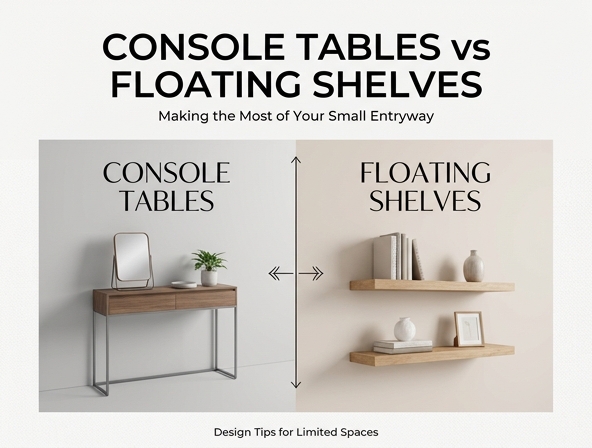
Console tables provide a sense of permanence and architectural anchor to an entryway. They offer a generous surface area, and many models feature built-in drawers to hide away messy items. However, their physical presence can overwhelm tight walkways. The primary benefit of a console table lies in its robust storage capacity and traditional aesthetic appeal, though its ground-level footprint can make a small hallway feel even tighter.
Floating Shelves: The Minimalist, Gravity-Defying Alternative
Floating shelves are the ultimate space-savers for narrow or awkward entries. By leaving the floor completely clear, they maintain an open, airy visual flow and can be mounted at any height. While they lack the deep drawer space of traditional furniture, they excel at holding light drop-zone items. They require careful installation to handle weight, but their minimalist profile is hard to beat in ultra-tight quarters.
The Crucial Tape Measure Test
To avoid the headache of returning furniture that doesn't fit, follow these precise steps to measure your entryway before making any purchase decisions.
- Measure the door swing: Open your front door fully and mark its path to determine the maximum depth available.
- Assess the hallway width: Measure from wall to wall to calculate how much walking clearance remains.
- Determine the optimal height: Mark comfortable heights on the wall for dropping keys and mail (typically 30 to 34 inches).
Aesthetic Harmony: Matching Your Home's Style
The choice between a console table and a floating shelf heavily influences the design narrative of your home. Console tables bring a sense of classic warmth and work beautifully in traditional, farmhouse, or transitional interiors. Floating shelves, on the other hand, boast clean lines that align perfectly with modern, industrial, or minimalist aesthetics.
"The entryway sets the tone for the entire household; choosing the right scale and style here establishes an immediate sense of harmony." - Interior Design Guild
Functionality Face-Off: Managing Daily Clutter
| Feature | Console Tables | Floating Shelves |
|---|---|---|
| Key & Mail Storage | Excellent (built-in drawers) | Moderate (requires trays or bowls) |
| Footprint | Occupies valuable floor space | Zero floor footprint |
| Shoe Storage | Often allows under-table space | Leaves floor completely open for baskets |
| Weight Capacity | High (sturdy, grounded legs) | Low to Moderate (limited by anchors) |
Styling Your Selection for Maximum Impact
No matter which option you choose, thoughtful styling elevates your entryway from a simple drop zone to a beautiful, welcoming portal.
Styling a Console Table
Leaning a large mirror against the wall behind the table anchors the setup. Add a small task lamp for warmth, a decorative tray for keys, and a vase of fresh greenery to breathe life into the space.
Styling a Floating Shelf
Keep it minimalist. Hang a circular mirror above the shelf, place a single ceramic catch-all dish, and add a small trailing plant to soften the clean geometric edges.
The Hybrid Approach: Why Not Both?
If you are torn between the two choices, a hybrid layout might offer the perfect compromise. By mounting a slim floating shelf at waist height and pairing it with a low bench or stylish storage baskets underneath, you capture the airy look of floating storage while keeping the functional storage options of a traditional setup. This creative combination maximizes vertical wall space without sacrificing the lower storage area for shoes and bags.
Final Verdict: Choosing Your Perfect Entryway Companion
When deciding on your ideal entryway setup, consider your daily routine and space limitations. If you require deep, hidden storage and have the floor space to spare, a classic console table is your best bet. If floor space is non-existent and you favor a modern, uncluttered look, a floating shelf will solve your layout dilemmas beautifully.
The right choice balances spatial reality with daily utility, ensuring your entryway remains a welcoming, functional gateway to your home.
Leave a comment