
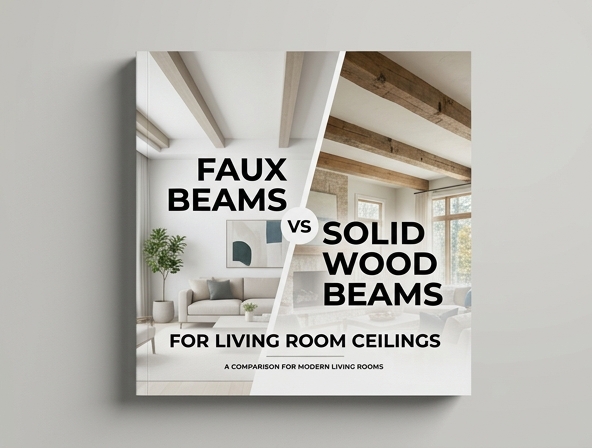
Elevating a living room with the warmth of exposed ceiling beams is a design dream for many homeowners, yet the reality of navigating structural load limits and skyrocketing material costs often stalls these ambitions before they even begin.
Historically, heavy timber was a structural necessity in home construction. Today, however, ceiling beams function primarily as aesthetic elements, serving as powerful visual anchors. This shift means you can achieve a high-end, customized look without the need for major architectural re-engineering.
To make the right choice, one must balance authentic character with modern practicality. For example, while a solid, rough-hewn Douglas fir beam offers unmatched organic beauty, a lightweight, high-density polyurethane faux oak beam replicates that texture without the threat of warping or pest damage.
Below, we will compare faux and solid wood beams across durability, cost, and installation complexity to help you choose the ideal option for your ceiling.
Introduction: Elevating Your Living Room Ceiling
The living room serves as the heart of the home, a space where design choices establish the mood for the entire household. Incorporating overhead architectural elements is one of the most powerful ways to elevate this space. Ceiling beams instantly draw the eye upward, adding a sense of warmth, scale, and sophistication. However, homeowners looking to transform their ceilings face a classic interior design debate: should they choose the timeless authenticity of solid wood beams or opt for the modern innovation of faux wood alternatives?
This comprehensive guide will explore the structural, financial, and aesthetic realities of both options. We will break down the differences in installation, maintenance, and visual appeal to help you make an informed decision for your living room remodel.
The Timeless Appeal of Solid Wood Beams
Solid wood beams are crafted from real timber harvested directly from trees. Traditionally sourced from species such as oak, pine, Douglas fir, or reclaimed barn wood, these architectural elements carry a rich history and natural origin that manufactured materials struggle to duplicate.
Homeowners favor solid wood because of its unparalleled organic character. Every timber possesses unique features that tell a story of its growth and history:
- Natural grain patterns, knots, and burls that differ from one beam to the next.
- Organic cracks and checking that occur naturally as the wood seasons over time.
- A deep, tactile texture that responds beautifully to stains, oils, and natural light.
- An undeniable structural presence that infuses a room with historic depth and warmth.
Understanding Faux Wood Beams: Materials and Modern Innovation
Faux wood beams are lightweight, non-structural alternatives designed to replicate the appearance of solid lumber without the associated weight and cost. Most modern faux beams are manufactured from high-density polyurethane, a durable synthetic foam material poured into molds made from real timber.
This manufacturing process allows for incredible precision, producing hollow, three-sided "U-shaped" beams. Here is how modern technology makes this possible:
- High-density polyurethane captures microscopic grain details, splinters, and tool marks from the original wood mold.
- Lightweight materials allow for easy handling and cutting with standard woodworking tools.
- Advanced painting and staining techniques mimic the multi-toned variations of natural wood finishes.
Visuals and Aesthetics: Can You Tell the Difference?
When it comes to visual impact, the debate between real timber and polyurethane replicas is closer than ever. To the naked eye, a high-quality faux wood beam installed on a high ceiling is nearly indistinguishable from real wood. Because the beams are positioned far from eye level, the subtle differences in light refraction and organic depth are minimized.
However, close inspection reveals key aesthetic differences. Real timber boasts infinite variety; no two sections of a solid wood beam are identical, and its grain patterns shift dynamically as you walk through the room. Faux beams, while highly detailed, are cast from molds, meaning that repeating patterns can occur on very long runs. Additionally, the organic imperfections of real wood, such as natural sap lines and deep splits, possess a distinct tactile quality that synthetic materials cannot fully replicate.
Structural Weight and Engineering Requirements
The physical weight of your chosen material is one of the most critical factors in this project. Solid wood beams are exceptionally heavy, often weighing hundreds of pounds depending on the wood species and dimensions. Installing these heavy timbers requires substantial structural support, which may involve reinforcing your ceiling joists or framing. Without professional engineering calculations, adding solid timber can pose a serious structural risk to a standard residential ceiling.
In contrast, faux wood beams are incredibly lightweight, typically weighing only a fraction of their timber counterparts. Because they are hollow and composed of high-density foam, they put virtually no structural stress on your home. This makes them a much safer and more practical choice for standard drywall ceilings, eliminating the need for expensive structural retrofitting or architectural reinforcement.
Installation Process: DIY-Friendly vs. Professional Construction
The installation processes for these two materials could not be more different, impacting both your timeline and your project difficulty level.
- For Faux Beams: The process is highly DIY-friendly. You install simple wood mounting blocks along the ceiling joists, slide the lightweight, hollow U-shaped beam over the blocks, and secure it with finishing screws. A single homeowner can often complete a living room ceiling in a weekend.
- For Solid Beams: The process requires professional expertise. Heavy timber beams demand specialized rigging, structural fasteners, and a team of carpenters to safely lift and secure the wood to the framing. The installation is labor-intensive and requires precise structural calculations.
Cost Analysis: Upfront Pricing and Long-Term Value
Budget is a major deciding factor for most home renovation projects. While faux beams offer savings on shipping and labor, solid wood beams can provide a unique return on investment by boosting your home's long-term resale value.
| Cost Factor | Solid Wood Beams | Faux Wood Beams |
|---|---|---|
| Material Cost | High (especially for premium or reclaimed wood) | Moderate (consistent pricing per linear foot) |
| Shipping & Delivery | Very High (due to freight weight) | Low (lightweight and easy to ship) |
| Labor & Installation | High (requires professional carpenters) | Low to None (highly DIY-friendly) |
| Resale Value Impact | High (highly valued as authentic craft) | Moderate (aesthetic appeal only) |
Durability, Lifespan, and Maintenance Demands
Over time, environmental conditions in your living room will affect your ceiling beams. Understanding how each material ages helps ensure your ceiling remains beautiful for decades to come.
- Moisture and Humidity: Solid wood expands and contracts with humidity changes, which can lead to warping, twisting, or splitting over time. Faux wood is completely moisture-resistant and will not warp or crack.
- Pest Vulnerability: Real wood is susceptible to wood-boring insects like termites or powderpost beetles. Synthetic polyurethane is completely impervious to pests.
- Lifespan and Maintenance: Real wood may require periodic staining, sealing, or oiling to maintain its appearance. Faux beams require virtually no maintenance after installation beyond occasional dusting.
Environmental Impact and Sustainability
When evaluating the environmental footprint of your home design, both materials present distinct ecological trade-offs. Harvesting real timber requires cutting down trees, which impacts forest ecosystems. However, wood is a natural, biodegradable, and renewable resource, especially when sourced from responsibly managed forests or reclaimed from older structures.
While synthetic polyurethane beams spare trees, they are manufactured using petroleum-based products and chemical processes. These synthetic materials are not biodegradable, making the choice between the two a balance between immediate timber conservation and long-term synthetic footprint.
The Final Verdict: Which Beam Is Right for Your Living Room?
Your choice between solid wood and faux wood beams depends on your priorities, structural capabilities, and budget. Choosing the right material ensures a stunning, stress-free addition to your home.
Choose Solid Wood Beams if: You live in a historic home, demand absolute architectural authenticity, have the budget for professional labor, and your ceiling structure can safely support heavy timber loads.
Choose Faux Wood Beams if: You want a cost-effective and DIY-friendly project, require a lightweight solution for standard framing, want a maintenance-free material, and prefer a fast installation process.
Leave a comment