
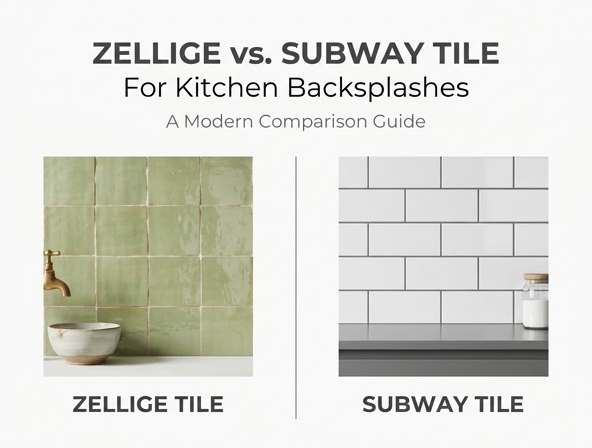
Selecting a kitchen backsplash often feels like an overwhelming design commitment. Because this vertical surface anchors your kitchen's entire visual identity, choosing between the imperfect charm of hand-molded clay and the clean, structured lines of classic ceramic is a high-stakes decision.
Selecting the correct material grants you a timeless backdrop that elevates your home's daily aesthetic and long-term resale value. However, we must stipulate that while handmade Moroccan Zellige offers unmatched organic texture, it requires specialized, virtually grout-less installation, unlike the highly forgiving, budget-friendly application of traditional ceramic subway tile.
Whether you prefer the glossy, light-catching variations of authentic terracotta or the crisp, symmetrical grid of a 3x6 white ceramic block, understanding these nuances is key. In this guide, we will compare Zellige and subway tile across durability, maintenance, costs, and installation demands to help you confidently select the ideal fit for your culinary space.
The Great Backsplash Debate: Zellige vs. Subway Tile
Choosing the perfect kitchen backsplash is a pivotal design decision that shapes the entire character of your culinary space. Two heavyweights dominate the modern design landscape, representing two entirely different philosophies of beauty: the organic, artisanal allure of Zellige tile and the clean, timeless symmetry of classic subway tile. While one celebrates natural variation and human touch, the other champions structural order, versatility, and clean lines.
In this comprehensive guide, you will learn the distinct histories, aesthetic impacts, installation requirements, and cost profiles of both options. We will break down how each tile performs under daily wear and tear and help you align your choice with your personal budget and design style, ensuring your final decision is both beautiful and functional.
Understanding Zellige: Handmade Moroccan Artistry
Authentic Zellige tile is a masterpiece of historical craftsmanship, tracing its roots back to 10th-century Morocco. Hand-molded from natural clay sourced from the Fez region, these tiles are sun-dried, hand-glazed, and fired in ancient olive pit-fueled kilns. The manual nature of this process means that no two tiles are identical, resulting in a surface that is delightfully perfectly imperfect.
When you look closely at a Zellige backsplash, you will notice rich color variations (known as shade variation), crazing in the glossy glaze, pitting, and chipped edges. These characteristics are not flaws; rather, they are the defining features of handmade artistry that catch the light dynamically, creating a living, breathing wall surface that machine-made tiles simply cannot replicate.
The Subway Tile Legacy: Timeless and Versatile
Subway tile earned its name in the early 1900s when it was used to clad the walls of New York City's subterranean transit stations. Designed for sanitation, brightness, and easy maintenance, its classic 3x6-inch rectangular format quickly made the leap from public transit to residential kitchens and bathrooms. Its enduring appeal lies in its clean lines, symmetrical layout options, and deep-seated versatility.
"Subway tile is the ultimate design chameleon; it can effortlessly anchor an ultra-modern minimalist kitchen or lend structural character to a historic farmhouse without ever shouting for attention." - Interior Design Specialist
Beyond its visual appeal, subway tile remains highly celebrated for its budget-friendliness and accessibility. Available in an infinite array of colors, finishes, and sizes, it offers a reliable, low-risk way to create a polished look that will never feel outdated.
Aesthetic Differences: Texture, Gloss, and Grout Lines
The Surface Dimension
The primary visual difference between the two tiles is texture. Zellige tiles feature an uneven, undulating surface that reflects light at varying angles, creating a shimmering, almost watery effect. Subway tiles, conversely, offer a perfectly flat, uniform surface that delivers a clean, smooth, and predictable finish across the entire wall.
Edges and Grout Lines
Zellige is characterized by raw, hand-cut edges that allow the tiles to be laid closely together with almost invisible, ultra-tight grout joints. Subway tiles feature clean, straight, often beveled edges, allowing designers to play with contrasting grout colors and wider joints to emphasize geometric patterns like herringbone or running bond.
Installation Realities: DIY-Friendly vs. Professional Mastery
Installing subway tile is a classic weekend warrior project. Because of their consistent sizing, flat backs, and uniform edges, subway tiles are highly predictable and DIY-friendly. With standard tile spacers, a basic wet saw, and premixed adhesive, home DIYers can achieve a professional-looking result with minimal frustration.
Zellige installation, however, is a fine art that requires professional mastery. Due to variations in tile thickness, wedge-shaped profiles, and slightly warped edges, installers cannot rely on standard spacers. Instead, tiles must be hand-selected, blended from multiple boxes to balance color variations, and placed edge-to-edge ("butt-jointed"). Attempting to install Zellige as a DIY project often leads to structural misalignment and excessive waste.
Maintenance and Durability: Daily Wear and Cleaning
Under daily kitchen use, both tiles perform exceptionally well, but they require different levels of attentiveness. Classic ceramic or glass subway tiles are completely non-porous, flat, and sealed, offering a simple wipe-and-go convenience. Splatters of oil or tomato sauce wipe away effortlessly with standard household cleaners.
While glazed Zellige is also generally water and stain-resistant, its uneven surfaces, exposed raw clay edges, and tiny crevices make it slightly more susceptible to trapping grease and dust. Additionally, unglazed Zellige is highly porous and must be properly sealed upon installation to prevent deep staining.
- Do: Wipe down Zellige spills immediately using a soft micro-fiber cloth and mild, pH-neutral dish soap.
- Do: Use a soft-bristled toothbrush to clean out any dirt accumulation in the uneven crevices of Zellige tiles.
- Don't: Use harsh acidic cleaners, bleach, or abrasive scouring pads on Zellige, as these can etch the delicate artisanal glaze.
- Don't: Worry about aggressive cleaning with subway tile; its robust factory glaze easily tolerates standard multi-purpose kitchen sprays.
Cost Comparison: Budget-Friendly vs. Premium Investment
The financial commitment required for these two tile styles differs dramatically. Subway tile represents one of the most budget-friendly options on the market, leaving more room in your budget for high-end appliances or countertops. Zellige tile is a luxury material, with premium prices reflecting the manual labor involved in its authentic Moroccan production and the specialist labor needed for its delicate installation.
| Tile Option | Material Cost (per sq. ft.) | Installation Labor Cost | Overall Investment Level |
|---|---|---|---|
| Subway Tile | $2 – $8 | Low (DIY-friendly / $5 – $10/sq. ft. pro) | Budget to Mid-Range |
| Zellige Tile | $15 – $40+ | High (Specialist pro required / $15 – $30+/sq. ft.) | Premium / Luxury |
Matching Your Kitchen Style: From Modern to Rustic
Modern Farmhouse
Both tiles shine here, but they express the farmhouse look differently. Subway tile in a traditional running bond keeps things clean, classic, and bright. Zellige tile adds a layer of earthy warmth and rustic texture that complements exposed wooden beams, open shelving, and copper accents beautifully.
Mid-Century Modern
Subway tile is a spectacular match for mid-century designs when installed vertically or in a stacked grid layout. Its structural clean lines pair perfectly with flat-panel walnut cabinetry and retro appliances.
Industrial
The stark geometric lines of subway tile with contrasting dark charcoal grout evoke a historic urban loft vibe that pairs naturally with concrete countertops and matte black fixtures.
Transitional
Zellige brings a soft, organic touch to transitional kitchens. The subtle shade variation softens the look of shaker cabinets and marble countertops, preventing the kitchen from feeling too sterile or rigid.
Quick Comparison: Pros and Cons at a Glance
Choosing Zellige Tile
- Pro: Exquisite, unique aesthetic with rich character and dimensional sparkle.
- Pro: Environmentally friendly, natural clay product made by hand.
- Con: Expensive material and high installation labor cost.
- Con: Irregular edges and uneven surface require specialized professional installation.
Choosing Subway Tile
- Pro: Affordable, highly accessible, and excellent for strict budgets.
- Pro: Easy to clean, durable, and completely flat, non-porous surface.
- Pro: Highly DIY-friendly, making it a great weekend project.
- Con: Can sometimes look uniform or commonplace if not styled creatively.
Making Your Decision: Which Backsplash Wins?
Selecting the right backsplash is about balancing your design aspirations with practical household realities. Use this straightforward checklist to help identify which tile aligns best with your kitchen renovation goals:
- Evaluate Your Budget: If you are looking to maximize savings or allocate funds elsewhere, choose subway tile. If you have the flexibility to make a premium design investment, select Zellige.
- Assess Your Installation Plans: Do you want to tackle this project yourself? Subway tile is ideal for DIY. If you are hiring an experienced tile artisan, Zellige remains a viable, highly custom choice.
- Consider Your Tolerance for Variation: Do you love symmetry, straight lines, and uniform surfaces? You will appreciate the consistency of subway tile. If you find beauty in shifting colors, natural texture, and minor imperfections, Zellige is your match.
- Think About Maintenance: If you want a zero-maintenance, wipe-and-forget surface, choose ceramic subway tile. If you are willing to use gentle cleansers and occasionally clean around minor uneven joints, Zellige is worth the minimal extra effort.
Both of these exceptional tile options possess the power to elevate your kitchen into a beautifully designed space. Trust your instincts, order physical samples to see how they look in your kitchen's unique lighting, and select the material that makes you feel excited to step into your home every single day.
Leave a comment