
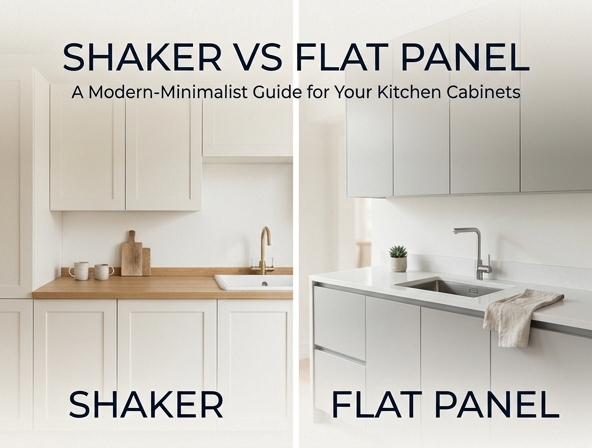
Embarking on a kitchen renovation is deeply exciting, yet many homeowners quickly find themselves overwhelmed by the sheer volume of design choices. Selecting the right cabinet door style is a high-stakes decision; choosing incorrectly can lead to an expensive mismatch that disrupts your entire home's aesthetic flow.
Because cabinetry defines the structural footprint of your kitchen, securing the correct design grants you a harmonious, high-value space that elevates both your daily living and your property's equity. However, making the right choice requires an educational stipulation: visual appeal must be balanced with practical considerations, such as your home's existing architecture and your lifestyle needs.
For instance, the classic five-piece recessed frame of a Shaker cabinet offers a versatile, traditional warmth, while the seamless slab of a flat-panel cabinet delivers a sleek, minimalist European aesthetic. In this guide, we will analyze the durability, cost variations, and design compatibility of both styles to help you make an informed decision for your renovation.
Introduction: The Great Cabinet Debate in Kitchen Design
The kitchen is the heart of the home, and nothing defines its aesthetic personality more than your choice of cabinetry. Because cabinets occupy the largest amount of visual real estate in the room, their style sets the design foundation for the entire space, influencing your choice of countertops, backsplashes, and appliances. When planning a remodel, home renovators must navigate a vast sea of options, yet the final choice often boils down to a fundamental clash of design philosophies. The core decision home renovators face is choosing between the classic, textured warmth of Shaker cabinets and the seamless, ultra-modern simplicity of Flat Panel cabinets. This single choice will dictate whether your kitchen feels like a cozy, traditional gathering place or a sleek, cutting-edge culinary studio.
What are Shaker Cabinets? Timeless Craftsmanship Explained
Originating in the mid-18th century from the Shaker religious community, Shaker-style cabinets were born out of a philosophy that valued utility, honesty, and simplicity above all else. Free of ostentatious carvings or unnecessary ornamentation, these cabinets have endured for centuries due to their clean lines and unmatched versatility. Their signature look is characterized by a recessed center panel surrounded by a raised frame, making them an iconic staple in both historic and contemporary homes alike.
- Five-Piece Construction: Built using a classic frame-and-panel design consisting of four outer pieces (two stiles and two rails) and a recessed center panel.
- Square Edge Detailing: Clean, 90-degree angles on the inside and outside edges that minimize shadows while maintaining a defined shadow line.
- Proportional Harmony: A balanced aesthetic that easily accommodates paint, wood stains, and a wide array of hardware designs.
What are Flat Panel Cabinets? Sleek Modernity Defined
Flat Panel cabinets, frequently referred to as slab cabinets, represent the pinnacle of minimalist and contemporary kitchen design. Unlike their paneled counterparts, slab doors are constructed from a single, continuous flat piece of wood, MDF, or engineered material. This style gained massive traction during the mid-20th century, heavily influenced by European modernism and Scandinavian design principles that prioritize streamlined functionality, clean surfaces, and the elimination of visual clutter.
- Slab Construction: A single, smooth panel devoid of any frames, panels, or decorative beveling.
- Seamless Aesthetic: Creates uninterrupted vertical and horizontal lines across the kitchen footprint, making spaces feel larger.
- European Influence: Associated with high-end, frameless cabinet engineering that maximizes interior storage while maintaining a flush, integrated exterior appearance.
Aesthetic Battle: Transitional Charm vs. Minimalist Chic
The Warmth of Shaker in Transitional and Traditional Spaces
Shaker cabinets excel at bridging the gap between historical charm and modern utility. Because of their subtle depth and structured frame, they add visual interest without overwhelming the eyes. This quality makes them the absolute favorite for transitional kitchens, where homeowners mix classic elements (like farmhouse sinks or marble countertops) with modern fixtures. They introduce a sense of cozy, lived-in warmth that feels grounded in heritage, making them equally at home in a rustic country cottage or an upscale suburban residence.
The Precision of Flat Panel in Modern, Industrial, and Minimalist Layouts
In contrast, Flat Panel cabinets dominate environments where simplicity, symmetry, and architectural precision are paramount. In minimalist and modern kitchens, slab doors act as a quiet backdrop, allowing high-end appliances, dramatic light fixtures, or marble backsplashes to take center stage. They are also incredibly popular in urban lofts and industrial-style kitchens, where their unadorned surfaces pair perfectly with raw concrete, exposed brick, and stainless steel hardware.
Material, Paint, and Finish Versatility
The raw construction of a cabinet door is only half the story; the finish applied to the surface dictates how the cabinetry interacts with light and daily wear. While Shaker cabinets rely heavily on classic wood grains and painted finishes to emphasize their structure, Flat Panel cabinets open the door to a massive array of advanced synthetic materials and high-gloss laminates.
For Shaker cabinets, painted finishes-particularly in neutral tones like crisp white, soft gray, or deep navy-are exceptionally popular as they highlight the crisp recessed detailing. Wood stains also work beautifully, showing off natural grain patterns within the stiles and rails. Flat Panel cabinets, however, thrive on ultra-glossy lacquers, matte black acrylics, textured thermofoils, and rich wood veneers. Because there are no crevices, exotic wood veneers can showcase continuous grain patterns that flow seamlessly from one door to the next, turning the entire cabinet run into a singular work of art.
Maintenance and Cleaning: Which is Easier to Keep Spotless?
Kitchens are high-traffic environments prone to grease, spills, and food splatters, making maintenance a major consideration for any homeowner. Shaker cabinets require a bit more effort due to their recessed design; the inner ledge of the frame acts as a natural shelf that collects dust, flour, and grease over time. Cleaning these requires meticulously wiping down the inner corners with a microfiber cloth. Flat Panel cabinets, with their completely smooth surfaces, can be wiped down in seconds with a simple, continuous swipe. However, because slab doors lack physical details to distract the eye, they are far more prone to showing oils, fingerprints, and water spots, especially in high-gloss or matte dark finishes.
Cost Comparison: Budgeting for Your Cabinet Style
The budget for cabinetry typically consumes a significant portion of a kitchen remodel budget. Shaker cabinets require more intricate labor due to their multi-piece construction and alignment requirements, which can drive up costs when using solid hardwood frames. Flat Panel cabinets can be incredibly cost-effective if manufactured from engineered substrates like MDF coated with melamine or thermofoil. However, if you opt for high-end, custom-matched wood veneers or exotic acrylic slabs with integrated invisible handles, Flat Panel designs can easily surpass the price of premium Shaker cabinets.
| Cabinet Style | Primary Material Options | Manufacturing Complexity | Relative Price Range |
|---|---|---|---|
| Shaker Cabinets | Solid Wood Frame, MDF Center Panel | Moderate to High (5-piece joint assembly) | Moderate to Premium |
| Flat Panel Cabinets | MDF, Plywood, Acrylic, Wood Veneer | Low to High (depending on edge banding & finish) | Budget to Ultra-Premium |
Hardware Selection: Elevating Your Cabinet Choice
Hardware Recommendations for Shaker Cabinets
Shaker cabinets act as a blank canvas, allowing you to steer their final aesthetic with hardware choice. For a classic, farmhouse look, traditional cup pulls on drawers matched with round knobs on doors work beautifully. If you want to lean into a transitional or slightly modern feel, slim, elongated bar pulls in matte black, brushed brass, or satin nickel provide a stunning contrast against the painted rails.
Hardware Recommendations for Flat Panel Cabinets
Flat Panel cabinets require a completely different approach to maintain their sleek, uncluttered lines. Sleek edge-pulls that mount to the top of the door frame offer functionality without disrupting the flat plane of the slab. For an ultra-clean, architectural finish, touch-latches (push-to-open mechanisms) or integrated J-pull channels cut directly into the top of the door eliminate the need for external hardware altogether.
Long-Term Resale Value and Appeal
When renovating a home with future resale in mind, opting for a style with broad market appeal is a smart financial strategy. Shaker cabinets are widely considered the safest bet for high resale value. Their versatility allows future buyers to easily transition the kitchen to suit their personal tastes simply by changing the wall paint, light fixtures, or hardware. Flat Panel cabinets, while highly appealing to buyers searching for modern, luxury urban spaces, can sometimes feel too sterile or specific to buyers who prefer traditional home aesthetics. Real estate market analysis consistently shows that Shaker-style cabinets hold the most universally timeless appeal, making them the safest long-term investment for maximizing home equity.
Making Your Decision: Which Cabinet Style Wins?
Choosing between Shaker and Flat Panel cabinets comes down to aligning your personal design vision, the architectural style of your home, and your daily lifestyle. Neither style is objectively better than the other; instead, each serves a distinct role in creating a functional, beautiful living space. Review the step-by-step checklist below to determine which option aligns best with your upcoming kitchen transformation.
- Evaluate Your Home's Architecture: Choose Shaker if you live in a traditional, transitional, or craftsman home. Opt for Flat Panel if your home features mid-century modern, contemporary, or industrial architecture.
- Assess Your Cleaning Habits: If you despise wiping fingerprints and prefer structural details that hide smudges, choose Shaker. If you want a quick, seamless wipe-down surface and don't mind polishing away finger oils, choose Flat Panel.
- Consider Your Space Size: Flat Panel cabinets excel in compact kitchens because their seamless look reflects light and prevents the room from feeling visually crowded.
- Define Your Long-Term Goals: If you plan on selling your home within the next five to ten years, Shaker's broad buyer appeal offers exceptional market security.
Leave a comment