
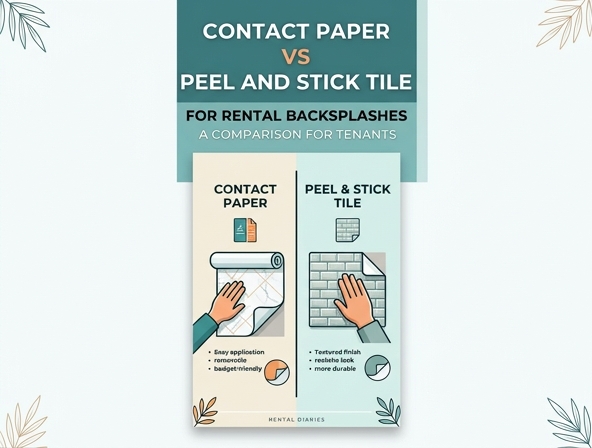
Staring at a drab, outdated kitchen backsplash is a frustrating reality for many renters, who must balance the desire for a personalized home with strict lease agreements. Traditional ceramic tile installations offer a beautiful, durable finish, but their high costs and permanent adhesive methods make them entirely impractical for temporary living spaces.
Fortunately, modern temporary adhesive solutions offer a premium, customized aesthetic without risking your security deposit. However, achieving a professional result requires understanding the structural differences between these materials-such as budget-friendly vinyl contact paper versus realistic, three-dimensional gel-coat subway tiles.
In this comprehensive comparison, we evaluate contact paper against peel-and-stick tile across crucial categories, including material cost, installation complexity, long-term durability, and ease of removal, helping you choose the perfect, damage-free upgrade for your rental kitchen.
The Great Rental Kitchen Dilemma: Upgrading Without Losing Your Deposit
Staring at a boring, yellowed, or plain beige rental kitchen backsplash can wear down your culinary inspiration. You deserve a space that reflects your style, but standard remodeling is out of the question when a security deposit is on the line. Fortunately, temporary DIY design has evolved dramatically, giving renters two formidable options to completely transform their walls without permanent alterations. Enter contact paper and peel-and-stick tiles-the two biggest contenders vying for your kitchen walls. Both promise easy installation and damage-free removal, but they deliver very different results when it comes to realism, effort, and budget.
Unrolling Contact Paper: The Budget-Friendly Contender
What is Contact Paper?
Contact paper is a thin, flexible adhesive roll traditionally used to line shelves and drawers. However, its lightweight nature and extreme affordability have made it a favorite hack for covering vertical surfaces like kitchen backsplashes. Today's market offers a massive variety of patterns, meaning you can easily mimic the look of marble, terrazzo, or geometric tiles on a shoestring budget.
- Highly affordable, often costing just a few dollars per roll.
- Incredibly lightweight and easy to cut with standard scissors.
- Available in countless colors, patterns, and finishes.
Unveiling Peel-and-Stick Tiles: The Dimensional Challenger
What are Peel-and-Stick Tiles?
Peel-and-stick tiles are individual sheets engineered specifically to mimic genuine ceramic, glass, or stone mosaics. Unlike paper, these tiles boast a distinct 3D texture and are manufactured using premium, realistic materials such as polyurethane gel, vinyl, or even thin metal layers. This multi-layered design gives them a substantial, high-end feel that can easily fool the eye.
- Realistic 3D texture with raised grout lines.
- Made from durable materials like vinyl, epoxy gel, or metal.
- Creates a premium look that replicates authentic tiling.
Aesthetics and Realism: Which One Actually Looks Real?
When it comes to aesthetic impact, the difference between these two materials is striking. Contact paper is flat and 2D. While high-resolution printing has improved the look of marble or wood patterns, it remains a printed sticker. From a distance, it can look convincing, but up close, it lacks the depth and tactile feel of real tile. If a glossy, perfectly smooth surface is what you want, contact paper does a fine job, but it will never pass for real masonry.
In contrast, peel-and-stick tiles excel at realism. The raised edges, molded grout lines, and textured finishes catch the light exactly like traditional tile. Whether you choose a glossy subway tile style or a matte slate look, these products provide realistic depth that elevates a kitchen from a temporary rental space to a custom-designed home.
The Installation Showdown: Patience vs. Precision
Applying Contact Paper
Installing contact paper requires a high degree of patience. Because you are dealing with large, thin sheets, managing air bubbles and wrinkles is a constant battle. You will need to carefully smooth out the paper as you unroll it, using a squeegee to prevent imperfections.
- Measure the wall area and cut the contact paper with an extra inch of overhang.
- Peel back a small section of the backing and align the paper to the top edge.
- Slowly smooth downward while pulling the backing away, constantly fighting air bubbles.
- Trimming around outlets is done with a utility knife, which can cause tearing if the blade is dull.
Applying Peel-and-Stick Tiles
Peel-and-stick tiles present a different kind of challenge, requiring structural precision rather than bubble-smoothing patience. Because these tiles are thicker and come in interlocking sheets, aligning the patterns correctly is vital to maintaining the illusion of real tile.
- Draw a level reference line across the wall to ensure straight placement.
- Cut the interlocking tabs off the first tile sheet to create a flat starting edge.
- Peel the backing and firmly press the tile sheet onto the wall, aligning the seams tightly.
- Use heavy-duty shears or a utility knife to make precise cuts around electrical outlets.
Durability Test: Standing Up to Steam, Splatters, and Heat
Kitchens are high-moisture, high-heat environments, making durability a major deciding factor. Contact paper is generally water-resistant, making it easy to wipe down grease splatters. However, its thin adhesive layer is susceptible to steam and heat degradation. Over time, steam rising from a boiling pot or moisture near the sink can cause the edges to curl and peel away from the wall, requiring frequent touch-ups.
Peel-and-stick tiles are built to last much longer under pressure. The thick vinyl or gel material is completely waterproof, making it highly suitable for the splash zone behind a sink. Many premium options are also rated as heat-resistant, meaning they will not melt or peel when installed behind a stove, provided you follow the manufacturer's recommended clearance distances.
The Ultimate Rental Test: Damage-Free Removal
For any renter, the moment of truth arrives on move-out day. You need to know that your temporary upgrade will peel away cleanly without taking chunks of drywall with it. Both options are designed to be temporary, but the ease of removal depends largely on the adhesive quality and your removal technique.
Using a standard hair dryer to apply gentle heat is the secret to softening the adhesive on both contact paper and peel-and-stick tiles, ensuring a smooth, damage-free removal process.
Contact paper, being thin, can sometimes tear into small, frustrating pieces during removal, though it rarely damages the wall underneath. Peel-and-stick tiles, with their stronger adhesive, require a bit more effort. Using a heat gun or blow dryer to soften the glue is highly recommended to avoid peeling the paint. Any leftover adhesive residue can be easily scrubbed away with a mild adhesive remover or warm soapy water.
Budget vs. Value: Cost per Square Foot Breakdown
If budget is your primary constraint, contact paper is the undisputed champion. You can easily cover an entire kitchen backsplash for under thirty dollars. This makes it an incredibly cost-effective choice for short-term leases or students who want a quick visual upgrade without investing real money into a property they do not own.
Peel-and-stick tiles require a higher initial investment, often ranging from five to fifteen dollars per square foot. However, the long-term value they provide in terms of durability and premium aesthetics is substantial. If you plan to stay in your rental for several years, spending more on peel-and-stick tiles yields a much more satisfying and durable return on your investment.
Side-by-Side: Contact Paper vs. Peel-and-Stick Tile
| Feature | Contact Paper | Peel-and-Stick Tile |
|---|---|---|
| Price Range | Very Low ($10 - $30 total) | Moderate ($5 - $15 per sq. ft.) |
| Realism | Flat, 2D printed design | Realistic 3D texture & grout lines |
| Installation Difficulty | Moderate (challenges with air bubbles) | Moderate (requires precise cutting) |
| Durability | Low (prone to steam damage) | High (waterproof and heat-resistant) |
| Ease of Removal | Easy (can tear into small strips) | Moderate (requires heat for clean peel) |
The Verdict: Choosing the Perfect Backsplash for Your Space
When to Choose Contact Paper
If you are on a razor-thin budget, living in a short-term dorm, or just want to experiment with a bold pattern for a year, contact paper is your best bet. It is highly affordable, easy to swap out, and gets the job done without a massive investment of time or money.
When to Choose Peel-and-Stick Tiles
For those living in long-term rentals who desire a luxurious, high-end kitchen aesthetic, peel-and-stick tiles are the clear winner. They offer the realistic texture, superior heat resistance, and long-term durability needed to withstand daily kitchen activities while looking indistinguishable from a professional tile installation.
Leave a comment