
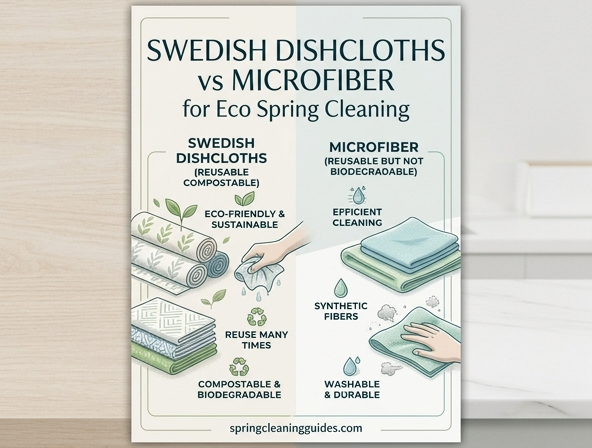
Achieving a truly pristine home during your spring clean often feels compromised by the environmental waste it generates. Many homeowners struggle with the endless cycle of single-use paper towels and sour-smelling synthetic sponges that inevitably end up in landfills.
To address this waste, the cleaning industry has long positioned synthetic microfiber as the ultimate reusable alternative. However, before adopting any new tool, we must first analyze the lifecycle and material composition of these popular textiles.
Transitioning to authentic, plant-based alternatives grants you a streak-free, highly hygienic clean without sacrificing environmental ethics. As a critical stipulation, consumers must recognize that a reusable label does not automatically equate to biodegradability, particularly when synthetic cloths shed microplastics into our waterways.
For example, while microfiber excels at trapping dry dust on delicate electronics, a genuine Swedish dishcloth is far superior for absorbing heavy kitchen spills and wiping down countertops.
This comparison evaluates Swedish dishcloths and microfiber across absorbency, durability, and ecological impact to help you select the ideal, sustainable champion for your seasonal refresh.
The Spring Clean Dilemma: Choosing Your Cleaning Cloth
Spring is the season of renewal, a time when we throw open our windows and scrub away the winter dust. In recent years, our collective approach to cleaning has undergone a massive shift. No longer are we satisfied with simply getting things clean; we want to do so without harming the planet. Eco-friendly living has turned the spotlight onto the tools we use daily. This has sparked a popular battle between two reusable heavyweights: the traditional-yet-modern Swedish dishcloth and the highly efficient microfiber cloth.
What is a Swedish Dishcloth?
Invented in Sweden in 1949, the Swedish dishcloth is a marvel of simple, natural engineering. These cloths are made from a blend of 70% wood cellulose and 30% cotton, making them completely plant-based. When dry, a Swedish dishcloth feels stiff, almost like cardboard. However, once you wet it, the fibers instantly soften to become incredibly pliable, soft, and sponge-like, allowing it to wipe down surfaces with ease and minimal friction.
Understanding Microfiber Cloths
In contrast to natural alternatives, microfiber cloths are highly engineered synthetic tools. They are typically woven from a blend of polyester and nylon (polyamide). What makes them so incredibly effective is the structure of the fibers themselves; they are split to be microscopic-hundreds of times thinner than a human hair. This intricate web of plastic fibers creates millions of tiny hooks that trap dust, grease, and dirt directly within the cloth rather than just pushing them around.
Absorbency and Cleaning Performance Compared
When comparing liquid absorption and physical scrubbing power, both materials showcase impressive capabilities. Swedish dishcloths behave like super-absorbent sponges, holding immense liquid weight. Microfiber, on the other hand, excels at electrostatic dust attraction and deep microscopic cleaning.
| Feature | Swedish Dishcloth | Microfiber Cloth |
|---|---|---|
| Water Absorption | Up to 20 times its weight | Up to 7 to 8 times its weight |
| Scrubbing Action | Gentle but effective on stuck-on food | Excellent for lifting fine dust and oils |
| Drying Time | Dries extremely fast, reducing bacteria | Dries moderately fast depending on density |
Durability and Lifespan: Which Cloth Lasts Longer?
Both options offer outstanding longevity compared to single-use alternatives, but their overall lifespans and sanitizing requirements differ significantly. To keep your cleaning routine hygienic, understanding how to care for each cloth is essential.
- Swedish Dishcloth Lifespan: Can be washed up to 200 times and typically lasts between 9 to 12 months with proper care.
- Microfiber Lifespan: Exceptionally durable, lasting through 500 to 1,000 washes before losing its electrostatic properties.
- Sanitizing Swedish Dishcloths: Easily sterilized by placing them wet in the microwave for one minute, running them through the dishwasher on the top rack, or washing in a standard laundry cycle.
- Sanitizing Microfiber: Wash in the washing machine using warm water, but avoid fabric softeners and high heat dryers, which melt the synthetic fibers.
The Ecological Footprint: Microplastics vs. Natural Materials
The manufacturing and everyday use of cleaning supplies carry hidden environmental consequences. When we wash synthetic fabrics, they shed tiny debris directly into our water systems, threatening marine life.
Microfiber cloths, being synthetic, release thousands of microscopic plastic fibers during every wash cycle, contributing directly to global microplastic pollution in our oceans.
Conversely, Swedish dishcloths boast a clean, plant-based production cycle. Because they are made entirely of cellulose and cotton, their manufacture does not rely on petroleum, and they release zero synthetic pollution when washed or used.
End-of-Life: Biodegradability vs. Landfill Waste
What happens when a cleaning cloth finally loses its utility? This phase of a product's life cycle is where we see the starkest contrast between natural and synthetic materials. For an eco-conscious household, the final destination of their tools is just as important as their utility.
When a Swedish dishcloth is worn thin, it can be tossed directly into your backyard compost bin. It is 100% biodegradable and will decompose naturally within a few weeks, returning valuable organic matter to the soil. A microfiber cloth, however, cannot compost or biodegrade. When it is discarded, it is destined for a landfill where it will remain for hundreds of years, slowly breaking down into smaller plastic particles rather than returning to the earth.
Cost-Effectiveness: Upfront Price vs. Long-Term Value
Making the switch to reusable cloths is not only good for the planet; it is incredibly beneficial for your household budget. While reusable cloths require a small initial investment, they pay for themselves rapidly by eliminating paper towels.
- An average household goes through approximately 80 to 100 rolls of paper towels per year, costing upwards of $150 to $200.
- A single Swedish dishcloth costs around $3 to $5 and replaces up to 17 rolls of paper towels, meaning a pack of four can cover your kitchen needs for an entire year.
- A high-quality microfiber pack of six costs around $10 to $15 and can last for several years, offering massive long-term financial savings.
Best Practical Uses Around the House
To get the most out of your green cleaning toolkit, it helps to assign each cloth to the tasks it performs best. Combining their strengths will leave your home spotless.
Swedish Dishcloths: Perfect for wiping down messy kitchen countertops, soaking up spilled milk or coffee, washing dishes, and cleaning up sticky spills on dining tables.
Microfiber Cloths: Ideal for obtaining a streak-free shine on glass windows and mirrors, dusting electronic screens, polishing stainless steel appliances, and trapping dry pet hair from baseboards.
The Verdict: The Truly Sustainable Choice for Your Home
When we weigh the environmental pros and cons of our spring cleaning gear, the winner becomes clear. While microfiber cloths offer unmatched longevity and precise dust removal, their plastic composition and microplastic shedding present long-term ecological drawbacks. For those striving for a waste-free, earth-friendly household, the Swedish dishcloth is the champion of sustainability. By choosing plant-based cleaning tools, you protect our waterways and reduce landfill waste.
Are you ready to transform your cleaning routine? Make the eco-conscious choice this spring and explore a wide selection of biodegradable Swedish dishcloths to give your home a truly green refresh.

Leave a comment