
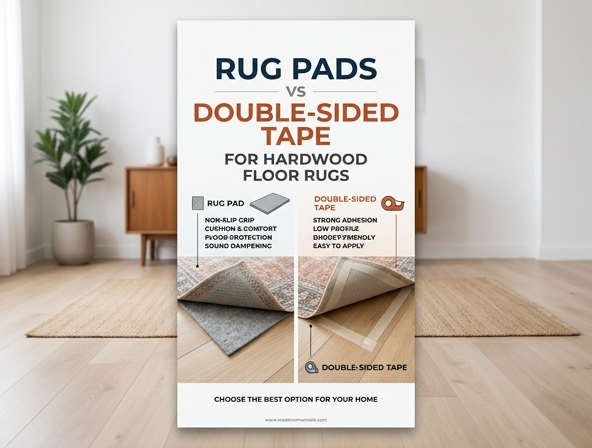
Keeping elegant area rugs securely in place is a constant, frustrating battle for many homeowners. Before rushing to secure your slipping rugs, however, it is vital to consider the long-term integrity of your flooring investment. Selecting the correct anchoring method grants you immediate peace of mind while actively preserving your home's aesthetic and resale value.
As a crucial stipulation, not all securing products are safe for delicate surfaces. Certain adhesives can react catastrophically with modern polyurethane finishes on oak or maple planks, leaving permanent chemical discoloration or peeling the topcoat. For example, cheap latex-backed pads or heavy-duty industrial carpet tapes often cause irreversible damage to these premium woods.
To help you safeguard your home, this article evaluates the critical differences between rug pads and double-sided tape, comparing their safety, floor protection, and overall durability so you can make an informed, expert-backed decision.
Introduction: The Battle for Hardwood Floor Protection
Beautiful hardwood floors are a major investment that adds warmth, elegance, and value to any home. To protect these surfaces and add comfort, homeowners often decorate with stylish area rugs. However, this introduces a frustrating dilemma: area rugs have a tendency to slip, slide, and bunch up, creating serious tripping hazards and risking scratches to the wood underneath. To solve this issue, people generally turn to two main solutions: rug pads and double-sided rug tape. Finding the right balance between keeping your rugs securely anchored and protecting your expensive floor finish is a continuous battle that requires understanding how these two products interact with wood surfaces.
What Are Rug Pads and How Do They Work?
Rug pads are protective barriers placed directly between the underside of an area rug and the floor surface. Their primary function is to keep the rug securely in place while providing an extra layer of protection for the hardwood beneath. Unlike tape, rug pads do not rely on sticky glues to prevent movement. Instead, they utilize friction and material density to anchor the rug.
High-quality rug pads are typically made from safe, durable materials that are engineered specifically for floor safety:
- Natural rubber: Offers exceptional non-slip grip by using natural suction against the floor without sticking to the finish.
- Felt: Provides dense cushioning and sound absorption, ideal for larger rugs that stay in place due to their own weight.
- Felt and rubber hybrids: Combine the best of both worlds, offering plush cushioning alongside a strong, non-slip rubber backing.
The Advantages of Using Rug Pads
Investing in a high-quality rug pad yields numerous long-term rewards for your home. These products go beyond simple safety to actively preserve your property.
Key Benefits of Choosing a High-Quality Rug Pad
- Superior Floor Protection: They act as a shield, preventing the rough backing of rugs from scratching, scuffing, or wearing down your wood finish.
- Added Cushioning: Dense felt and rubber materials make your rugs feel much softer and more comfortable underfoot.
- Noise Reduction: The thick barrier absorbs impact sound, making your home quieter, especially on upper levels.
- Extending Rug and Floor Life: By preventing friction and allowing airflow, they stop fibers from breaking down and protect the wood from premature wear.
The Disadvantages of Rug Pads
While they offer excellent protection, rug pads are not without their downsides. Homeowners must weigh these factors before buying.
Potential Drawbacks to Keep in Mind
One major consideration is the higher upfront cost associated with premium materials like natural rubber and felt. Cheap alternatives often degrade quickly, while high-quality pads require a larger initial investment. Additionally, the added thickness can sometimes create a minor tripping hazard if the rug sits too high off the floor near doorways. Finally, most pads require manual trimming to fit the exact dimensions of your rug, which adds an extra step to the installation process.
What Is Double-Sided Rug Tape?
Double-sided rug tape is a heavy-duty adhesive strip designed to bond the underside of an area rug directly to the floor. It features a sticky coating on both sides, creating a permanent or semi-permanent physical bond between the two surfaces. When applied, one side of the tape sticks firmly to the textile backing of the rug, while the other side adheres tightly to the hardwood floor finish, preventing any lateral movement.
The Advantages of Double-Sided Tape
Many people opt for tape due to its simplicity and immediate results. It provides a quick fix for sliding rugs.
Why Tape Appeals to Homeowners
- Low Profile: Because it is paper-thin, it keeps rugs flat against the floor without adding bulk or height.
- Affordability: It is highly budget-friendly, costing only a fraction of what a premium pad costs.
- Ease of Application: Installing tape requires no special tools; you simply peel, stick, and press down.
- Strong Non-Slip Hold: It creates a highly secure bond that prevents even light rugs from moving in high-traffic zones.
The Risks: Disadvantages of Double-Sided Tape on Hardwood
Despite its convenience, using adhesive tape on delicate wood surfaces carries severe long-term risks. The very strength of its bond can become its greatest liability.
Why Tape Can Ruin Hardwood
- Adhesive Residue: Over time, the glue can break down, leaving a sticky, dirt-attracting film that is extremely difficult to clean.
- Chemical Reactions: Many tape adhesives contain synthetic chemicals that can react with polyurethane or oil finishes, causing permanent discoloration.
- Hardwood Finish Damage: When peeling the tape off, the strong adhesive can actually strip away layers of the wood's protective topcoat.
- Difficulty of Removal: Removing dried tape often requires using harsh chemical solvents, which can further damage the integrity of the wood.
Hardwood Safety: Adhesive Chemical Reactions vs. Breathable Barriers
To understand the true impact on your floors, it is crucial to analyze how these two methods interact chemically with hardwood finishes. Polyurethane and oil-finished wood floors are organic materials that need to release trace amounts of moisture to prevent warping or discoloration. Double-sided tape creates an airtight seal that completely blocks this natural process. It traps moisture beneath the adhesive strip, leading to cloudiness in polyurethane finishes and deep water-staining on oil-treated floors.
Safety Warning: Glues and synthetic adhesives can trigger chemical off-gassing, which reacts with wood finishes to cause irreversible yellowing or peeling. In contrast, high-quality, breathable rug pads allow the wood to breathe naturally while preventing moisture accumulation.
Furthermore, natural rubber and felt rug pads contain no plasticizers, ensuring they will never bond with or melt into your floor finish. This keeps the protective coating of your hardwood completely intact and pristine over decades of use.
How to Choose: Rug Pads vs. Tape Decision Matrix
Choosing between these two options depends on your specific household needs, budget constraints, and tolerance for risk. Use the decision matrix below to find the best match for your home:
| Factor | Rug Pads | Double-Sided Tape |
|---|---|---|
| Rug Size Compatibility | Excellent for all sizes (especially large rugs) | Best for small accent rugs or runners |
| Traffic Levels | Handles high foot traffic and heavy furniture easily | Great for light traffic, but adhesive degrades under heavy load |
| Budget | Moderate to high initial cost | Very low cost and affordable |
| Hardwood Finish Safety | 100% safe (if using natural rubber or felt) | High risk of residue, discoloration, and peeling |
| Cushioning & Noise Control | Excellent sound dampening and padding | None (flat profile) |
The Verdict: Which Is Best for Your Hardwood Floors?
Protecting your beautiful floors requires choosing a solution that balances slip prevention with surface preservation. While double-sided tape is an inexpensive and highly effective way to keep small rugs flat, its potential to damage expensive polyurethane and oil finishes makes it a risky option for long-term use on genuine wood.
For those prioritizing the longevity, value, and health of their floors, natural rubber and felt rug pads are the clear winner. They offer slip resistance, plush comfort, and reliable noise reduction without using harmful chemicals or sticky adhesives that ruin finishes. Investing in a premium pad pays off by keeping both your rugs and your hardwood floors in pristine condition for years to come.
Leave a comment