
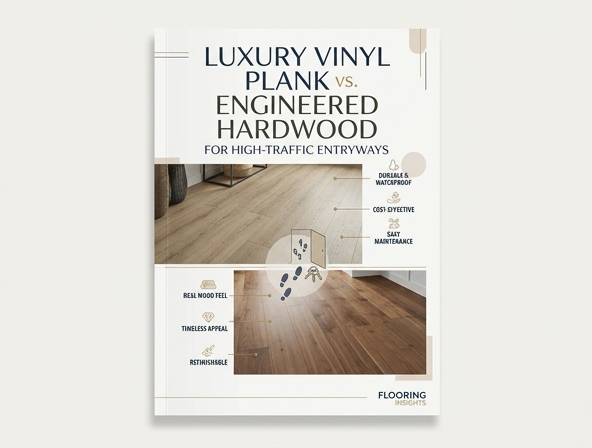
The home entryway is a high-stakes zone, constantly battered by wet boots, abrasive grit, and sharp pet claws that can quickly degrade standard flooring. Yet, before diving into aesthetic choices, it is crucial to recognize this space's dual role: it serves as your home's aesthetic first impression and its primary physical barrier against the outdoor elements.
Selecting the right material grants homeowners long-term structural peace of mind and sustained property value. While no surface is entirely impervious to wear under extreme conditions, modern engineering offers highly resilient solutions designed to withstand active families and dripping umbrellas.
In this guide, we will conduct a comparative analysis of Luxury Vinyl Plank (LVP) and Engineered Hardwood. By evaluating their performance in moisture resistance, scratch durability, and overall return on investment, we will help you identify the ultimate flooring solution for your high-traffic foyer.
Introduction: The Entryway Flooring Challenge
The entryway of your home is a high-stakes zone. It is the first space guests see, but it is also the primary battleground against the elements. Every single day, your foyer floor must withstand a constant barrage of heavy foot traffic, wet umbrellas, muddy shoes, and abrasive grit tracked in from the outdoors. Choosing the wrong material can quickly lead to warped wood, stained surfaces, or unsightly scratches right where your home is supposed to make its best impression.
Finding a floor that balances rugged resilience with welcoming style is essential. This brings us to the modern showdown of entryway flooring: Luxury Vinyl Plank (LVP) versus Engineered Hardwood. Both offer gorgeous wood-look aesthetics, but they handle the daily chaos of a busy home in vastly different ways. Let's dive deep into how these two popular contenders perform in the demanding environment of your home's main entry.
Understanding Luxury Vinyl Plank (LVP)
Luxury Vinyl Plank, commonly known as LVP, is a synthetic flooring option designed to realistically mimic the look and texture of natural wood. Its rise to dominance in modern households is no accident; it is engineered specifically to survive the heavy wear and tear of active family life. The secret to its incredible performance lies in its multi-layer construction:
- The Wear Layer: A clear, tough top coat that protects against scratches, stains, and scuffs.
- The Print Layer: A high-definition photographic image that replicates the intricate grain, knots, and color variations of authentic wood species.
- The Core Layer: The structural backbone, typically made of Stone Plastic Composite (SPC) or Wood Plastic Composite (WPC), which provides rigid stability and absolute waterproof protection.
- The Underlayment: An attached backing that offers sound insulation, warmth, and underfoot cushioning.
This synthetic makeup means LVP does not expand, contract, or warp when exposed to humidity or spills, making it an exceptionally reliable choice for busy foyers.
Understanding Engineered Hardwood
Engineered hardwood is a genuine wood flooring product, but it is constructed differently than traditional solid planks. Instead of a single, solid piece of timber, engineered planks are built using a clever layered design that optimizes structural stability. This makes it far better suited for temperature-fluctuating entryways than solid hardwood, which is prone to cupping and gapping when exposed to moisture.
The anatomy of an engineered hardwood plank consists of several key components:
- The Wear Layer (Veneer): A top slice of genuine hardwood (such as oak, maple, or hickory) that delivers the exact look, texture, and feel of solid wood.
- The Core Layer: Multiple cross-laminated layers of high-quality plywood or high-density fiberboard (HDF) glued together under intense pressure.
- The Backing Layer: A stabilizing wood veneer that prevents the plank from cupping or bowing over time.
By running the grain of each plywood layer in opposing directions, engineered hardwood resists expansion and contraction, allowing you to have real wood in areas where solid timber might fail.
Durability and Scratch Resistance Comparison
When it comes to surviving the daily grind of an entryway, durability is paramount. Heavy boots, dropped keys, high heels, and pet claws can quickly ruin a delicate surface. While both materials are built for durability, they handle mechanical wear differently.
| Feature | Luxury Vinyl Plank (LVP) | Engineered Hardwood |
|---|---|---|
| Scratch Resistance | Excellent; the heavy polyurethane wear layer resists deep scratches and scuffs from pets and shoes. | Moderate; the real wood veneer is susceptible to scratching and denting from high heels or dog claws. |
| Impact Protection | High; resilient synthetic core absorbs impacts without denting easily. | Variable; softer wood species (like cherry or pine) dent easily, while harder woods (like hickory) offer better defense. |
| Refinishing Potential | None; damaged planks must be replaced, though individual planks can often be swapped out. | Limited; depending on the veneer thickness, it can be sanded and refinished 1 to 3 times over its lifespan. |
LVP relies on synthetic engineering to deflect damage, making it practically immune to the typical hazards of a busy household. Engineered hardwood, while sturdy, demands more caution because it utilizes authentic, softer organic material on its surface.
Moisture and Mud Resistance in the Foyer
Water is the ultimate enemy of flooring, and the foyer is where moisture strikes first. Wet umbrellas dripping onto the floor, snowy boots melting in the corner, and damp mops used to clean up muddy footprints can ruin an vulnerable surface. The way these two materials interact with water is one of their most significant differentiators.
Luxury Vinyl Plank is 100% waterproof from top to bottom. It can hold standing water for hours without warping, swelling, or losing structural integrity. Engineered hardwood, on the other hand, is water-resistant but not waterproof. While its plywood core resists minor humidity changes, standing water or soaked-in mud can cause permanent staining, veneer peeling, or wood rot if not cleaned up immediately.
If you live in an area with harsh winters, frequent rain, or have kids and pets tracking in mud daily, LVP offers a worry-free shield that engineered hardwood simply cannot match. You can confidently damp-mop LVP without fear of ruining the subfloor, whereas engineered hardwood requires specialized wood cleaners and dry-mopping techniques.
Aesthetic Appeal and Resale Value
The entryway dictates the design tone for your entire home. For many homeowners, nothing compares to the classic elegance and prestigious appeal of real wood. Engineered hardwood features a genuine timber veneer, meaning every plank is completely unique, showing natural grain patterns, knots, and mineral streaks. This organic variation provides a level of warmth and luxury that is highly coveted by homebuyers, which can significantly boost your home's overall resale value.
Modern manufacturing has allowed LVP to close the aesthetic gap dramatically. Premium LVP brands utilize high-definition printing and embossed-in-register technology, which aligns the surface texture with the visual wood grain. However, because it is a printed image, you may occasionally notice repeating patterns across a large floor space. While LVP looks incredibly convincing and is highly appealing for its practicality, it does not carry the same premium market prestige or long-term financial return as authentic hardwood.
Installation Complexity and DIY Friendliness
The cost and ease of installation can heavily influence your decision, especially if you plan to tackle the project yourself over a weekend. The two materials require very different levels of skill, tools, and preparation:
- Luxury Vinyl Plank (LVP): Most LVP products feature a user-friendly click-lock system. This floating floor method requires no messy adhesives or specialized power tools. Planks can often be cut with a simple utility knife, making it an excellent weekend project for DIY enthusiasts.
- Engineered Hardwood: While some engineered products offer a floating click system, most high-quality options must be nailed, stapled, or glued down to a wood subfloor. This process requires specialized pneumatic nailers, heavy-duty saws, and precise subfloor preparation to avoid squeaking and gapping. Professional installation is highly recommended for engineered hardwood.
LVP is the clear winner for DIYers looking to save on labor costs. Engineered hardwood installation requires precision and experience to ensure the manufacturer's warranty remains intact.
Maintenance and Long-Term Care
An entryway floor must be easy to clean, as it frequently collects mud, grit, and winter road salt. Keeping your foyer pristine requires different care levels depending on which material you choose:
- LVP Maintenance: LVP is exceptionally low-maintenance. Daily dust-mopping or sweeping removes abrasive grit. For muddy footprints, you can use a damp mop with a gentle pH-neutral floor cleaner. It requires no waxing, oiling, or special treatments to maintain its protective wear layer.
- Engineered Hardwood Maintenance: Engineered hardwood requires a gentler touch. Abrasive dirt must be swept up immediately to prevent scratches. You cannot use steam mops or wet mops, as excess moisture can penetrate the seams and damage the wood. Spills must be wiped up instantly, and cleaning should only be done with approved hardwood floor cleaners.
While both benefit from protective door mats at the entry, LVP allows you to clean up heavy messes quickly without stressing over permanent damage.
Budget and Cost Analysis
Your budget plays a critical role in determining which flooring is right for your entryway. While LVP offers substantial upfront savings, engineered hardwood should be viewed as a long-term investment that adds real equity to your property. Below is a breakdown of typical costs per square foot:
| Cost Category | Luxury Vinyl Plank (LVP) | Engineered Hardwood |
|---|---|---|
| Material Cost (Per Sq. Ft.) | $2.00 – $7.00 | $5.00 – $15.00 |
| Professional Installation (Per Sq. Ft.) | $2.00 – $5.00 | $5.00 – $10.00 |
| Total Estimated Cost (Per Sq. Ft.) | $4.00 – $12.00 | $10.00 – $25.00 |
Choosing LVP offers immediate savings, freeing up your home improvement budget for other projects. However, engineered hardwood retains its value for decades and can be a major selling point when you decide to list your home.
The Final Verdict: Which Belongs in Your Entryway?
Selecting the ideal flooring for your entryway comes down to assessing your household's daily lifestyle, your aesthetic priorities, and your overall project budget. Both materials excel in different environments, meaning there is no single wrong choice, only the choice that works best for your home.
By matching your entryway's traffic patterns and moisture exposure to the unique strengths of either LVP or engineered hardwood, you will create a beautiful, welcoming foyer that stands the test of time.
Leave a comment