
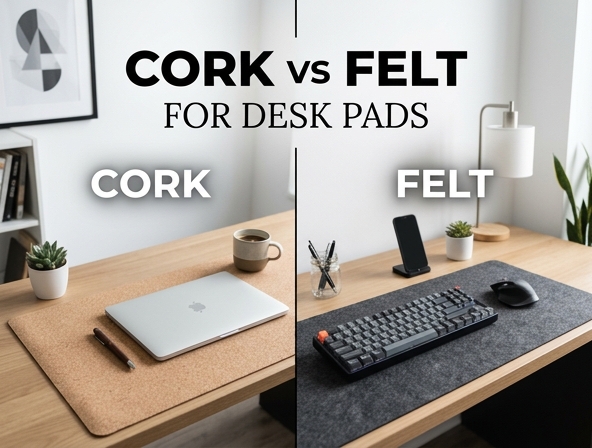
Working from home often leads to an uninspiring, cluttered workspace where keyboard clicks echo endlessly and expensive wooden desktops are easily scratched. Before investing in complex ergonomic furniture, remote professionals must first address the foundational surface directly beneath their hands. Selecting the ideal desk pad does more than shield your furniture; it grants immediate tactile comfort and organizational clarity, instantly elevating your daily focus.
However, an important educational stipulation must be made: neither material is universally superior, as the right choice depends heavily on your specific workflow. For example, premium merino wool felt offers cozy warmth and acoustic dampening, whereas sustainably harvested cork oak provides a firm, water-resistant surface ideal for precise writing.
To help you optimize your setup, this guide will analyze cork and felt desk pads across durability, maintenance, and performance, ensuring you select the perfect foundation for your home office.
Introduction: Elevating Your Workspace Aesthetics and Ergonomics
In the modern home office, the desk setup is more than just a place to work; it is a reflection of personal style and a hub for productivity. As professionals spend more hours at their desks, the demand for accessories that combine form and function has skyrocketed. Among these, the desk pad has emerged as an essential tool, offering both protection for your workspace and a designated area for your keyboard and mouse. A well-chosen desk mat defines your workspace, adding a layer of comfort and sophistication that elevates the entire room.
When selecting the perfect desk mat, the decision often comes down to two popular and distinct materials: cork and felt. Both materials bring unique benefits to a desk setup, but they cater to very different preferences in terms of look, feel, and performance. This guide provides an in-depth comparison of cork versus felt desk pads, exploring their aesthetics, tactile comfort, durability, acoustics, and environmental impact to help you make the perfect choice for your daily workflow.
Understanding Cork Desk Pads: Nature's Minimalist Solution
Cork desk pads are crafted from the bark of the cork oak tree, a natural and renewable resource primarily harvested in Mediterranean regions. This material is stripped from the tree without causing harm, allowing the bark to regenerate over time. The resulting product is a lightweight, thin, and highly functional workspace accessory that celebrates natural textures and subtle organic patterns.
For those aiming to build a clean, minimalist home office, cork offers several outstanding characteristics:
- Natural water resistance that repels accidental spills and moisture.
- An ultra-slim profile that sits flat on the desk without adding unnecessary bulk.
- Antimicrobial properties that naturally resist dust, mold, and mildew.
- A non-slip, high-friction backing that keeps the pad firmly in place during intense typing sessions.
The clean lines and understated warmth of cork make it an ideal choice for professionals who appreciate a clutter-free, organic aesthetic. It provides a smooth, structured surface that integrates seamlessly into modern, light-filled workspaces.
Exploring Felt Desk Pads: Cozy, Textured, and Warm
Felt desk pads are premium workspace accessories made from either natural sheep wool or synthetic fibers, such as recycled polyester. Known for their distinct fibrous texture and visual depth, these mats are favored for their ability to soften the hard, cold surfaces of wooden, glass, or metal desks. They introduce an element of physical and visual warmth that immediately makes a home office feel more inviting.
Felt mats are highly regarded for their unique characteristics, which include:
- A soft, plush texture that cushions your forearms and wrists throughout the workday.
- Excellent thermal insulation, keeping your hands warm against a cold desk surface in the winter.
- A rich, multi-toned visual depth that adds sophistication and layers to your desk setup.
- High density and thickness that provides a heavy, premium feel under your accessories.
Whether you choose pure merino wool for luxury or a synthetic blend for added durability, a felt desk pad is the go-to option for creating a cozy, high-end sanctuary in your workspace.
Head-to-Head: Aesthetics, Desk Setup, and Visual Appeal
The Organic Brightness of Cork
Cork desk pads offer a warm, golden, or earthy tone that brings a touch of nature indoors. They harmonize beautifully with light wood desks, such as oak, birch, or maple, and are a natural fit for bright, airy rooms with plenty of sunlight. If your design philosophy leans toward biophilic design, Scandinavian minimalism, or a clean modern look, the organic grain of cork serves as a grounding visual base.
The Textured Sophistication of Felt
In contrast, felt desk pads excel at adding texture and contrast to a workspace. Available in shades ranging from soft off-white and heather grey to deep charcoal and black, felt fits perfectly into moody, industrial, or high-end executive setups. The fibrous material contrasts beautifully against sleek metal keyboards, glass-top desks, and dark walnut surfaces, creating a layered, cozy aesthetic that feels highly curated and tactilely rich.
Tactile Comfort: How They Feel Under Your Hands
Skin Contact and Warmth
The physical sensation of resting your arms on your desk pad for eight hours a day is a crucial consideration. Felt offers a plush, pillowy softness that cushions your wrists and forearms. It provides immediate warmth, making it incredibly comfortable in colder climates. However, some users with sensitive skin may find lower-grade synthetic felt slightly scratchy, whereas premium merino wool remains incredibly soft to the touch.
Writing Performance and Firmness
Cork, on the other hand, offers a smoother, firmer, and more uniform surface. While it does not provide the plush cushion of felt, it remains smooth and pleasantly warm to the touch. Because cork is a firm and stable medium, it is significantly better for writing directly on a single sheet of paper. Writing on felt can cause your pen to puncture the paper due to the soft, yielding nature of the fibers beneath.
Durability, Spills, and Maintenance: Which Lasts Longer?
Spills, Stains, and Everyday Messes
When it comes to resisting coffee spills and water droplets, cork is the clear winner. Cork naturally contains suberin, a waxy substance that makes the material highly water-resistant. If you spill a drink on a cork pad, the liquid pools on top, allowing you to wipe it away with a damp cloth without leaving a trace. Felt, especially synthetic blends, can absorb liquids quickly, leading to deep-set stains and odors if not treated immediately with a specialized wool cleaner.
Wear, Fraying, and Longevity
Long-term wear tells a different story. Over months of use, cork pads can sometimes experience dry-out, minor cracking, or chipping along the edges if they are bent or handled roughly. Felt is highly resilient to bending and will never crack; however, low-quality felt is prone to pilling and fraying where your wrists rub against the edge. Maintaining felt requires occasional shaving with a lint remover, whereas cork requires a simple wipe-down with a mild soapy solution to stay clean.
Keyboard Acoustics and Mouse Tracking Performance
Keyboard Sound Dampening
For mechanical keyboard enthusiasts, the acoustic profile of a desk is highly important. Felt excels at absorbing sound, acting as a natural dampener that reduces the high-pitched "clack" of mechanical switches and hollow desk echoes, resulting in a deeper, more satisfying thocky sound profile. Cork also dampens sound, but due to its thinness and high density, it provides less acoustic absorption than thick felt, offering a crisper, more neutral typing sound.
Mouse Glide and Tracking Precision
Mouse performance varies significantly between these two surfaces. Cork provides a firm, consistent surface with moderate friction, making it excellent for office work and optical mouse tracking, though it may feel slightly resistive for fast-paced gaming. Felt offers a very smooth glide for the mouse feet, but the fibrous texture can sometimes cause minor optical sensor jitter on lower-end mice. Many users prefer using a separate small mouse mat on top of a felt pad to achieve optimal gaming precision.
Sustainability and Eco-Friendliness: A Green Choice
For environmentally conscious consumers, choosing sustainable workspace accessories is a top priority. Cork is widely considered one of the most eco-friendly materials on the planet. Because cork harvesting only removes the bark of the tree, the tree continues to grow and absorb carbon dioxide, making the entire process carbon-negative. Cork is 100% biodegradable, recyclable, and renewable, leaving almost no environmental footprint at the end of its life cycle.
Felt presents a more nuanced sustainability profile depending on how it is sourced. Pure wool felt is renewable and biodegradable, though the environmental impact of sheep farming must be considered. On the other hand, many affordable felt desk pads are made from synthetic polyester, which is essentially plastic and does not biodegrade. To make an eco-friendly choice with felt, look for certified organic wool or pads made entirely from recycled post-consumer plastics.
"Choosing materials that respect the planet transforms our workspaces from simple productivity hubs into mindful, sustainable environments."
Price, Sizing, and Value Comparison
Budget is often a deciding factor when upgrading a workspace. Generally, cork desk pads are highly affordable, offering a cost-effective way to get a premium, natural surface. Since cork is relatively easy to process and manufacture into thin sheets, you can find durable, high-quality options at a very accessible price point. This makes cork an excellent choice for student workspaces or budget-conscious home offices.
In contrast, high-quality wool felt desk pads represent a more significant financial investment. Genuine merino wool felt is a premium material that requires specialized craftsmanship to wash, press, and dye. While synthetic felt blends are cheap, they do not offer the same longevity or luxury feel as real wool. Investing in a premium wool felt pad ensures superior wear resistance, excellent acoustic properties, and a lifespan that can span several years, providing superb long-term value for dedicated professionals.
Final Verdict: Which Desk Pad Is Right for You?
Choosing between cork and felt comes down to your daily habits, aesthetic preferences, and how you interact with your workspace. Both materials offer exceptional qualities that can transform a dull desk into an inspiring workstation.
Choose a Cork Desk Pad if you:
- Frequently drink coffee or water at your desk and need maximum spill resistance.
- Prefer a firm, stable surface for writing directly on paper with a pen or pencil.
- Want a highly sustainable, carbon-negative product made from 100% natural tree bark.
- Aim for a bright, clean, minimalist, or biophilic office aesthetic.
Choose a Felt Desk Pad if you:
- Desire a plush, cozy, and soft texture that cushions your wrists and forearms.
- Want to dampen the acoustic sound of your mechanical keyboard typing.
- Prefer a cozy, moody, Scandinavian, or highly textured dark aesthetic.
- Live in a colder climate and want excellent thermal insulation for your hands.
By matching your daily workflow with the physical properties of these materials, you can select a desk pad that enhances both your physical comfort and your creative output.
Leave a comment