
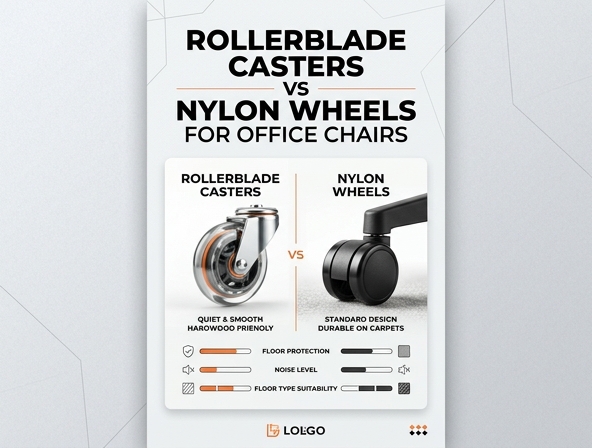
When designing the perfect home office, we carefully select the right desk and ergonomic chair, yet we often overlook the critical component that connects them to our workspace: the wheels. Unfortunately, standard chair wheels frequently leave unsightly scratches on hardwood or get frustratingly stuck in plush rugs, disrupting both your daily productivity and your floor's integrity. Upgrading your office chair's wheels grants you effortless, silent mobility while preserving your flooring's pristine condition. However, the ideal choice is not one-size-fits-all; it depends heavily on your specific workspace setup. For instance, delicate bamboo and soft hardwood demand a different level of protection than thick carpets or durable laminate. To help you optimize your setup, this guide compares rollerblade casters versus traditional nylon wheels, evaluating their performance in floor safety, noise reduction, and overall maneuverability.
Introduction: Upgrade Your Home Office From the Ground Up
Creating an efficient workspace involves choosing the right desk, finding a comfortable chair, and ensuring your equipment supports your daily workflow. However, one of the most overlooked components of any home office setup is the set of wheels underneath your desk chair. The quality of your workspace mobility directly impacts your physical comfort, focus, and overall work output.
Many remote workers do not realize that standard plastic wheels can cause significant issues over time. These low-grade components often lead to severe scratching on expensive hardwood floors, permanent scuffs on tile surfaces, and snagged carpet fibers that ruin your room's aesthetic. This has sparked an ongoing debate among home office enthusiasts: should you stick with the standard nylon wheels that came with your chair, or is it time to upgrade to heavy-duty rollerblade casters?
Understanding Nylon Wheels: The Standard Default
Nylon wheels are the baseline standard in the office furniture industry. Manufacturers default to these wheels because they are cheap to produce, lightweight, and functionally adequate for a broad range of generic office settings. Typically constructed from hard molded plastic, these dual-wheel casters are designed to provide basic mobility on low-pile carpets and commercial-grade flooring without requiring advanced engineering.
- Material: Hard, molded nylon plastic.
- Design: Dual-wheel configuration to distribute weight.
- Cost: Extremely inexpensive, making them the default factory choice.
- Mobility: Rigid movement that requires active physical effort to roll.
Enter Rollerblade Casters: The Modern Upgrade
Rollerblade casters represent a major technological leap forward in office ergonomics. Unlike traditional dual-wheel plastic designs, these upgrades utilize a single-wheel system made of high-grade polyurethane. This soft, rubber-like material mimics the outer shell of high-performance outdoor skates, allowing the wheels to roll smoothly over various surfaces without creating friction.
The secret to their performance lies in their construction. They feature heavy-duty steel brackets and precision ball bearings that eliminate standard resistance. Because they are inspired by high-speed recreation and athletic inline skates, they bring a level of maneuverability, fluid motion, and durability that standard office furniture components simply cannot replicate.
Floor Protection: Saving Your Hardwood and Carpets
One of the primary reasons homeowners seek out alternative wheels is to prevent costly floor damage. Standard nylon wheels are incredibly rigid, which means any grit or dirt trapped under them acts like sandpaper against your floor. Over time, this leads to deep scratches on hardwood, cracked tiles, and flattened carpet paths. Rollerblade wheels, on the other hand, absorb impact and glide safely over delicate surfaces, often removing the need for an ugly plastic chair mat altogether.
| Flooring Type | Nylon Wheels Performance | Rollerblade Casters Performance |
|---|---|---|
| Hardwood | High risk of scratching; requires protective mat | Safe, non-marking, smooth glide; no mat needed |
| Tile / Stone | Noisy, can chip grout lines over time | Quiet, absorbs shock, transitions smoothly |
| Low-Pile Carpet | Acceptable movement, but prone to snagging fibers | Excellent rolling; easily cuts through light resistance |
| Thick Carpet | Sinks in, highly restricted movement | Can sink slightly; large diameter helps roll over pile |
Noise and Gliding Smoothness: The Sound of Productivity
A quiet workspace is essential for maintaining deep focus, especially during long study sessions or intense virtual meetings. Standard nylon wheels are notorious for their loud, rattling, scraping sound as they drag across hard floors. This disruptive noise can break your concentration and echo through your home. Rollerblade wheels feature sealed ball bearings and soft polyurethane tires, making them virtually silent during operation.
"Swapping out my squeaky factory wheels for polyurethane rollerblade casters was an immediate game-changer. I can glide across my office late at night without waking up my family, and the motion feels like I am floating on ice."
Durability and Maintenance: Which Wheels Last Longer?
The durability of your chair wheels determines how often you will have to deal with annoying jams and sticky movement. Traditional nylon wheels have exposed dual-wheel axles that easily collect pet hair, dust bunnies, and carpet fibers. Once this debris gets trapped inside the plastic housing, it becomes nearly impossible to clean, eventually leading to locked wheels. Rollerblade casters feature open, heavy-duty steel frames and shielded bearings that naturally resist dust buildup and last for years under heavy loads.
- Flip your office chair upside down on a flat surface to expose the wheel bases.
- Pull the old wheels straight out of the socket using a firm grip or a flathead screwdriver for leverage.
- Use a damp microfiber cloth to clean out any dirt, hair, or grease inside the stem socket.
- Inspect the new wheels and clear away any stray packaging materials from the bearings.
- Push the new wheel stem firmly into the socket until you hear or feel it click securely into place.
Aesthetics: Elevating the Look of Your Workspace
A beautiful home office space inspires better work and improves your daily mood. While we often obsess over the style of our desk and the color of our walls, small details like chair wheels can quietly ruin the overall visual flow. Standard nylon wheels are bulky, dark, and industrial, giving your desk chair a cheap, clinical look that clashes with elegant home decor.
By contrast, upgrading to rollerblade wheels adds a high-tech, modern touch to your furniture. Featuring sleek metal frames and clear or tinted polyurethane rings, these casters elevate your chair's overall profile. They allow light to pass through, creating a clean, minimalist, and premium visual appeal that complements any contemporary workspace design.
Cost vs. Value: Is the Upgrade Worth It?
At first glance, standard nylon wheels appear to be the most cost-effective option because they cost nothing upfront. However, this perspective ignores the hidden long-term expenses associated with floor damage. Repairing scratched hardwood floors can cost thousands of dollars, and even buying a decent plastic floor mat to protect your flooring can set you back quite a bit of money. Premium rollerblade wheels require a small initial investment but save you from these unnecessary costs down the line.
When you look at the numbers, investing in aftermarket casters is a highly practical financial decision. High-quality polyurethane wheels deliver an estimated 100% return on investment by preventing wood floor refinishing costs, while also eliminating the need to buy $30 to $60 plastic chair mats that crack and discolor over time. Spending a small amount on this upgrade protects your home's equity and saves money in the long run.
How to Choose and Install the Right Wheels
Upgrading your office chair wheels is incredibly straightforward and requires no specialized tools. The most important step is ensuring that you purchase the correct stem size for your specific chair model. While the vast majority of office chairs use a universal standard stem, certain brands (like IKEA) use a slightly smaller custom size. Measuring before you buy guarantees a perfect fit and a hassle-free upgrade.
- Pull one of your existing wheels out of the chair base to measure the metal stem.
- Use a caliper or ruler to measure the stem diameter; the standard size for 95% of chairs is
11mm x 22mm(7/16" x 7/8"). - Note that if you own an IKEA chair, you will likely need a specialized stem size of
10mm x 22mm. - Order your preferred style of high-quality polyurethane rollerblade wheels with the matching stem dimensions.
- Firmly push the metal stem of each new rollerblade caster into the empty leg sockets until they are fully seated.
The Final Verdict: Which Wheels Reign Supreme?
Choosing between standard nylon wheels and rollerblade casters comes down to valuing your flooring, your peace of mind, and your daily physical comfort. While factory-default nylon wheels serve as a functional, cost-free option for low-traffic commercial spaces, their tendency to scratch floors, collect dirt, and make annoying scraping noises makes them poorly suited for a refined home office environment.
Investing in a set of high-quality rollerblade casters provides an immediate, noticeable upgrade to your entire workday flow. With their silent movement, superior floor preservation, and sleek aesthetic appeal, they turn a simple desk chair into a high-performance ergonomic tool. For a truly professional and comfortable workspace, polyurethane rollerblade casters are the clear, undisputed winner for any modern home office setup.

Leave a comment