
Bedrooms should be personal sanctuaries, yet light leaks and visual clutter often disrupt our rest and compromise our sense of order. Before selecting window treatments, we must recognize that a truly organized space relies on a deliberate balance of environmental control and streamlined design. Investing in the right window covering grants you absolute mastery over your room's lighting and privacy, fostering immediate peace of mind and better sleep hygiene.
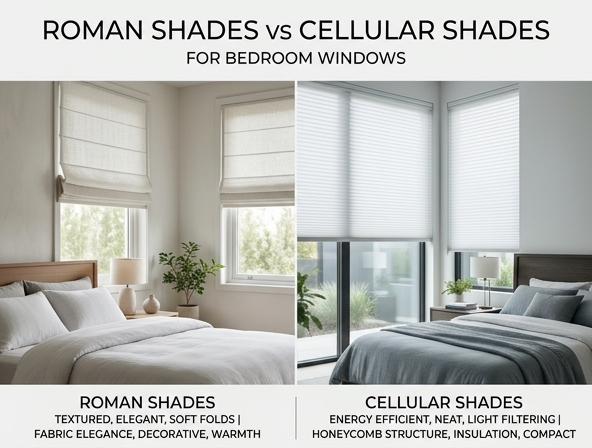
However, achieving this perfect balance requires a key stipulation: your choice must align with your specific climate and aesthetic priorities. For example, the elegant, structured folds of Roman shades deliver a tailored, clean look, whereas the engineered honeycomb cells of cellular shades provide superior thermal insulation. Below, we compare both options across key performance metrics-including light control, energy efficiency, and spatial footprint-to help you select the ideal smart covering for your organized bedroom.
Introduction: The Role of Window Coverings in an Organized Bedroom
Your bedroom is your personal sanctuary, a place where the mind should easily transition from the chaos of daily life into a state of deep, restorative rest. While we often focus on bedding, decluttered nightstands, and calming color palettes to achieve this, the impact of window treatments is frequently underestimated. The right window coverings do far more than block light; they actively control visual noise and define the room's physical boundaries. By choosing window treatments that align with your organizational goals, you can eliminate distracting shadows, streamline the architecture of your windows, and establish a strong sense of mental calm that prepares your mind for sleep.
Understanding Roman Shades: Classic Elegance and Tailored Texture
Roman shades are classic, fabric-based window coverings that fold up gracefully into neat, horizontal pleats when raised. Unlike traditional drapery that can pool on the floor and collect dust, Roman shades offer a structured, tailored look that stays confined to the window frame. They are available in various styles, including flat folds for a clean, modern aesthetic, and soft looped folds that deliver a more traditional, romantic volume. By utilizing beautiful fabrics like linen, cotton, or velvet, Roman shades bring a warm, cozy yet highly orderly texture to the bedroom, softening the hard angles of the room while maintaining a tidy, curated appearance.
Exploring Cellular Shades: Modern Efficiency and Minimalist Lines
Cellular shades, often referred to as honeycomb shades, represent the peak of modern, functional window design. These treatments feature a unique hexagonal cell structure that, when viewed from the side, resembles a honeycomb. When lowered, they display precise, ultra-slim horizontal pleats that stack tightly and discretely at the top of the window when raised. This exceptionally low profile makes them a favorite for minimalist design, as they practically disappear when open. By offering clean, uninterrupted horizontal lines, cellular shades minimize visual distraction and foster a streamlined, distraction-free environment perfect for contemporary bedrooms.
Visual Appeal: Soft Fabric Folds vs. Low-Profile Pleats
The Rich Drapery of Roman Shades
Roman shades focus on fabric presence and visual warmth. When fully lowered, they look like a smooth, elegant fabric panel, and when raised, they form beautiful, deep folds. This fabric-forward design allows them to act as a soft focal point in the bedroom, complementing other textiles like rugs and bedding.
The Architectural Precision of Cellular Shades
In contrast, cellular shades emphasize sharp, architectural lines and a compact structure. Their thin, uniform pleats do not billow or drape, offering a highly disciplined and uniform appearance. They blend seamlessly into the window trim, making them ideal for spaces where the window treatment should support the room's design rather than dominate it.
Space Optimization: Physical Footprint and Cordless Safety
When organizing a bedroom, maximizing physical space and ensuring a safe, uncluttered environment are top priorities. The physical footprint of your window coverings plays a surprising role in how spacious your room feels.
- Inside-Mount Cellular Shades: These fit snugly within the window casing, preserving precious wall space and maintaining a completely flush profile with the surrounding wall.
- Roman Shade Stackback: Because of their thick fabric construction, Roman shades retain a substantial physical stack at the top of the window when raised, which can slightly block natural light and view.
- Cordless Safety Controls: Both options are available in cordless configurations, removing unsightly, tangled cords that present safety hazards for children and pets while instantly decluttering the window's visual field.
Light Control and Privacy for a Restful Sleep Environment
Achieving high-quality sleep requires a bedroom that can transition into complete darkness on demand. Light pollution from streetlights or early morning sun can disrupt your circadian rhythm, making effective light-blocking solutions essential. Both Roman and cellular shades offer excellent light control, but they achieve it through different materials. Roman shades rely on heavy, tightly woven fabrics, which can be enhanced with specialized blackout linings to block light completely while providing total privacy from the outside world.
Cellular shades utilize internal foil layers or specialized opaque non-woven polyester within their cells to achieve blackout status. Because cellular shades fit so tightly inside the window frame, they minimize the light gaps along the edges, offering an exceptionally dark environment. Choosing the right blackout variation ensures your sleeping sanctuary remains dark, private, and perfectly primed for deep sleep.
Climate Control and Noise Reduction: Creating a Sensory Sanctuary
A true sanctuary should engage all the senses, protecting you from both outdoor temperature fluctuations and intrusive neighborhood noise. The physical properties of your window coverings can act as a powerful buffer against these disruptions, helping to maintain a quiet, comfortable sleeping climate year-round.
Cellular shades excel in thermal insulation due to their honeycomb air pockets, which trap air at the window pane and reduce heat transfer. Meanwhile, thick, lined Roman shades provide excellent sound-dampening qualities, absorbing ambient noise with their heavy fabric folds.
Maintenance and Durability: Keeping Your Bedroom Dust-Free
An organized bedroom must also be a clean, healthy space. Window treatments can easily become dust traps if they are difficult to maintain, impacting indoor air quality and triggering allergies. Establishing a simple maintenance routine is key to ensuring long-term durability and cleanliness.
- Dusting and Vacuuming Cellular Shades: Gently use the brush attachment of your vacuum cleaner on a low setting, or use a feather duster to clean inside the pleats regularly.
- Spot Cleaning Honeycomb Fabric: Blot any stains gently with a damp cloth and mild detergent, taking care not to crush or misshape the delicate cell structure.
- Maintaining Roman Shades: Regular light dusting is highly effective. Depending on the fabric type, many Roman shades can also be dry cleaned or carefully steam-cleaned to remove deep-seated allergens.
- Inspecting Operating Mechanisms: Keep cordless mechanisms free of dust and debris to ensure smooth raising and lowering over the lifetime of the shade.
Decision Guide: Roman vs. Cellular Shades Comparison
| Feature | Roman Shades | Cellular Shades |
|---|---|---|
| Aesthetic Style | Classic, soft, fabric-focused, textured | Modern, minimalist, clean, architectural |
| Energy Efficiency | Moderate (dependent on fabric and lining weight) | Excellent (honeycomb cells trap air to insulate) |
| Ease of Cleaning | Varies (often requires dry cleaning or steaming) | Easy (regular dusting or light vacuuming) |
| Light Control | Excellent (achieved with heavy fabrics or blackout linings) | Superb (tight inside-mount reduces edge light gaps) |
Final Verdict: Choosing the Smart Window Covering for Your Space
Selecting the ideal window treatment boils down to prioritizing your personal design aesthetics and functional needs. If your goal is to build a cozy, warm space rich with beautiful fabrics and classic textures, Roman shades offer the tailored elegance you crave. On the other hand, if you are committed to maximizing energy efficiency, minimizing visual clutter, and achieving a sleek, minimalist footprint, cellular shades are the superior choice. Assess your bedroom's layout, evaluate your local climate, and select the option that best supports your vision of a peaceful, organized sleeping sanctuary.
Leave a comment