
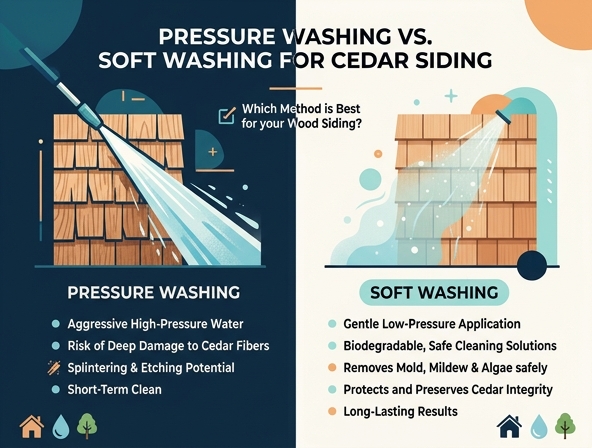
Keeping cedar siding looking pristine is a constant battle for homeowners. Over time, moisture and shade invite unsightly green algae, black mold, and stubborn grime that mar your home's exterior. While it is tempting to blast these eyesores away, cedar's unique composition requires a more calculated approach. Before selecting a cleaning method, we must consider the wood's natural characteristics; maintaining its organic warmth and structural integrity means balancing effective sanitization with delicate material preservation.
Choosing the correct washing method grants you an instantly restored curb appeal while significantly extending the lifespan of your exterior. However, an important educational stipulation remains: cedar is a soft timber, and aggressive techniques can permanently ruin the wood. For example, using excessive pressure easily leads to costly damage like splintering, wood rot, and "fuzzing" of the delicate cedar fibers.
To help you protect your investment, this guide compares high-pressure washing against low-pressure soft washing. We will examine how each method impacts cedar, outline the safest techniques, and help you determine the absolute best approach for your home.
Introduction to Cedar Siding Maintenance
Cedar siding offers an unparalleled rustic charm, warmth, and high-end aesthetic appeal that makes any property stand out. Its natural wood grain patterns and rich color variations provide a classic architectural beauty. However, maintaining this stunning look requires a proactive approach. Regular cleaning is absolutely critical to prevent the accumulation of dirt, organic growth like mold and mildew, wood decay, and unsightly discoloration. Neglecting this maintenance can quickly turn a beautiful investment into a costly renovation project.
Why Cedar Siding Requires Special Care
Cedar is a beautiful wood, but it possesses unique physical characteristics that demand a gentle touch. Unlike synthetic materials, cedar is a softwood, meaning its physical structure is easily compressed, dented, or torn. While it contains natural oils that help resist insects and decay, prolonged exposure to the elements makes it highly susceptible to moisture damage. Standard cleaning methods, which rely on sheer physical force, are far too harsh for cedar's delicate fibers. Treating cedar the same as concrete will inevitably lead to irreversible surface damage.
Understanding High-Pressure Washing
Traditional pressure washing relies on mechanical force to clean surfaces. By pumping water through a narrow nozzle at high pounds per square inch (PSI), it physically strips away built-up grime, peeling paint, and stubborn dirt. This method relies heavily on water velocity rather than chemical agents to achieve results.
While highly effective, high-pressure washing is best suited for hard, non-porous surfaces such as:
- Concrete driveways and sidewalks
- Brick masonry and stone pavers
- Asphalt surfaces
- Sturdy metal fixtures
What is Soft Washing?
Soft washing is a low-pressure alternative designed specifically for delicate exterior surfaces. Instead of blasting contaminants away with high PSI, this method relies on specialized, biodegradable chemical solutions to sanitize and clean delicate surfaces. The water pressure used in soft washing is comparable to a strong garden hose, ensuring that the underlying structure remains entirely unharmed. By combining eco-friendly surfactants and sanitizers, soft washing breaks down organic matter chemically, leaving surfaces clean and sanitized for a longer period than pressure washing alone.
The Hidden Dangers of Pressure Washing Cedar
Using high-pressure water on delicate cedar siding is a recipe for disaster. The intense force of a pressure washer can easily ruin the appearance and structural integrity of the wood. The primary risks of this aggressive cleaning method include:
- Wood gouging and splintering, as high-pressure water can easily carve deep ruts into soft wood.
- Stripped protective finishes, including wood stains, sealants, and natural protective oils.
- Forced water intrusion behind the cedar boards, which can lead to hidden mold growth in the wall cavities.
Why Soft Washing Wins for Cedar Siding
When compared directly, soft washing is the clear winner for maintaining cedar wood. High-pressure washing only removes the surface layer of organic growth, often leaving the root systems of mold and algae intact within the wood pores. Soft washing, on the other hand, targets these organisms at their biological source without damaging the wood.
Soft washing doesn't just clean the wood surface; it sanitizes it by killing mold, mildew, and algae spores at the root level, ensuring a longer-lasting clean without harming delicate wood fibers.
The Safe Cedar Soft Washing Process
Safely soft washing cedar siding requires a systematic approach to protect both the wood and the surrounding environment. This step-by-step process ensures a thorough clean without risking property damage:
- Pre-wetting nearby vegetation and plants to shield them from chemical overspray.
- Applying the specialized, low-pressure sanitizing solution to the siding.
- Allowing the solution to dwell on the wood to break down organic contaminants.
- Performing a low-pressure final rinse with clean water to wash away residue.
Choosing the Right Cleaning Solutions
Using the correct chemical mixture is essential for a successful soft wash. The ideal formula utilizes biodegradable surfactants that act as wetting agents, allowing the cleaning solution to cling to vertical cedar shingles and dissolve dirt. To eliminate mold and mildew spores, a very mild, diluted sodium hypochlorite mix is typically used. This active ingredient targets organic pathogens quickly and breaks down into simple salt and water shortly after application, ensuring it does not accumulate in the soil or harm local landscaping when managed correctly.
- Eco-Friendly Surfactants: These help loosen dirt and organic matter from the wood pores.
- Mild Sodium Hypochlorite Mix: This kills algae and mold spores safely without harming wood fibers.
- Neutralizing Agents: These balance the pH of the wood post-treatment to preserve the natural cedar color.
DIY vs. Hiring a Professional Cedar Cleaner
Deciding whether to tackle cedar cleaning yourself or hire a professional requires balancing cost against potential risks. While a DIY project seems cheaper initially, the cost of renting equipment, buying specialized chemicals, and risking irreversible damage to soft cedar can easily outweigh the upfront savings.
| Aspect | DIY Cedar Cleaning | Professional Cedar Cleaner |
|---|---|---|
| Initial Cost | Lower upfront, but requires renting equipment and purchasing chemicals. | Higher initial service cost. |
| Safety Risks | High risk of ladder falls and exposure to chemical fumes. | Minimized; technicians are trained in safety protocols. |
| Risk of Damage | Very high risk of wood gouging or water intrusion. | Extremely low; backed by commercial insurance. |
| Quality of Results | Variable; relies on consumer-grade products and limited experience. | Superior and longer-lasting clean due to professional-grade sanitizers. |
Final Verdict: Preserving Your Cedar Investment
The choice between pressure washing and soft washing is clear when it comes to delicate wood exteriors. High-pressure washing poses too many physical threats to cedar siding, from gouging soft fibers to forcing water behind the boards. In contrast, soft washing provides a safe, highly effective alternative that sanitizes wood surfaces and eradicates mold and mildew at the root. For long-term wood health, structural integrity, and aesthetic preservation, soft washing is the superior choice.
Protect your home's curb appeal and extend the lifespan of your exterior. Schedule a professional soft wash today to keep your cedar siding looking spectacular and rot-free for years to come.
Leave a comment