
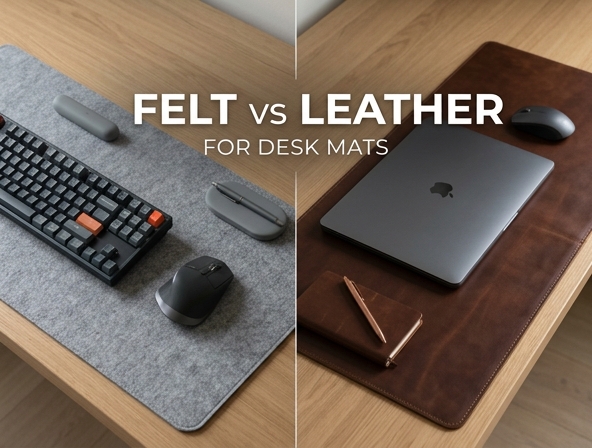
Finding the balance between workspace protection and a premium aesthetic is a constant frustration for professionals striving to curate the perfect work-from-home environment. Before investing in high-end accessories, it is essential to recognize how your desk's physical surface directly dictates daily tactile comfort and overall workflow efficiency.
Selecting the ideal desk mat grants you an immediate upgrade in keyboard acoustics, mouse tracking precision, and wrist support. However, optimizing your desktop requires accepting a key stipulation: no single material is universally superior, as performance depends entirely on your specific work habits.
For example, while premium leather effortlessly resists accidental coffee spills and provides a firm writing surface, textured merino wool felt excels at dampening the echo of clicky mechanical keyboards and preventing laptop slippage.
This ultimate guide contrasts felt and leather across durability, maintenance, ergonomics, and style, helping you select the perfect foundation for your unique home office setup.
Introduction: Elevating Your Workspace Aesthetic
The home office evolution has shifted focus from mere utility to curated aesthetics. As professionals spend hours at their desks, the desk mat has transitioned from an optional accessory to a foundational workspace element. Beyond protecting the underlying desk surface, a quality desk pad anchors the entire setup, defining the workspace while directly impacting daily comfort, keyboard acoustics, and typing strain.
At the heart of desk styling lies a classic debate: felt versus leather. Selecting between these two distinct materials is not just a cosmetic choice. The surface material changes how a computer mouse tracks, how writing feels, and how long the mat will endure the rigors of daily wear and tear. Finding the balance between the soft warmth of felt and the sleek refinement of leather is key to creating an optimal working environment.
Understanding Felt Desk Mats: Softness and Texture
Felt desk mats have surged in popularity due to their distinct tactile warmth and ability to soften industrial desk setups. Unlike hard plastics or metals, felt introduces an organic, textile-rich element to the desktop, making the entire workspace feel more inviting.
These mats are generally manufactured from two distinct material sources, each offering a different balance of luxury and practicality:
- Wool Felt: Made from natural sheep wool, this premium variety is highly breathable, naturally flame-retardant, and biodegradable, offering an authentic, dense fiber structure.
- Synthetic Felt: Typically produced from recycled polyester or acrylic fibers, this option provides a similar look at a lower cost, though it lacks some of the natural elasticity of authentic wool.
Regardless of the fiber source, felt mats are characterized by their visual coziness, excellent sound-dampening properties, and comfortable, soft cushioning for your forearms during long typing sessions.
The Pros and Cons of Felt Desk Mats
Choosing felt brings a specific set of operational trade-offs that every remote professional should consider. While it excels at acoustic dampening, it demands careful handling.
| Advantage | Disadvantage |
|---|---|
| Excellent sound dampening and keyboard noise reduction | High tendency to absorb spilled liquids and stains |
| Soft, warm, and highly comfortable skin-to-surface contact | Susceptible to pilling and fuzzing over time |
| Budget-friendly starting price points | Can slip on smooth wooden or glass desks without a rubber backing |
Exploring Leather Desk Mats: Sleekness and Longevity
Leather desk mats represent a timeless, executive standard for workspace design, offering unmatched durability and structural integrity. They create a smooth, continuous surface that instantly elevates the professionalism of any home office.
To choose the right leather desk mat, understanding the material tiers is essential:
- Full-Grain Leather: The highest quality cut, featuring the natural grain with all its unique imperfections, aging beautifully with a rich patina over years of use.
- Top-Grain Leather: A premium choice that has been slightly sanded to remove imperfections, offering a more uniform appearance and excellent durability.
- Polyurethane (PU) Leather: A synthetic, eco-friendly alternative made from a plastic polymer, providing a similar sleek aesthetic and water resistance without using animal products.
The Pros and Cons of Leather Desk Mats
Leather mats offer incredible utility but come with their own distinct characteristics. Weighing these attributes helps determine if a smooth hide surface aligns with your daily habits.
| Advantage | Disadvantage |
|---|---|
| Exceptionally easy to clean and highly water-resistant | Cool or cold to the touch in winter environments |
| Provides a firm, smooth surface ideal for writing | Higher upfront purchase cost |
| Extremely durable with a long operational lifespan | Susceptible to scratching from sharp objects or metal keychains |
Aesthetic and Style: Matching Your Office Vibe
The Cozy and Minimalist Appeal of Felt
Felt desk mats harmonize perfectly with Scandinavian, cozy, and minimalist interior design languages. The textured gray, charcoal, or pastel tones of felt soften the harsh lines of monitor arms and metal computer stands. It works exceptionally well with light wood desktops, such as birch or oak, creating an inviting, tactile environment that feels less like a corporate cubicle and more like a curated home sanctuary.
The Executive and Professional Polish of Leather
Leather desk mats lean heavily into classic, modern, or executive aesthetics. A rich brown, tan, or black leather pad introduces structured authority and timeless luxury to a workspace. This material acts as a bold anchor on dark walnut or glass desks, complementing metallic computer hardware and premium mechanical keyboards. It exudes professionalism, making it the ideal backdrop for high-profile video meetings.
Performance Battle: Writing, Typing, and Mouse Tracking
Tactile Responsiveness and Mouse Control
When it comes to raw utility, the surface material alters your daily interactions. Felt provides a textured experience that can feel scratchy to some users but offers high tactile feedback. Optical mouse sensors generally track well on high-density felt, though competitive gamers might find the fiber drag slightly restrictive. Leather, especially smooth PU or top-grain, offers a consistent glide with minimal resistance, ensuring flawless sensor precision for precise graphic design or gaming tasks.
Acoustics and Writing Usability
Keyboard enthusiasts heavily favor felt for its acoustic properties, as it dampens high-frequency mechanical switch sounds to produce a deeper, more satisfying thock sound. However, writing on a single sheet of paper placed directly on felt is highly impractical, as the pen tip will easily puncture the paper due to the soft, spongy layer underneath. Leather provides a firm, supportive backing, making it the superior surface for handwriting notes or signing documents smoothly.
Care and Maintenance: Keeping Your Mat Pristine
Routine Care and Spot Cleaning
Longevity is directly tied to maintenance routines, which vary significantly between these materials. Proper care ensures the mats maintain their visual appeal and structural integrity over years of use.
- Vacuum or lint-roll felt mats regularly to remove dust, pet hair, and loose fibers.
- Spot-clean felt using a damp microfiber cloth with mild wool detergent, avoiding rubbing to prevent pilling.
- Wipe leather mats weekly with a dry or lightly damp lint-free cloth to eliminate surface dust.
- Apply a dedicated leather conditioner twice a year to genuine leather mats to keep the hide supple and prevent cracking.
Cost vs. Value: A Long-Term Investment Analysis
Upfront pricing is often a major deciding factor when configuring a home office workspace. Felt options, particularly synthetic variants, are incredibly accessible and allow for low-risk experimentation with desktop layouts. Genuine leather stands on the opposite end of the spectrum, requiring a substantial initial financial commitment.
A premium full-grain leather desk mat should not be viewed as a simple accessory, but rather as a multi-year investment that patinas beautifully, outlasting several synthetic or felt mats that succumb to wear, pilling, or staining.
The Verdict: Choosing the Perfect Mat for Your Setup
Choosing your ideal desk mat comes down to identifying your functional priorities. If you prioritize comfort, physical warmth, and keyboard sound dampening, a high-quality wool felt mat will transform your workspace into a cozy haven. If you value seamless writing surfaces, effortless cleaning, and a timeless, professional appearance, investing in leather is the superior route.
Your environment and working style dictate the best path forward. A designer who sketches on paper will have vastly different needs than an editor who values acoustic silence.
Leave a comment