
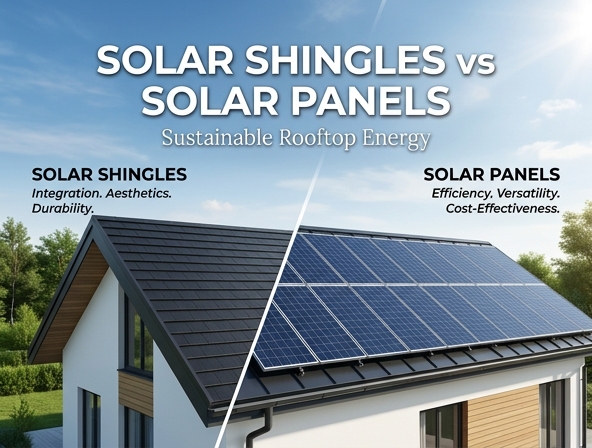
Transitioning to renewable energy often leaves environmentally conscious homeowners torn between maximizing utility savings and preserving their property's curb appeal. Before comparing specific technologies, however, one must evaluate the structural health and remaining lifespan of the existing roof, as this foundation ultimately dictates your project's viability.
Fortunately, embracing rooftop generation grants you immediate insulation from volatile utility rates and secures long-term energy independence. Still, a key stipulation must be made: neither system is a universal cure-all, as performance heavily depends on roof pitch, shading, and local climate. For instance, while integrated options like Tesla Solar Shingles offer a sleek, premium aesthetic, traditional monocrystalline solar panels remain the industry benchmark for raw efficiency and output on complex roofs.
To help you navigate this investment, this guide will analyze solar shingles versus traditional panels across key metrics-including cost, durability, installation complexity, and aesthetics-to determine the best fit for your sustainable home.
The Battle on the Roof: Solar Shingles vs. Solar Panels
As a homeowner looking to lower your carbon footprint and slash monthly utility bills, transitioning to sustainable energy is one of the most exciting investments you can make. Today, the clean energy market is booming, and the choices are more sophisticated than ever. The primary decision no longer centers just on *whether* to go solar, but *how* to do it. The biggest debate currently playing out on rooftops across the country is the clash between sleek, modern solar shingles and traditional, high-performing solar panels.
For decades, bulky silicon grids were the only viable option for harnessing the sun. However, architectural innovations have introduced low-profile solar shingles that integrate directly into your roof. This head-to-head comparison explores the critical differences in aesthetics, cost, performance, and durability to help you find the *perfect green energy match* for your home.
What Are Solar Shingles? The Sleek Newcomer
The Evolution of Building-Integrated Photovoltaics
Solar shingles, also widely known as building-integrated photovoltaics, represent a massive leap forward in solar technology. Unlike traditional systems that mount on top of your existing shingles, these innovative power-generators serve as the actual roof itself. They are designed to mimic the appearance and weight of standard asphalt or slate shingles, meaning they lay completely flat against your roofline.
Each individual shingle contains a small photovoltaic cell that absorbs sunlight and converts it into usable electricity. These cells are wired together beneath the roof deck to route power directly to your home's electrical panel. When you choose this option, you are not just adding an appliance to your roof; you are rebuilding your roof structure with active, clean energy generation built into every square inch.
What Are Solar Panels? The Time-Tested Standard
The Blue and Black Grids of Modern Energy
Traditional solar panels represent the established, highly dependable gold standard of the residential solar industry. These systems consist of large, rectangular silicon panels-either monocrystalline or polycrystalline-that are mounted on top of your existing roof structure using a metal racking system. For decades, they have served as the *backbone of the global shift* toward renewable home energy.
Monocrystalline panels, easily recognized by their dark, uniform look, offer top-tier energy output. Polycrystalline panels, which display a distinct blue tint, offer a slightly more cost-effective alternative. Because they are bolted above the roof rather than acting as a barrier themselves, they function strictly as a power-generating appliance, relying on your existing roof to keep the weather *safely out*.
Efficiency Showdown: Which Generates More Power?
When comparing energy conversion rates, traditional solar panels are the clear winner. Because they are designed solely for optimal energy generation without having to double as construction materials, they can achieve higher efficiency ratings. Understanding the technical nuances shows how both technologies perform under real-world conditions:
- Energy Conversion Rates: Standard solar panels typically convert 18% to 22% of sunlight into electricity. In contrast, solar shingles lag slightly behind, generally averaging between 14% and 18% efficiency.
- Airflow and Cooling: Traditional panels are raised several inches above the roof surface, allowing natural airflow to cool them down. Solar shingles lie flush against the roof deck, trapping heat underneath which can reduce their overall efficiency on hot summer days.
- Positioning and Angle: Mountable panels can be angled precisely toward the sun regardless of your roof's natural pitch. Shingles are locked into the exact slope and direction of your roofline, which limits their capacity to maximize daily exposure.
Curb Appeal: Architectural Integration vs. Bold Utility
The visual impact of your clean energy transition is often the deciding factor for many homeowners. Solar shingles excel in this category by blending seamlessly into your home's existing architecture. They offer a uniform, high-end look that is virtually indistinguishable from a luxury slate or asphalt roof. For homes in historic districts or neighborhoods with strict design guidelines, this low-profile integration is a game-changer.
"The best design is the one you barely notice. Solar shingles allow homeowners to generate clean power without changing the visual identity of their neighborhood."
On the other hand, traditional solar panels present a much bolder utility look. Because they sit on raised racks, they are highly visible from the street. While some homeowners appreciate this modern, *eco-conscious statement*, others find that the bulky frames and exposed wiring detract from their home's natural curb appeal.
Built to Last: Durability, Weather Resistance, and Lifespan
Your roof is your home's first line of defense against the elements, meaning durability is paramount. Because solar shingles function as both a power source and a protective barrier, they are built to be incredibly tough. Most premium solar shingles are made of tempered glass or aerospace-grade polymers, allowing them to withstand heavy impact. They often boast Class 4 hail ratings and wind resistance certifications up to 130 miles per hour, matching or exceeding standard roofing materials.
Traditional solar panels are also highly durable, but they do not protect your roof; instead, they shield the specific areas underneath them. Heavy snow and high winds can put stress on the racking system, though modern mounts are engineered to withstand extreme conditions. In terms of lifespan, panels typically come with a 25-year performance warranty. Solar shingles also feature robust warranties, but because they double as a roof, they often include dual warranties covering both power generation and weatherproofing for up to 30 years.
Installation Process: Roof Replacement vs. Retrofitting
The ease and timing of your installation play a massive role in which system is right for your property. Because the two systems interact with your roof structure in fundamentally different ways, the physical installation process is night and day:
- Solar Shingles (Roof Replacement): Installing solar shingles is a major construction project. It requires tearing away your old roofing material completely down to the deck. Because of this complexity, shingles are highly recommended only if you are already planning a full roof replacement or building a new home.
- Solar Panels (Retrofitting): Traditional panels are far simpler to install because they mount directly onto your current, structurally sound roof. The installation crew simply attaches brackets, runs the wiring, and mounts the panels. This process typically takes only one to two days and does not require touching your existing shingles.
Financial Breakdown: Upfront Costs and Long-Term ROI
Transitioning to solar is a significant financial decision, and the economics of these two options differ vastly. While both qualify for federal and state tax incentives, their initial price points and payback periods are worlds apart. Here is a breakdown of what you can expect financially:
- The Upfront Investment: Solar shingles are a luxury product with a price tag to match. Because they require a complete roof replacement and highly specialized labor, the initial cost is often double or triple that of a standard solar panel installation.
- Long-Term Return on Investment (ROI): Traditional panels provide a much quicker path to net savings. Their lower upfront cost coupled with higher energy efficiency means they typically pay for themselves in 6 to 10 years, compared to 15 to 20 years for solar shingles.
- Combined Value Proposition: If your home already needs a brand-new roof, the financial math changes. Combining the cost of a new standard roof and traditional panels can sometimes approach the cost of a single solar shingle system, making the sleek option much more competitive.
Deciding Factors: When to Choose Shingles vs. Panels
Choosing between these two technologies requires balancing several competing factors. To help simplify your decision, use this quick checklist to see which option aligns best with your home's current status and your personal priorities:
- Choose Solar Shingles if: Your current roof is near the end of its life, you have a flexible budget, your *Homeowners Association (HOA)* has strict visual guidelines, and you prioritize seamless, high-end aesthetics.
- Choose Solar Panels if: Your roof is less than 10 years old, you want the *highest possible energy output*, you want a fast return on investment, and you prefer a quick, non-invasive installation.
The Verdict: Powering Your Sustainable Future
Both solar shingles and solar panels offer exceptional pathways to reduce your carbon footprint, secure energy independence, and hedge against rising utility rates. Your choice relies heavily on where your home is in its lifecycle and how much value you place on architectural design versus raw, cost-effective power generation.
If you are building a new custom home or preparing for a complete roof overhaul, solar shingles offer an elegant, futuristic solution that protects your home while powering it. If your current roof is in great shape and your primary goal is maximizing your monthly utility savings as quickly as possible, traditional solar panels remain the champion of residential clean energy. By choosing the system that fits your home today, you are making a wise, powerful investment in a cleaner tomorrow.

Leave a comment