
Dealing with a slippery, green-stained patio can feel like an endless battle. No matter how often you sweep, stubborn mold and algae seem to reclaim your outdoor living space every spring, leaving unsightly patches that ruin your home's curb appeal. Before reaching for a high-powered pressure washer-which can easily erode joint sand and scar delicate stone-homeowners must consider smarter, less destructive treatment methods.
Selecting the correct agent not only restores your patio's pristine look but also preserves the structural integrity of your masonry. However, it is crucial to understand that different solutions behave uniquely depending on your patio's composition; for instance, highly acidic remedies can permanently etch natural limestone or concrete pavers, while slow-acting commercial surfactants require patience to eradicate deep-seated black mold.
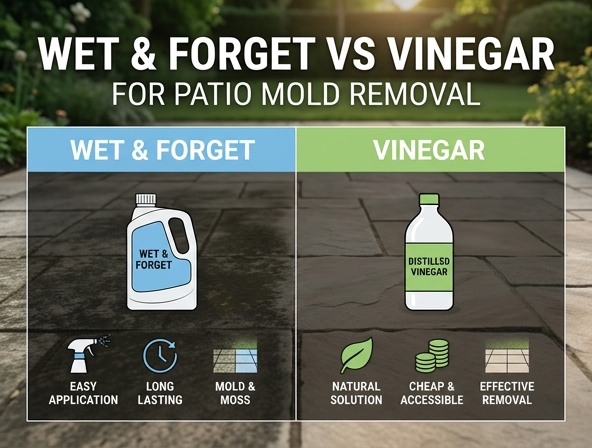
In this guide, we will compare the science, cost-effectiveness, and environmental safety of Wet & Forget versus household vinegar to help you determine the ultimate mold-removal solution for your specific patio.
Introduction: The Battle for a Clean Patio
For many homeowners, the outdoor patio is a sanctuary-a place to unwind, host barbecues, and enjoy the fresh air. However, nature has a way of reclaiming these spaces. Over time, moisture and shade conspire to turn pristine stone, brick, or concrete into a slippery, unsightly canvas of green algae, black mold, and stubborn mildew. Keeping these outdoor surfaces clean can feel like an ongoing, exhausting battle against the elements.
When it comes to restoring the beauty of your outdoor living space, homeowners generally find themselves choosing between two very different cleaning paths. On one side stands Wet & Forget, a highly popular commercial product formulated to eliminate organic growth over time with minimal scrubbing. On the other side is vinegar, a household staple celebrated by DIY enthusiasts as a cheap, natural, and highly accessible alternative. Deciding which solution is right for your patio requires looking closely at how they work, their safety profiles, and their long-term effectiveness.
Why Mold Grows on Patios and the Hazards It Presents
Patios are constantly exposed to the elements, making them prime real estate for biological growth. When rainwater or high humidity combines with shaded areas that receive little direct sunlight, the surface remains damp. Porous materials like concrete, brick, and natural stone absorb this moisture, creating the perfect damp environment for mold spores, mildew, and algae to take root and flourish.
Leaving these growths untreated is more than just a matter of poor curb appeal. Homeowners should address patio mold and algae quickly due to several significant risks:
- Slip Hazards: Algae and mold become incredibly slick when wet, turning your patio into a dangerous slipping zone for family and guests.
- Structural Damage: Over time, the root systems of mold and moss can penetrate porous materials, leading to pitting, cracking, and premature degradation of your patio pavers.
- Allergen Risks: Outdoor mold spores can easily track indoors on shoes or paws, triggering respiratory issues and allergies for sensitive individuals.
- Aesthetic Decline: Dark green and black stains ruin the visual appeal of your outdoor spaces, lowering your pride of ownership and home value.
What is Wet & Forget?
Wet & Forget is a specially formulated, commercial-grade outdoor cleaner designed to eliminate moss, mold, mildew, and algae without the need for intense scrubbing or high-pressure washing. Its active ingredient is alkyl dimethyl benzyl ammonium chloride, a surfactant that breaks down the cellular structure of simple biological growths. This chemical binds to the surface, creating a protective barrier that continues to work long after the initial application.
Unlike traditional bleach-based cleaners that require immediate rinsing and physical scrubbing, this product relies on a spray and leave methodology. Once applied, it works in tandem with natural weather cycles. Wind and rain gently wash away the decaying organic matter over the course of several weeks or even months. Its main selling point is this hands-off, low-labor approach combined with its ability to keep surfaces clean for up to a year or more.
Vinegar: The Natural Cleaning Alternative
For those looking to avoid commercial chemicals, white vinegar stands out as a highly effective, budget-friendly DIY alternative. Readily available in almost every kitchen pantry, vinegar is a natural product that offers an environmentally conscious way to tackle patio grime. It provides a simple, accessible solution without the need for specialized chemical purchases.
The secret to vinegar's cleaning power lies in its acetic acid content. Standard household white vinegar typically contains about five percent acetic acid, which acts as a mild, natural disinfectant. When sprayed onto porous patio surfaces, the acid penetrates the cell walls of mold, mildew, and algae, disrupting their growth and killing the organisms. Because it is highly acidic, it easily breaks down the stubborn organic bonds clinging to stone or concrete, allowing homeowners to wash the residue away with relative ease.
Analyzing Wet & Forget: Pros and Cons
To determine if this commercial solution is right for your home, it is essential to weigh its distinct advantages against its practical drawbacks.
The Pros of Wet & Forget
- Minimal Physical Labor: There is absolutely no scrubbing, scraping, or pressure washing required; you simply spray the diluted solution and walk away.
- Long-Term Prevention: The active ingredients bond to the patio surface, preventing new mold, mildew, and algae from returning for up to a year.
- Safe for Varied Surfaces: It is non-acidic and pH-neutral, meaning it will not damage or etch delicate stones, concrete, or brick.
The Cons of Wet & Forget
- Delayed Results: Because it relies on wind and rain, it can take several weeks to months to see a completely clean patio.
- Chemical Composition: It is a synthetic chemical product, which may not appeal to strictly eco-conscious homeowners.
- Higher Upfront Cost: A bottle of the concentrate is significantly more expensive than standard household cleaning agents.
Analyzing Vinegar: Pros and Cons
While vinegar is a beloved household remedy, it comes with its own set of unique trade-offs that must be considered before application.
The Pros of Vinegar
- Eco-Friendly and Safe: Vinegar is fully biodegradable, non-toxic, and safe to use around children, pets, and most garden landscapes.
- Extremely Cost-Effective: It is highly affordable, and you can buy large gallon jugs for a fraction of the price of commercial cleaners.
- Fast-Acting Results: Vinegar kills mold and algae relatively quickly, allowing you to scrub and rinse the area clean on the very same day.
The Cons of Vinegar
- Risk of Surface Damage: The strong acetic acid can etch, pit, or degrade alkaline stones like limestone, travertine, and concrete if left on too long or used in high concentrations.
- High Physical Labor: To completely clear the dead mold and algae, you must manually scrub the patio surface and rinse it thoroughly.
- Short-Lived Protection: Vinegar does not leave a lasting barrier, meaning mold and algae can easily return within a few weeks if damp conditions persist.
Head-to-Head: Speed of Results vs. Prevention Longevity
When deciding between these two methods, the choice often comes down to immediate gratification versus long-term maintenance. While one solution delivers fast results with active physical effort, the other offers a slow-burn effect that yields a clean patio for many months to come. The table below outlines how these two options stack up against each other across key performance metrics.
| Performance Metric | Wet & Forget | Vinegar (White) |
|---|---|---|
| Time to See Visible Results | Several weeks to months (dependent on weather) | Almost immediate (requires scrubbing/rinsing) |
| Prevention Longevity | 9 to 12 months or longer | Few weeks to a couple of months |
| Physical Effort Required | Very low (spray and walk away) | High (manual scrubbing and rinsing needed) |
| Risk to Porous Stone/Concrete | None (neutral pH formula) | Moderate to High (acidic nature can cause etching) |
Environmental and Safety Considerations
Caring for your patio should not come at the cost of your local environment. Both products have distinct footprints when they wash off into nearby soil and waterways. Understanding these impacts helps ensure you protect your local ecosystem, garden plants, and household animals.
Wet & Forget is a concentrated chemical solution. While it is biodegradable, it poses risks during application. It can harm surrounding garden plants if sprayed directly on foliage, and runoff into aquatic environments must be minimized. Homeowners must keep pets and children off the treated area until it has completely dried. Once dry, however, the product is safe for pets. Conversely, vinegar is incredibly benign for the broader environment, though its high acidity can temporarily lower soil pH and kill nearby delicate plants if splashed. It is exceptionally safe for pets, posing zero toxic residue risks, though they may strongly dislike the pungent aroma.
How to Apply Each Method Effectively
To get the best possible results from either cleaning solution, it is vital to follow the proper application steps and safety protocols.
Applying Wet & Forget
- Choose a cool, dry, windless day when rain is not forecasted for at least four to five hours to prevent the solution from washing away too early.
- Mix one part Wet & Forget concentrate with five parts water in a standard garden pump sprayer.
- Thoroughly saturate the dry patio surface with the mixture, paying close attention to heavily infested areas of mold or algae.
- Leave the solution to dry completely; do not rinse or scrub the surface. Let the wind and rain do the work over the coming weeks.
Applying Vinegar
- Mix a 1:1 solution of white vinegar and warm water in a spray bottle or large bucket. For severe infestations, you can use straight, undiluted white vinegar.
- Generously spray or pour the vinegar solution over the affected patio tiles or pavers.
- Let the solution sit on the surface for thirty minutes to an hour, allowing the acetic acid to break down the organic cells.
- Use a stiff-bristled scrub brush to vigorously scrub away the dead mold, mildew, and algae.
- Rinse the entire area thoroughly with clean water to dilute the residual acid, protecting your stones and nearby soil.
The Verdict: Which is the Best Choice for Your Patio?
Both products offer highly effective, yet fundamentally different, solutions to the persistent problem of patio mold, mildew, and algae. Selecting the right option depends entirely on your immediate needs, physical capability, and ecological values. There is no one-size-fits-all answer, but mapping your priorities to the strengths of each cleaner will yield the best results.
Choose Wet & Forget if you have a large patio area, suffer from recurring mold infestations, and prefer a low-maintenance, hands-off approach. It is also the ideal choice if your patio is made of acid-sensitive stones like limestone, where vinegar could cause irreversible structural damage. The higher upfront cost is offset by its exceptional preventative lifespan and labor-saving nature.
Opt for vinegar if you are working on a tight budget, want immediate results for an upcoming weekend gathering, and prioritize a fully natural, plant-safe, and pet-safe cleaning routine. Just prepare to put in some physical scrubbing power to achieve that spotless finish, and plan for more frequent touch-ups to keep the green stains at bay.
Leave a comment