
Dirty, stained tile joints can make even the most pristine bathroom or kitchen look neglected, defying hours of tedious scrubbing. While traditional tile restoration typically demands the messy, labor-intensive process of scraping out and replacing old mortar, modern homeowners have simpler alternatives.
Fortunately, cosmetic restorers offer a brilliant way to revive your tile's original luster at a fraction of the cost. However, it is important to note that these topical solutions are designed to mask staining and discoloration, rather than repair structurally crumbling or compromised grout lines. Whether you are reviving discolored white subway tile in a high-moisture shower or updating the contrast on a kitchen backsplash, selecting the right tool is vital.
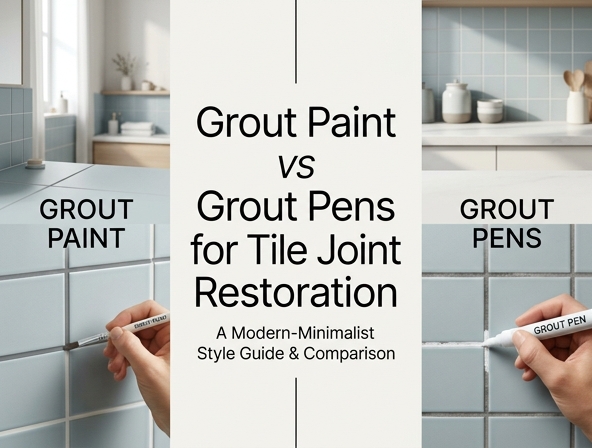
Below, we compare grout paint versus grout pens-evaluating their durability, application ease, and overall finish-to help you choose the best restoration method for your home.
Introduction: The Battle Against Grimy Tile Joints
Few things compromise the beauty of a kitchen or bathroom like discolored, stained tile joints. Over time, moisture, dirt, and soap scum seep into porous surfaces, leaving behind unsightly dark patches that resist standard cleaning agents. Fortunately, you do not need to embark on a dusty, expensive re-grouting project to restore your surfaces. Homeowners can breathe new life into their tiled surfaces using two highly effective DIY methods: grout paint and grout pens. This comprehensive comparison will evaluate both solutions, helping you choose the perfect restoration tool for your specific home improvement needs.
Understanding Grout Paint: Features and Benefits
Grout paint, commonly referred to as grout colorant, is an epoxy- or acrylic-based liquid formula designed to completely coat and seal porous grout lines. Unlike standard wall paint, this specialized product is engineered to sink into the grout, forming a tough shield that actively repels liquids and stains. Typically applied with a small, stiff-bristled brush, it transforms the look of the joint while providing deep-seated protection.
- Creates a highly durable, water-resistant barrier over existing joints.
- Allows for complete color customization, including light shades over dark grout.
- Formulated with epoxy or acrylic to resist mold and mildew growth.
- Fills tiny cracks and imperfections, restoring structural uniformity.
Understanding Grout Pens: Features and Benefits
Grout pens are handy, marker-like applicator tools pre-filled with specialized water-resistant paint or ink. This user-friendly design features a pressurized barrel that dispenses the coloring agent directly through a felt nib. As you glide the nib along the joints, it delivers a clean, controlled line of pigment that instantly masks discoloration, making it incredibly popular for swift touch-ups.
- Unmatched convenience with a simple, grab-and-go marker design.
- Extremely fast drying times, allowing rapid room turnaround.
- Ideal for beginners because it requires no specialized brushes or heavy cleanup.
- Provides a highly precise application that targets only the discolored areas.
Application Process: Brush vs. Nib
Grout Paint Application
Applying grout paint requires a meticulous, detail-oriented approach. Users must work the liquid colorant deep into the joints using a small brush, painting in short strokes. This process demands a clean, thoroughly dry surface beforehand, as any grease or moisture will prevent the paint from bonding. While it takes significant patience, the brush method ensures thorough coverage of deep recessions.
Grout Pen Application
In contrast, using a grout pen is highly intuitive, mimicking the simple motion of drawing with a thick marker. The prep work involves a quick wipe-down, after which you shake the pen, pump the felt nib to start the flow, and trace the lines. It is a fast-paced method that covers long distances quickly, though it may require multiple passes if the grout lines are deep or uneven.
Durability and Lifespan: Which Lasts Longer?
When analyzing longevity, the formulation of the product plays a massive role. Grout paint chemically bonds to the cementitious grout structure, creating a tough, non-porous layer that can withstand years of heavy scrubbing. This robust bond ensures that the finish will not peel or chip easily under intense cleaning regimens.
Grout pen ink, on the other hand, sits primarily on the surface of the joint rather than deeply penetrating it. While it is water-resistant, it is more susceptible to friction and may wear away faster in high-moisture environments like busy walk-in showers. For long-term durability, the brush-on paint is the clear winner.
Precision, Control, and Mess Factor
Precision and control are vital when working in tight corners or on vertical surfaces. Grout pens offer superior handling in these challenging spaces, allowing you to trace vertical walls without gravity causing messy runs or drips. The controlled ink flow ensures the pigment stays exactly where you want it, minimizing waste.
Conversely, liquid grout paint has a higher mess factor. The brush-on technique inevitably results in excess paint overlapping onto the surrounding tiles. This requires you to carefully wipe down the tile faces before the paint cures, a tedious process that demands careful attention to avoid lifting paint from the actual joints.
Cost and Coverage Comparison
Choosing the right option also depends on your budget and the size of your tiled area. While individual units of both products are relatively inexpensive, their coverage-to-cost ratio varies significantly.
| Product Type | Average Price per Unit | Approximate Coverage Area | Best Value For |
|---|---|---|---|
| Grout Paint (Bottle) | $15 - $25 | 200 - 300 square feet | Large, multi-room projects |
| Grout Pen (Single) | $8 - $12 | 30 - 60 linear feet | Small touch-ups and accents |
When to Choose Grout Paint
Grout paint is the superior choice for extensive home improvement projects that require a long-lasting, heavy-duty solution. It is ideal for the following scenarios:
- Large-scale floor tiling projects in high-traffic areas like entryways and kitchens.
- High-moisture bathroom showers and tub surrounds that require heavy scrubbing.
- Instances where a complete and dramatic color transformation is needed, such as turning dark brown grout to crisp white.
When to Choose Grout Pens
Grout pens are the ideal tool when speed, simplicity, and instant results are your main priorities. This option shines in these specific situations:
- Quick cosmetic touch-ups before hosting guests or selling a home.
- Small kitchen backsplashes and bathroom vanity areas.
- Temporary updates for rental properties where you want a clean look without major modifications.
- Low-moisture vertical accent walls where the pigment is not subjected to constant running water and speed is prioritized over maximum durability.
The Verdict: Restoring Your Tile Joints with Confidence
Selecting the ideal solution depends on your project size, budget, and durability expectations. Grout paint offers unmatched longevity and chemical bonding, making it the premier choice for demanding environments and large flooring areas. Meanwhile, grout pens provide unparalleled convenience and rapid application, making them perfect for quick, budget-friendly cosmetic updates on vertical walls and backsplashes. By matching the tool to your specific DIY needs, you can achieve a stunning, professional-grade finish that completely revitalizes your tiled spaces.
Leave a comment