
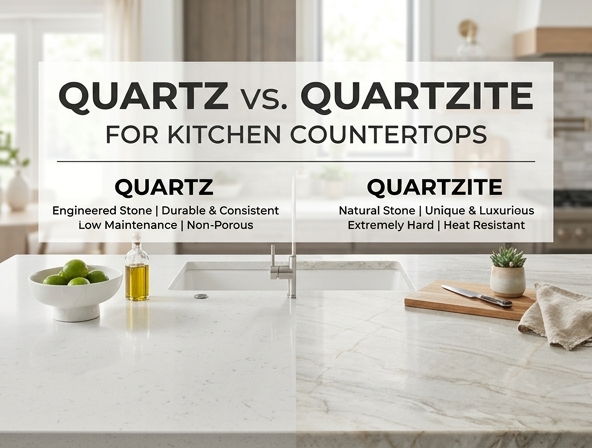
Renovating a kitchen is a major milestone, yet selecting the right countertop surface often leaves homeowners overwhelmed by near-identical names and conflicting advice. Before diving into aesthetic choices, it is crucial to recognize how modern fabrication and mineral sourcing have transformed surface durability in today's market. Making the correct distinction between these materials grants you a lifetime of maintenance ease and protects your home's resale value.
To set proper expectations, we must stipulate a fundamental difference: quartz is an engineered surface made of resin and mineral dust, while quartzite is a 100% natural metamorphic stone. This composition dictates how each handles daily kitchen realities-such as resisting a hot cast-iron skillet or fending off acidic lemon juice spills. Below, we break down their performance, cost, and maintenance profiles to help you select the ideal option for your lifestyle.
Introduction: The Ultimate Kitchen Countertop Showdown
When planning a kitchen remodel, choosing the right countertop material is one of the most significant decisions you will make. Among the most popular premium options on the market today are quartz and quartzite. Despite their very similar names, these two materials are fundamentally different in how they are made, how they perform, and how they look in your home.
The common confusion between quartz and quartzite often leads homeowners to make assumptions that can impact their kitchen's functionality and budget. While one is a manufactured product designed for uniformity and low maintenance, the other is a rare natural stone forged by the Earth itself. This guide is designed to clarify the differences, helping you make an informed choice that matches your design vision and lifestyle.
What is Quartz? The Engineered Marvel
Quartz countertops are not sliced directly from the earth in solid blocks; instead, they are highly engineered, manufactured surfaces. The composition of a modern quartz countertop typically consists of roughly 90 to 94 percent crushed natural quartz crystals, which are then combined with high-quality polymer resins and pigment binders to create an incredibly strong slab.
The manufacturing process involves mixing these raw ingredients, pouring them into a mold, and then compressing them under immense pressure and vacuum. The slabs are then cured in a kiln to lock in their structural integrity. Because they are engineered, manufacturers can control the color, pattern, and consistency. This controlled fabrication process results in a completely non-porous material that resists staining and bacteria without ever requiring chemical sealants.
What is Quartzite? Nature's Metamorphic Masterpiece
Unlike its engineered counterpart, quartzite is a 100 percent natural metamorphic rock. It begins its geological journey as sandstone, a sedimentary rock rich in quartz grains. Over millions of years, tectonic activity subjects this sandstone to intense heat and pressure deep within the Earth's crust.
This natural metamorphic process causes the individual quartz grains to recrystallize and fuse together, forming an incredibly dense and hard interlocking network of crystals. The resulting quartzite slabs are highly durable, boasting a hardness level that surpasses even granite. Miners quarry these massive blocks directly from the earth and slice them into the beautiful, unique slabs that eventually find their way into high-end kitchens.
Aesthetics and Design: Natural Veining vs. Engineered Consistency
The visual distinction between quartz and quartzite is where personal style plays a major role. Quartzite offers the raw, unpredictable beauty of nature. Every slab is entirely unique, displaying sweeping, organic veining and soft, swirling patterns that closely mimic the luxurious look of marble. Because it is a natural stone, quartzite typically comes in earthy tones like white, grey, beige, and occasionally exotic hues of blue, green, or pink, depending on the mineral impurities present during its formation.
Engineered quartz, on the other hand, excels in design consistency and variety. Because pigments and patterns are added during the manufacturing process, quartz can be customized to look like absolutely anything-from industrial concrete to flawless, pure white surfaces. It can also mimic natural marble veining with extreme precision. If you are looking for predictability where the seams in your countertop blend perfectly, engineered quartz is the ideal design solution.

Durability and Heat Resistance: How They Stand Up to Daily Use
In a busy kitchen, durability is paramount. Both materials are incredibly tough, but they react differently to heat, scratches, and everyday impacts. Quartzite is naturally harder than quartz, meaning it has exceptional scratch resistance and can easily withstand hot pots and pans direct from the stove. Quartz, while highly resistant to chipping and scratching due to the flexibility of its resin binders, is vulnerable to thermal shock. Placing a hot pan directly on a quartz surface can melt the resins, leaving permanent burn marks or discoloration.
| Feature | Engineered Quartz | Natural Quartzite |
|---|---|---|
| Scratch Resistance | High (can scratch with extreme force) | Very High (harder than glass and steel) |
| Heat Resistance | Low to Moderate (resins can burn/discolor) | High (withstands hot cookware easily) |
| Impact Resistance | Very High (resins add flexibility) | High (can chip on sharp edges if struck hard) |
Maintenance and Sealing: Easy Care vs. Required Protection
The ongoing maintenance routine of your kitchen countertops can drastically affect your long-term satisfaction. The primary difference here lies in porosity. Because quartz is engineered with resins, it has zero open pores, making it entirely non-porous. Quartzite, while extremely dense, is still a natural stone and possesses minute pores that can absorb liquids if left untreated.
- Quartz Maintenance: Requires absolutely no sealing, ever. It is highly resistant to stains from coffee, wine, and oils, and can be cleaned easily with mild soap and water.
- Quartzite Maintenance: Requires periodic sealing, typically once or twice a year, to prevent liquids from penetrating the surface and causing deep stains.
- Daily Cleaning: Quartz handles almost any standard non-abrasive household cleaner, while quartzite requires pH-neutral cleaners to avoid degrading its protective sealant.
Cost and Installation: Comparing the Financial Investment
Investing in new countertops is a significant financial commitment, and the cost difference between quartz and quartzite can be substantial. Quartz is generally more affordable and predictable in pricing because it is manufactured in standardized sizes, reducing waste. Average quartz installation costs typically range from $60 to $150 per square foot, depending on the brand and design complexity.
Quartzite, being a rare natural material, comes with a higher price tag. The slabs must be quarried, shipped internationally, and custom-cut. Because quartzite is incredibly hard, it requires specialized diamond-tipped tools to cut, which increases fabrication labor. Expect quartzite costs to range from $80 to over $200 per square foot. If you choose an exotic slab with rare coloration, the final price can soar significantly higher than engineered quartz.
Pros and Cons: A Quick Reference Guide
Lifestyle Match: Which Material Fits Your Kitchen Habits?
Before making your final choice, it is vital to evaluate how your household actually uses the kitchen. Your daily habits, cooking styles, and aesthetic preferences should drive this decision.
- The Low-Maintenance Household: If you want a "set-it-and-forget-it" countertop, quartz is your match. It is perfect for busy families with kids where spills are common and immediate cleanup is not always possible.
- The Culinary Enthusiast: If you cook frequently, bake often, and want to place hot pans directly onto the counter without worrying about trivets, natural quartzite is the superior choice.
- The Design Purist: If you crave the prestige of natural stone, demand unique patterns, and appreciate the geological history of your home's surfaces, quartzite is the clear winner despite the extra maintenance.
- The Budget-Conscious Remodeler: If you want to maximize your budget while retaining a premium look and excellent durability, quartz offers more predictable pricing and lower installation costs.
Conclusion: Elevating Your Kitchen with the Perfect Choice
Choosing between quartz and quartzite comes down to balancing your aesthetic desires with your daily habits and budget. Quartz offers unmatched convenience, consistency, and a stain-resistant surface that stands up to a busy household without any extra maintenance. Quartzite delivers unmatched, raw natural beauty, heirloom durability, and exceptional heat resistance for those willing to invest a bit more time and money into their kitchen.
By understanding how each material is made and how it performs under pressure, you can confidently select the slab that will elevate your home's value and bring joy to your culinary space for decades to come. Ready to find the perfect slab for your kitchen remodel? You can explore local suppliers and connect with a certified countertop fabricator today to take the next step in bringing your vision to life.
Leave a comment