
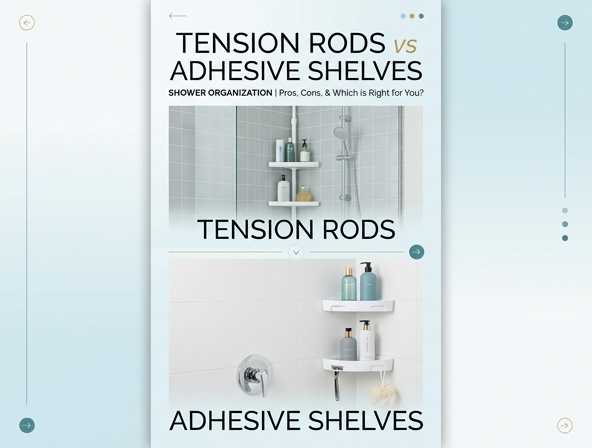
Dealing with cluttered shower corners and precarious pyramids of slipping shampoo bottles is a daily frustration for many homeowners and renters. Before resigning yourself to a cramped bathing space, it is crucial to first analyze your bathroom's specific layout and surface materials. Selecting the right damage-free organizing system not only maximizes your vertical storage but also safeguards your tile and grout from permanent damage. However, a key stipulation remains: the performance of these tools is strictly dependent on your wall texture and moisture levels. While heavy, liter-sized shampoo bottles require robust, load-bearing support, lightweight loofahs and bar soaps have much simpler structural demands. In this guide, we will compare tension rods and adhesive shelves across installation complexity, weight capacity, and long-term durability to help you select the ideal storage solution for your daily routine.
Introduction: The Battle for Shower Space
Every morning, millions of people step into the shower only to engage in a clumsy dance with falling shampoo bottles, slippery soap bars, and overcrowded ledges. Finding the perfect balance between accessibility and neatness is a constant struggle. When it comes to conquering this daily clutter, two main contenders dominate the market: the classic, adjustable tension rod and the sleek, modern adhesive shelf.
Each solution promises to transform your chaotic bathing area into an organized sanctuary. However, choosing the right system depends heavily on your bathroom layout, wall surface, and tolerance for DIY projects. Let us dive deep into this organization battle to help you claim victory over your shower clutter once and for all.
What Are Shower Tension Rods?
Shower tension rods are versatile, pole-like structures designed to fit snugly between two opposing walls without the need for drilling or permanent fasteners. They utilize horizontal pressure to remain securely suspended, stretching across the shower enclosure to create an instant hanging zone.
Tension Rod Storage Mechanisms
These rods generally function through one of two primary mechanical systems to maintain their grip:
- Spring-loaded mechanisms, which use an internal compressed spring to push outward against the walls.
- Screw-tension systems, which rely on threaded internal pipes that expand in length as you twist them, locking tightly in place.
Once secured, these rods are paired with hanging hooks, specialized caddies, or mesh baskets to hold body washes, loofahs, and shaving creams within arm's reach.
The Pros and Cons of Tension Rod Storage
Tension rods offer unique advantages for dynamic households, though they are not without some distinct drawbacks.
- Ease of Relocation: You can quickly move, raise, or lower the rod without leaving any marks behind.
- High Adjustability: They expand or contract to fit various shower widths effortlessly.
- Slipping Risks: Wet environments and heavy bottles can cause the rubber end caps to lose traction, leading to sudden collapses.
- Aesthetic Impact: While highly functional, a metallic or plastic rod stretching across the shower can interrupt clean design lines and look somewhat cluttered.
What Are Adhesive Shower Shelves?
Adhesive shower shelves are individual storage trays or baskets that mount directly to the flat surface of your shower walls. Unlike free-standing units, these shelves sit flush against your tiles, maximizing the physical space available inside the tub or stall.
Types of Shower Adhesives
These modern storage solutions rely on specialized mounting technologies to bond with smooth surfaces like ceramic, glass, or acrylic. The two most common options are heavy-duty suction cups, which create a vacuum seal, and waterproof silicone glue strips that chemically adhere to the tile face.
The Pros and Cons of Adhesive Shelves
Adhesive shelves have surged in popularity, but it is important to understand their long-term behavior in wet zones.
- Weight Limits: Premium adhesive strips can support significant weight, often holding multiple large bottles without budging.
- Modern Aesthetics: These shelves offer a floating appearance, blending seamlessly with contemporary bathroom decors.
- Wall Damage Risks: Removing strong glue strips can sometimes crack cheap tiles or pull off paint if installed incorrectly.
- Permanent Placement: Once the adhesive cures, relocating the shelf requires completely replacing the sticky backing.
Installation Showdown: Setup and Effort
The experience of setting up your new storage organizer varies wildly between these two options. Tension rods offer immediate gratification, requiring zero tools and only a few seconds to twist into place. Conversely, adhesive shelves require meticulous surface preparation and a mandatory curing window before they can bear any load.
| Feature | Tension Rods | Adhesive Shelves |
|---|---|---|
| Installation Time | Under 2 minutes | 24 to 48 hours curing time |
| Tools Required | None | Alcohol wipes and leveling tool |
| Surface Preparation | Minimal wipe down | Thorough cleaning and drying |
Durability Showdown: Weight Capacity and Longevity
When evaluated over months of daily use, humidity and steam become the ultimate tests of physical endurance. Standard spring-loaded tension rods can weaken over time as the internal metal springs succumb to moisture, occasionally causing the entire apparatus to slip. Furthermore, excessive weight from heavy liter-sized shampoo bottles can accelerate this physical decline.
On the other hand, high-quality adhesive strips perform remarkably well in humid conditions, provided they were applied to a bone-dry surface during setup. Simple suction cups, however, are notorious for losing their vacuum seal when temperature fluctuations cause the air inside the cup to expand and contract. For long-term heavy-duty storage, a properly cured acrylic glue strip easily outlasts its competitors.
Rental-Friendliness: Damage and Removal
For those living in leased apartments, preserving the integrity of the bathroom walls is paramount to securing a full deposit return. Tension rods represent the holy grail of rental-friendly design, leaving absolutely no trace of their presence once unscrewed and packed away.
While adhesive shelves look beautiful, removing them can be a stressful endeavor. Strong adhesives often leave behind a stubborn, sticky residue that requires chemical solvents to dissolve, and hasty removal can chip fragile ceramic tiles or peel away drywall paper.
Best Use Cases: Which One Should You Choose?
To help streamline your decision, follow this straightforward guide to match your unique bathroom setup with the ideal organizer:
- Choose tension rods if you are a renter who needs to avoid wall modifications entirely.
- Choose tension rods for shared family bathrooms where frequent height adjustments are necessary.
- Choose adhesive shelves if you prefer a minimalist aesthetic that keeps your shower looking modern.
- Choose adhesive shelves to support heavy shampoo bottles on stable, non-porous tiled walls.
The Verdict: Decluttering Your Shower
In the end, neither storage system is universally superior; instead, each excels in distinct scenarios. If your priority is quick installation and zero risk of wall damage, the classic tension rod is your best bet. If you favor a sleek look and require a heavy weight capacity, investing the time to install adhesive shelves yields a more durable and visually pleasing result.
By assessing your wall type, rental agreement, and daily storage needs, you can select the perfect option and enjoy a completely clutter-free bathing experience.
Leave a comment