
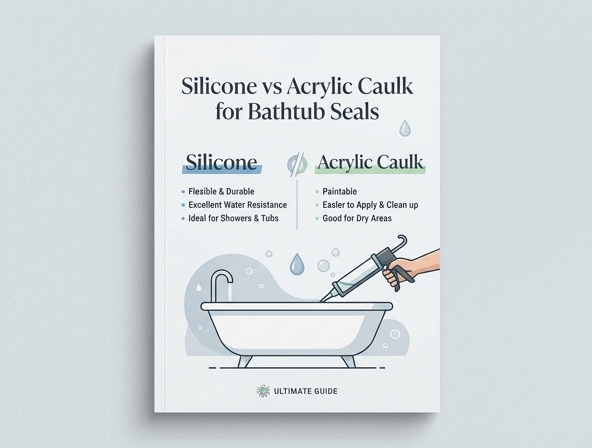
Few things are as frustrating to a homeowner as watching a bathtub's seal discolor, peel, or succumb to persistent black mold, threatening unseen water damage behind the walls. This common failure typically stems from the intense thermal expansion and constant moisture exposure unique to wet areas, which puts immense stress on joint seals over time.
Selecting the correct sealant grants you long-term peace of mind and prevents costly structural repairs. However, it is important to stipulate that the ideal choice depends heavily on your application expertise and specific project budget, as no single product fits every scenario. For instance, sealing high-moisture zones like tub-to-tile joints requires vastly different material properties than filling low-movement gaps around vanity baseboards.
In this guide, we will analyze the performance, lifespan, and application differences between silicone and acrylic caulk, equipping you to choose the perfect seal for your bathtub installation.
Introduction: Why Your Bathtub Seal Matters
Every time you take a shower or draw a bath, a silent hero works tirelessly behind the scenes to protect your home. That hero is the thin bead of caulk running along the edge of your bathtub. Without a proper seal, water easily seeps behind walls and beneath flooring, leading to structural rot, costly repairs, and dangerous mold growth. Choosing the right material for this barrier is crucial to maintaining a dry, healthy home.
When selecting a sealant, homeowners and DIY enthusiasts inevitably face a classic debate: silicone vs. acrylic caulk. Both materials serve as protective barriers, yet they possess vastly different chemical properties, application methods, and performance lifespans. Understanding these differences is the key to safeguarding your bathroom against water damage for years to come.
Understanding Silicone Caulk: The Heavy-Duty Protector
Silicone caulk is widely regarded as the gold standard for sealing high-moisture environments. Made from premium silicone polymers, this material is completely non-porous and naturally repels water. Its chemical makeup allows it to remain highly stable across wide temperature ranges, ensuring it does not degrade under hot shower water or cold drafts.
The primary advantage of silicone lies in its physical properties, which make it ideal for bathroom fixtures:
- Exceptional Waterproofing: It forms an impermeable barrier that completely blocks water from penetrating joints.
- Extreme Flexibility: It can stretch and compress up to twenty-five percent or more without tearing.
- High Resilience: It resists shrinking, cracking, and crumbling over decades of exposure.
Exploring Acrylic Caulk: The Easy-to-Use Alternative
Acrylic caulk, often referred to as latex caulk or painter's caulk, is a water-based sealant favored for its incredible ease of use. Unlike heavy-duty synthetic formulas, acrylic caulk goes on smoothly, requires minimal effort to tool, and emits very little odor during application. This makes it a popular choice for beginners and quick repair projects around the house.
While often modified with silicone additives to improve water resistance, pure acrylic caulk serves several distinct functions:
- It dries rapidly, allowing for faster project completion times.
- It cleans up easily with plain warm water and soap before it cures.
- It fills small gaps around baseboards, trim, moldings, and low-moisture areas perfectly.
Flexibility and Durability: Which Holds Up Better?
The Impact of Structural Movement
Bathtubs undergo significant stress every time they are filled with water and occupied by a person. This weight causes subtle settling and movement. Additionally, seasonal temperature shifts cause the surrounding tile, wood, and drywall to expand and contract. To maintain a seal, the caulk must flex dynamically along with these movements.
Comparing the Physical Performance
Silicone remains highly elastic throughout its entire lifespan. Even under heavy stress, it stretches like rubber and pulls back to its original shape. Acrylic caulk, on the other hand, is much more rigid. Over time, the repeated cycle of expansion and contraction can cause acrylic to dry out, harden, and eventually pull away from the bathtub surface, leaving behind gaps, cracks, and failed joints that welcome water infiltration.
Water Resistance and Mold Prevention
Fighting Constant Bathroom Moisture
Bathrooms are hotbeds for humidity, steam, and direct water spraying. A successful tub seal must repel standing water continuously without absorbing a single drop. Silicone is naturally hydrophobic, meaning it repels water completely, making it virtually impervious to moisture damage. Acrylic is water-based, meaning it can absorb moisture over time if subjected to standing water, which weakens its bond.
Preventing Mold and Mildew
Because silicone does not absorb water, mold spores have a much harder time finding a foothold on its surface. Most high-quality kitchen and bath silicone sealants are also infused with fungicides and mold inhibitors that actively prevent black mold growth. Acrylic caulk, because of its porous nature when cured, can trap organic matter and moisture, making it highly susceptible to unsightly mold colonization if not treated regularly.
Application and Cleanup: DIY Friendliness Compared
Applying caulk is a skill, and the material you choose plays a massive role in your project's ease of execution. Acrylic caulk is famously user-friendly. It flows smoothly out of the tube, is easy to smooth down with a wet finger, and can be cleaned up using nothing more than warm water and a rag. If you make a mistake, you can easily wipe it away and start over.
Silicone caulk is notoriously difficult for beginners. It has a sticky, thick consistency that clings to fingers and tools. Tooling a clean line requires patience, steady hands, and often a specialized smoothing tool. Because it is completely waterproof, you cannot clean it up with water; you must use mineral spirits or chemical solvents to clean your tools and hands before the caulk cures.
The Paintability Factor
If your bathroom design features custom wall colors or unique accent tiles, you must consider whether your sealant needs to match the paint. Standard acrylic caulk is fully paintable once cured. It bonds exceptionally well with latex and oil-based paints, allowing you to seamlessly blend the transition between your walls, trim, and tub fixtures for a uniform appearance.
In stark contrast, pure silicone caulk is completely non-paintable. Due to its slick, hydrophobic properties, paint will bead up, slide off, or crack immediately upon application. If you must use silicone but want a specific color, you must purchase pre-tinted silicone caulk-commonly available in white, clear, almond, and gray-or opt for a hybrid siliconized-acrylic formula that offers paintability alongside improved water resistance.
Lifespan and Maintenance Demands
While the initial application process varies in difficulty, the long-term maintenance demands are where these two materials truly diverge. Investing time and effort into a durable sealant pays off by reducing the frequency of tedious recaulking chores down the road.
| Feature | Silicone Caulk | Acrylic Caulk |
|---|---|---|
| Average Lifespan | 10 to 20+ Years | 3 to 5 Years |
| Maintenance Level | Low (occasional wipe down) | Moderate to High (scrubbing/replacing) |
| Shrinkage Resistance | Excellent (does not shrink) | Poor (shrinks as water evaporates) |
Decision Guide: When to Choose Which Caulk
Selecting the right sealant depends heavily on your specific project needs, your personal comfort level with DIY tasks, and how long you want the seal to last. Use this quick reference guide to make your decision:
- Choose Silicone If: You are sealing a high-use bathtub, shower stall, or sink basin where water exposure is constant, and you want a long-lasting, mold-resistant barrier that will not crack over time.
- Choose Acrylic If: You are sealing dry trim, crown molding, baseboards, or low-moisture areas where paintability is required, or if you are a beginner looking for an easy, forgiving application process.
- Choose Siliconized Acrylic If: You want a middle-ground solution that is easier to apply than pure silicone but offers better flexibility and moisture resistance than pure acrylic.
Conclusion: Sealing the Deal on Your Bathroom Project
Protecting your bathroom from water damage requires choosing the correct tool for the job. While acrylic caulk offers unmatched ease of use, simple water cleanup, and excellent paintability, it simply lacks the long-term flexibility and water resistance required for areas directly exposed to heavy moisture.
For a durable, watertight, and mold-resistant barrier around your bathtub, silicone caulk is the superior choice. Though it demands more patience and effort to apply and clean up, the investment pays off in decades of reliable protection. Taking the time to properly prep your surfaces and carefully apply a high-quality silicone bead will ensure a professional-grade, beautiful finish that stands the test of time.
Leave a comment