
Finding the perfect balance between environmental responsibility and everyday durability is a notorious challenge for eco-conscious homeowners. Too often, choosing sustainable building materials feels like a compromise on aesthetics or longevity.
To navigate this decision, we must first look at how modern green architecture integrates renewable resources into high-traffic living spaces. Investing in premium sustainable flooring grants you more than just peace of mind; it delivers exceptional indoor air quality, natural thermal efficiency, and lasting property value.
However, we must stipulate that "eco-friendly" does not mean identical performance. For example, while strand-woven bamboo boasts a tensile strength that rivals steel, cellular cork offers unmatched sound dampening and cushion underfoot. Each material serves distinct lifestyle needs.
In this comprehensive comparison, we will analyze bamboo and cork across crucial categories-including durability, moisture resistance, maintenance, and cost-to help you make an informed investment for your home.
Introduction: The Green Flooring Dilemma
The modern eco-friendly home is no longer just a trend; it is a conscious commitment to sustainable living. As homeowners and builders actively seek materials that reduce environmental impact without sacrificing style, flooring has become a major focal point. Among the top contenders in this green revolution, two natural options stand out: bamboo and cork.
Both materials offer an elegant alternative to traditional hardwoods, yet they present vastly different physical properties, aesthetics, and performance benefits. Choosing between them requires a careful look at how these innovative surfaces are made, how they perform under pressure, and how they contribute to a healthier planet. Selecting the right sustainable floor means balancing natural beauty with the everyday demands of your household.
Understanding Bamboo Flooring: Strength and Style
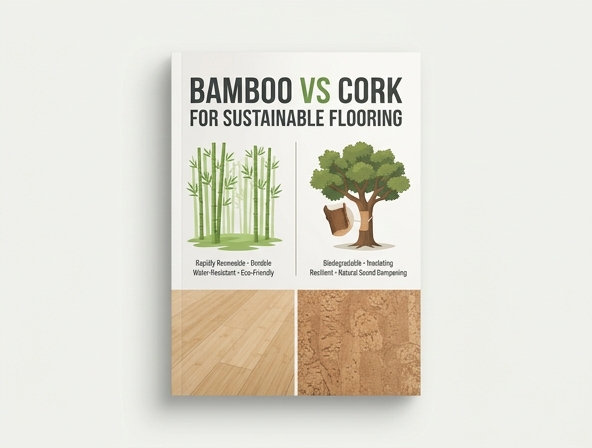
Bamboo is not actually wood; it is a fast-growing woody grass. This unique botanical classification allows it to regenerate rapidly, making it an exceptionally renewable raw material for contemporary interiors.
The Manufacturing Process
To turn this hollow grass into solid planks, manufacturers slice the raw stalks into strips, boil them to remove sugars, and dry them. From there, they are processed into three distinct construction types:
- Strand-Woven: Bamboo fibers are shredded, mixed with eco-friendly adhesives, and compressed under extreme heat and pressure to create highly dense, incredibly durable planks.
- Horizontal: Sliced strips are laid flat and laminated together, showcasing the characteristic growth rings and "knuckles" of the bamboo stalk.
- Vertical: Strips are stood on edge and glued side-by-side, creating a sleek, contemporary, and uniform linear grain pattern.
Aesthetic Appeal
With its clean lines and minimalist aesthetic, bamboo flooring fits seamlessly into modern, Scandinavian, and mid-century home designs. It is available in its natural light blonde coloration, caramelized tones achieved through heat treatment, or stained varieties to mimic exotic hardwoods.
Demystifying Cork Flooring: Natural Comfort Underfoot
Cork flooring is derived from the bark of the cork oak tree (Quercus suber), a species native to the Mediterranean basin. Unlike standard lumber, harvesting cork does not require cutting down the tree. Instead, skilled workers carefully strip away the outer bark, leaving the tree fully intact to regenerate a new outer layer over the next decade.
The remarkable performance of cork lies in its cellular makeup. At a microscopic level, cork consists of millions of tiny, air-filled honeycomb cells. This structure functions as a natural cushion, giving the floor a distinct, comfortable springiness underfoot. Its visual style is equally unique, displaying organic, variegated patterns, earthy textures, and a warm, inviting color palette that brings the soothing qualities of the outdoors inside.
Environmental Impact: Harvest Cycles and Renewability
When assessing ecological footprints, both bamboo and cork excel compared to traditional hardwoods, which can take 50 to 100 years to mature. However, their harvest cycles and production methods differ significantly.
Bamboo is one of the fastest-growing plants on Earth, reaching full maturity for structural harvesting in just 5 years. Once cut, the root system remains alive, allowing new shoots to grow immediately without replanting.
Cork offers a different, highly valuable ecological benefit. The bark is harvested in cycles of 9 years, and a cork oak tree can live for more than two centuries. The harvesting process actually stimulates the tree's natural carbon absorption capabilities.
Durability Showdown: Janka Hardness and Wear Resistance
The longevity of your flooring depends largely on how well it resists dents, scratches, and physical wear. Testing these materials reveals a sharp contrast in structural density and resilience.
| Flooring Material | Janka Hardness Rating (LBF) | Best Rooms for Installation | Weaknesses |
|---|---|---|---|
| Strand-Woven Bamboo | 3,000+ (Very Hard) | Hallways, Living Rooms, High-Traffic Areas | Prone to surface scratching if not sealed properly |
| Horizontal/Vertical Bamboo | 1,100 - 1,400 (Moderate) | Bedrooms, Home Offices | Can dent under heavy furniture impacts |
| Cork Flooring | 200 - 300 (Soft/Pliable) | Kitchens, Bedrooms, Playrooms | Susceptible to punctures and tears from sharp objects |
While strand-woven bamboo is incredibly rigid and scratch-resistant, cork operates on a different principle of durability. Cork is highly pliable; its air-filled cells compress under weight and naturally bounce back, giving it a self-healing quality against minor furniture indentations. However, sharp objects like high heels, dog claws, or dropped knives can tear or puncture cork much more easily than dense bamboo.
Comfort, Warmth, and Acoustic Performance
How a floor feels and sounds affects the daily atmosphere of your home. Each material offers a completely different sensory experience.
The Tactile Experience
Walking on bamboo is very similar to walking on traditional oak or maple. It offers a solid, unyielding surface that feels cool to the touch. It provides the firm, classic luxury feel associated with premium hardwood flooring.
Insulation and Sound Absorption
Cork excels when it comes to structural comfort. Thanks to its millions of microscopic air pockets, cork behaves as a natural thermal insulator. It feels warm under barefoot contact, even during the coldest winter months. Acoustically, cork is a superior sound dampener, significantly reducing impact noise from footsteps and dropping objects, making it highly beneficial for upper-level rooms, nurseries, and busy multi-story homes.
Moisture Resistance and Humidity Tolerance
Water is the primary enemy of natural flooring, and managing moisture exposure is vital to preventing swelling, cupping, or mold growth.
Bamboo is moderately sensitive to moisture. In humid environments or when exposed to standing water, bamboo planks can swell and warp. If you plan to install bamboo in a kitchen or half-bath, applying a high-quality polyurethane sealant immediately after installation is crucial to protect the joints from liquid penetration.
Cork contains a natural, waxy substance called suberin, which inherently resists moisture, mold, rot, and pests. While cork planks can tolerate spills better than bamboo, their core material is typically made of high-density fiberboard (HDF), which can still swell if water seeps into the seams. Therefore, cork floors installed in kitchens or bathrooms must be meticulously sealed to lock out moisture.
Installation Methods and Daily Maintenance
Both flooring types are diy-friendly but require precise subfloor preparation and regular care to maintain their pristine appearance.
Installation Techniques
- Click-Lock (Floating): Standard for both cork and engineered bamboo. Planks lock together easily over an underlayment without glue, making installation fast and accessible.
- Glue-Down: Commonly used for solid bamboo and solid cork tiles. This method creates a highly stable, permanent bond, which is ideal for high-traffic zones.
Cleaning and Maintenance Guide
Keeping these eco-friendly surfaces clean requires minimal effort, provided you avoid harsh chemicals and excessive water usage:
- Sweep or vacuum regularly using a soft brush attachment to remove abrasive dirt and grit.
- Damp-mop only with a pH-neutral cleaner designed specifically for wood or natural surfaces; never soak the floor.
- Place protective felt pads under all heavy furniture legs to prevent scratching or deep indentations.
- Keep pet nails trimmed to protect the protective surface finish from scratching.
Cost Analysis: Initial Investment vs. Lifespan Value
Budget is always a major factor when choosing building materials. Both bamboo and cork are cost-effective when compared to high-end solid hardwoods, but their long-term value scales differently depending on quality.
High-quality strand-woven bamboo ranges from $3 to $8 per square foot for materials, with installation adding another $3 to $6 per square foot. Given its immense hardness, a well-maintained bamboo floor can easily last between 30 to 50 years, especially if it is thick enough to be refinished in the future.
Cork flooring generally ranges from $4 to $9 per square foot for materials, and professional installation costs between $4 to $8 per square foot. Because cork is softer, it has an average lifespan of 25 to 40 years. To maximize this value, the floor must be resealed every few years to keep the protective wear layer intact.
The Verdict: Choosing the Best Option for Your Home
To choose the ideal surface for your home, you must weigh your aesthetic preferences against the physical realities of your daily household activity.
Consider Bamboo Flooring If:
- You have active pets, young children, and high-foot-traffic areas that require maximum scratch and dent resistance.
- You prefer a sleek, modern, linear aesthetic reminiscent of high-end traditional hardwoods.
- You want a long-term investment that can withstand heavy daily abuse for decades.
Consider Cork Flooring If:
- You prioritize physical comfort, joint relief, and a soft surface for standing or playing on the floor.
- You need excellent acoustic dampening to reduce noise transfer between floors.
- You love warm, earthy, textured patterns that emphasize natural organic design.
By evaluating these priorities, you can select the perfect sustainable surface that balances daily durability with the natural aesthetic you desire for your home.
Leave a comment