
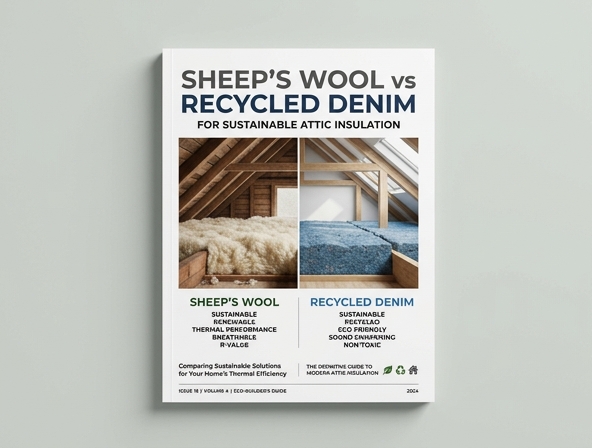
Homeowners committed to reducing their carbon footprint often struggle to balance environmental ethics with actual thermal performance. Selecting the right sustainable attic insulation can feel like an overwhelming compromise between green credentials and real-world home comfort.
Before evaluating specific natural materials, it is important to recognize how traditional fiberglass, despite its ubiquity, poses handling hazards and lacks end-of-life sustainability. Transitioning away from synthetic options grants homeowners a healthier living environment alongside significant long-term energy savings.
However, we must stipulate that "sustainable" is not a one-size-fits-all metric. For instance, while sheep's wool naturally manages moisture and retains its R-3.8 per inch thermal efficiency even when wet, recycled denim (offering roughly R-3.7 per inch) requires careful vapor barrier planning in high-humidity zones.
This article will compare sheep's wool and recycled denim across cost, installation safety, and climate compatibility, providing a clear roadmap to help you make an informed investment for your attic.
Introduction: The Rise of Sustainable Attic Insulation
As homeowners seek ways to lower their carbon footprints, green home improvement has moved from a niche trend to a mainstream priority. The attic, as the primary source of residential heat loss and gain, represents the most critical area for energy conservation. Standard fiberglass and spray foam insulations are increasingly being questioned due to their manufacturing emissions and potential health hazards. Consequently, two powerful natural alternatives have emerged as frontrunners in the eco-friendly market: sheep's wool and recycled denim. Choosing between these materials involves looking closely at performance, safety, and ecological impact to determine the ideal shield for your living space.
Opting for sustainable insulation is not just about environmental stewardship; it is also about creating a healthier indoor environment. Traditional insulation materials can release micro-fibers and volatile organic compounds (VOCs) into your home air supply. By contrast, sheep's wool and recycled denim offer excellent thermal protection while remaining completely safe to touch and breathe. Investing in high-quality, eco-friendly attic insulation acts as a double victory by lowering your monthly utility bills while safeguarding the planet.
Understanding Sheep's Wool Insulation: Nature's Thermal Shield
Sheep's wool insulation is made from raw wool sheared from sheep, which is then washed, treated, and carded into thick, lofty batts or loose-fill blow-in insulation. This material leverages millions of years of evolutionary design, providing animals with temperature regulation in extreme cold and scorching heat. Because it is a natural fiber, it offers unique physical structures that artificial materials struggle to replicate.
The secret to its outstanding performance lies in its structural characteristics:
- Natural crimp: The individual wool fibers have a natural wave or "crimp" that creates millions of tiny, microscopic air pockets that trap air and resist heat transfer.
- Elasticity and resilience: Wool fibers can be compressed and will naturally bounce back to their original shape, ensuring the insulation does not pack down or lose its loft over time.
- Keratin composition: Wool is composed of keratin, a natural protein that does not support combustion and actively absorbs harmful airborne chemicals.
Understanding Recycled Denim Insulation: Blue Jeans Reborn
Recycled denim insulation, often referred to as cotton insulation, is manufactured primarily from post-industrial denim scraps. When blue jeans and other cotton garments are manufactured, significant textile waste is generated. Instead of sending these clean scraps to landfills, manufacturers shred the cotton fabrics back into their raw, fibrous form. These fibers are then blended with a small percentage of polyolefin fibers to provide structure and loft, resulting in thick, plush insulation blankets.
Denim insulation appeals to eco-conscious homeowners for several key reasons:
- Diverts landfill waste: This insulation directly rescues clean, unused cotton manufacturing waste and repurposes it into a long-term home asset.
- Completely itch-free: Unlike traditional fiberglass, denim contains no glass fibers, meaning it is incredibly soft and comfortable to handle.
- Zero off-gassing: Cotton denim insulation contains no formaldehydes or chemical binders, which ensures that it will not release toxic fumes into your attic and living areas.
Thermal Performance: Comparing R-Values
The fundamental metric for evaluating any insulation material is its R-value, which measures its resistance to conductive heat flow. The higher the R-value per inch, the better the material prevents heat from escaping your home in the winter and entering during the summer. While both materials perform exceptionally well compared to traditional fiberglass, they achieve their thermal resistance through different structural means.
| Insulation Material | R-Value per Inch | Primary Thermal Benefit |
|---|---|---|
| Sheep's Wool | R-3.5 to R-3.8 | Maintains performance even when damp; high thermal mass. |
| Recycled Denim | R-3.7 to R-4.0 | Dense fiber structure blocks drafts and reduces air infiltration. |
While recycled denim holds a very slight edge in raw R-value per inch due to its high density, sheep's wool provides superior dynamic thermal performance. The natural crimp of wool allows it to hold its shape indefinitely, whereas denim can settle slightly if exposed to severe vibration or moisture over several decades. Both options easily meet modern building codes when installed at the correct depth, ensuring your attic remains a stable thermal barrier throughout the changing seasons.
Moisture Control and Indoor Air Quality
An attic is a dynamic zone prone to humidity fluctuations, making moisture management a primary concern for home longevity. Sheep's wool is highly breathable and can absorb up to 33% of its weight in moisture without feeling wet or losing its thermal performance. It acts like a natural humidifier, drawing moisture out of the air when humidity is high and releasing it when the air is dry.
"Wool is the only insulation fiber that naturally absorbs moisture and releases heat in the process, preventing condensation and protecting the wooden framing of your attic from rot."
Recycled denim, being made of cotton, also possesses natural moisture-absorbing capabilities. However, because cotton holds water differently than wool, denim insulation relies heavily on the proper use of vapor barriers to prevent water from saturating the fibers. To bolster indoor health, wool actively filters the air by trapping and permanently binding harmful gases such as formaldehyde, nitrogen dioxide, and sulfur dioxide, whereas denim excels in creating a tight seal that prevents outdoor allergens from seeping into the home.
Fire Retardation and Pest Resistance
Since both sheep's wool and cotton denim are organic fibers, safety treatments are mandatory to ensure they do not pose a fire hazard or attract pests. Fortunately, both materials undergo rigorous, eco-friendly treatment processes that make them exceptionally safe for attic applications. These treatments ensure that you do not have to compromise on safety when choosing green building materials.
Sheep's wool is naturally flame-resistant due to its high moisture content and nitrogen levels. When exposed to an open flame, wool will char but will not easily ignite or support a flame; it self-extinguishes once the flame source is removed. To protect against moths and beetles, wool insulation is treated with a safe, natural borate solution. Recycled denim is treated heavily with non-toxic, natural borates to achieve a Class A fire rating, making it highly resistant to flames, mold, mildew, and common household pests like rodents and insects.
Eco-Friendliness: Carbon Footprint and Lifecycle
Evaluating the lifecycle of these materials reveals different environmental advantages. Sheep's wool is a rapidly renewable resource, grown annually by sheep that graze on natural pastures. The carbon footprint of wool insulation is heavily influenced by agricultural practices and transportation, but because it requires minimal energy to process, its manufacturing footprint remains low. Wool is also completely biodegradable at the end of its useful life, returning nutrients back to the soil.
Recycled denim insulation focuses its environmental benefit on waste reduction and industrial efficiency. By transforming cotton manufacturing leftovers into insulation, it reduces the demand on agricultural resources for virgin cotton and prevents waste from being incinerated. For those aiming to meet rigorous sustainable building standards, denim offers valuable credits due to its high post-industrial recycled content. Choosing either material helps divert waste and lowers the overall embodied energy of your home construction.
Installation Guide: DIY vs. Professional Setup
Installing attic insulation can be a rewarding do-it-yourself project or a job for a professional crew. The safety profiles of wool and denim make them much friendlier for homeowners than traditional glass-based products. Understanding the workflow for each material will help you decide whether to tackle the job yourself or hire a contractor.
- Assess the attic space, seal any air leaks around pipes and light fixtures, and install proper attic baffles near the soffits to maintain airflow.
- Measure the spacing between your attic joists to purchase the correct width of batts, as both wool and denim are sold in standard widths designed to fit snugly.
- Carry the insulation rolls or batts into the attic; because both materials are non-toxic and itch-free, you do not need heavy protective suits, though a dust mask is recommended to avoid inhaling dust.
- Cut the materials to size using specialized insulation shears or a utility knife; denim is notoriously dense and can be difficult to cut, requiring sharp blades and patience.
- Lay the batts between the joists, making sure not to compress the material, as compression reduces the loft and decreases the overall R-value.
Cost Analysis and Long-Term Value
Upfront pricing is often the deciding factor for many home renovation projects. Both sheep's wool and recycled denim are premium insulation options that carry a higher initial price tag than standard fiberglass or cellulose. Sheep's wool is generally the more expensive option, reflecting the cost of shearing, washing, and preparing the raw animal fibers. Denim is more moderately priced, making it a highly attractive middle ground for homeowners wanting to go green without breaking the bank.
However, the long-term value of these materials offsets the higher initial investment. Both wool and denim do not settle or degrade over time like fiberglass, meaning they maintain their high thermal efficiency for the entire life of the home. This permanent performance prevents the need for top-offs or replacement down the road, while yielding substantial savings on heating and cooling bills. When you calculate the lifetime energy savings alongside the health benefits of clean indoor air, the return on investment for both sustainable options becomes highly favorable.
The Verdict: Which Sustainable Insulation is Best for Your Attic?
Selecting the ideal insulation for your attic depends on your climate, your budget, and your specific home performance goals. Sheep's wool shines in humid or damp climates, where its superior ability to manage moisture and purify indoor air provides invaluable protection against structural rot. It is the premium choice for those who prioritize natural, self-regulating materials and have the budget to invest in a lifetime thermal barrier.
On the other hand, recycled denim is the perfect solution for budget-conscious eco-friendly builders who want excellent thermal performance and superior acoustic dampening. Denim excels in dry to moderate climates where extreme moisture is not a daily concern, offering an exceptional Class A fire rating and high recycled content. By analyzing your local weather patterns, installation capabilities, and financial boundaries, you can confidently choose the sustainable insulation that will keep your home comfortable, efficient, and healthy for decades to come.
Leave a comment