
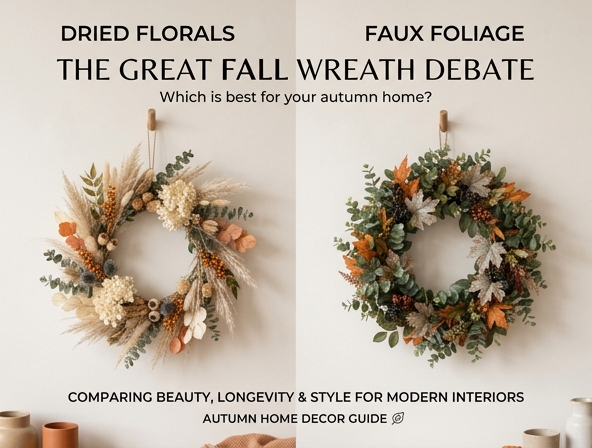
As autumn approaches, many design-conscious homeowners struggle to find front door decor that balances rich, seasonal warmth with actual longevity. Too often, promising arrangements end up shedding brittle debris across the entryway or looking disappointingly synthetic under natural light.
Before selecting a design, it is essential to consider how seasonal shifts impact our immediate living spaces and decor investments. Investing in the right medium grants your home an immediate, high-end sensory appeal that effortlessly elevates your curb appeal. However, we must stipulate that "durability" means something different for organic materials versus synthetic fibers; each demands specific environmental conditions to thrive.
For instance, while delicate dried wheat stalks and preserved eucalyptus offer unmatched organic texture, premium silk maple leaves and polymer berries withstand wind and moisture far better. In this guide, we will analyze dried florals versus faux foliage across durability, aesthetic impact, and maintenance to help you select the ultimate autumn wreath for your home.
Introduction: The Autumn Doorway Debate
As the crisp autumn air rolls in and leaves begin their golden transformation, our attention shifts to the threshold of the home. The front door becomes a canvas for seasonal expression, and nothing captures the spirit of fall quite like a beautifully crafted wreath. However, homeowners face a classic design dilemma: do you embrace the fleeting, authentic charm of dried florals, or do you opt for the resilient, vibrant appeal of modern faux foliage? Choosing the perfect doorway accent involves balancing aesthetic desires with practical considerations of longevity, climate, and lifestyle.
The Organic Appeal of Dried Florals
There is an undeniable magic in the whispers of real preserved botanicals. Dried floral wreaths offer a rich sensory experience that synthetics simply cannot replicate, carrying the very essence of the autumn harvest. From the delicate rustle of dried wheat stalks and seed pods to the warm, earthy fragrance of preserved eucalyptus, lavender, and citrus slices, these arrangements ground a home in the natural world. Choosing real botanicals means embracing the subtle, muted color palettes of nature's own transition, bringing an authentic warmth to your entryway that feels deeply connected to the cycle of the seasons.
Weighing the Benefits and Limitations of Dried Florals
While dried arrangements offer unparalleled natural beauty, they require a gentle hand and realistic expectations regarding their durability. Homeowners must weigh their exquisite, fleeting charm against their physical limitations.
- Stunning Organic Textures: Dried elements feature unique imperfections and rich, matte finishes that look completely natural because they are.
- Vulnerability to Weather: Direct sunlight can fade their rich colors rapidly, while wind and moisture can cause severe, irreversible degradation.
- Shedding and Fragility: Every gust of wind or door slam can cause delicate seed pods, leaves, and petals to drop, leaving a small mess on the porch.
- Finite Lifespan: Even with meticulous care, most dried wreaths are designed to last only one or two seasons before requiring replacement.
The Modern Evolution of Faux Foliage
The days of shiny, plastic-looking fake plants are long gone. Modern manufacturing techniques have revolutionized faux foliage, elevating it to an art form that easily rivals live greenery. Designers now utilize high-grade silks, advanced polymers, and hand-painted details to mimic the intricate leaf veins, botanical imperfections, and varied color gradients found in nature. This technological leap ensures that a high-end faux wreath looks remarkably lifelike, easily deceiving the eye of passersby from the curb and up close on the porch.
Analyzing the Durability and Utility of Faux Wreaths
For many busy households, the practical benefits of synthetic arrangements make them an incredibly attractive option. However, this convenience comes with a few trade-offs that are worth noting before making a purchase.
- Weatherproof Resilience: Built to withstand rain, wind, frost, and harsh UV rays without losing their structural integrity or vibrant colors.
- Easy Storage and Reuse: These pieces can be packed away in a plastic bin and brought out year after year looking brand new.
- No Messy Clean-up: Synthetic materials do not shed, crumble, or decay, keeping your entryway pristine.
- Lack of Natural Scent: While they look flawless, they lack the rich, nostalgic aromas of real autumn harvests.
Aesthetic Matchup: Rustic Patina vs. Polished Perfection
The decision between dried and faux often comes down to your home's overarching design language. Dried florals lend themselves beautifully to rustic, farmhouse, cottagecore, or bohemian styles where imperfections are celebrated. On the other hand, faux wreaths provide a symmetrical, polished, and vibrant appearance that complements modern, traditional, or transitional home architectures.
"True luxury lies in the poetry of imperfection, which dried florals express effortlessly, while modern faux designs offer the pristine, curated symmetry demanded by contemporary architecture."
Environmental Impact: Biodegradability vs. Longevity
For environmentally conscious decorators, the ecological footprint of holiday decor is an important factor. Dried wreaths are composed of natural materials that are fully biodegradable and compostable at the end of their lifecycle, making them an excellent zero-waste option. Conversely, faux wreaths rely on petroleum-derived plastics and synthetic fibers that do not break down in landfills. However, the environmental impact of faux foliage is mitigated if you reuse the same wreath for many years, reducing the demand for new consumer goods.
Investment and Cost-Per-Use Analysis
Short-Term Expense vs. Long-Term Value
Evaluating the financial side of seasonal decor requires looking past the initial price tag to calculate the long-term cost-per-use of each option.
- Dried Florals: Typically carry a moderate initial cost but must be repurchased annually, leading to recurring seasonal expenses over time.
- Faux Foliage: Demands a higher upfront investment for premium, realistic quality, but yields a microscopic cost-per-use over a decade of repeated displays.
Styling and Maintenance Guide for Fall Wreaths
Preserving Your Autumn Decor
To ensure your chosen wreath retains its beauty throughout the autumn season and beyond, proper handling and maintenance are key.
- For Dried Wreaths: Display them behind a storm door or under a deeply recessed porch. Spray them lightly with an unscented hairspray to reduce shedding, and store them in a climate-controlled room away from moisture.
- For Faux Wreaths: Use a hairdryer on a cool, low setting to blow away dust before hanging. Fluff the branches gently to restore shape after storage, and store them in a structured wreath box to prevent crushing.
The Verdict: Choosing the Best Wreath for Your Lifestyle
Selecting the ideal fall wreath depends on your daily routine, regional weather patterns, and design priorities. If you live in an area with dry autumn weather, have a protected entryway, and cherish natural aromas, dried florals will bring incomparable organic warmth to your home. If your front door is exposed to the elements, or if you prefer a hassle-free, reusable investment that looks immaculate year after year, faux foliage is the superior choice. Analyze your space and lifestyle to select the perfect welcoming accent for your autumn doorway.
Leave a comment