
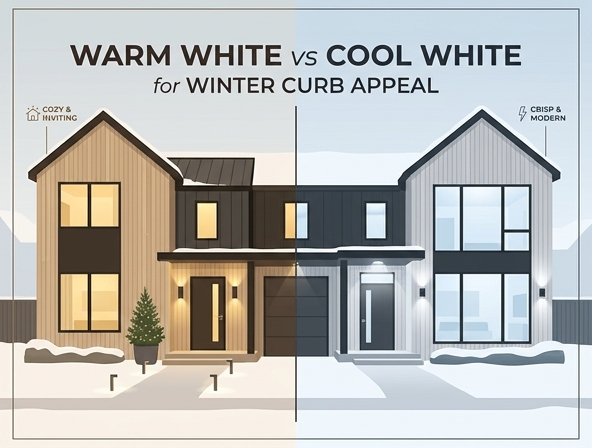
Every winter, homeowners face the frustrating challenge of hanging outdoor lights only to find the final result looks more like a sterile commercial parking lot than a welcoming seasonal retreat. Before purchasing your bulbs, it is crucial to understand how winter's early dusk and snowy backdrops drastically alter how light reflects off your home's exterior.
Selecting the correct color temperature grants your property an immediate boost in nighttime curb appeal, elevating its architectural presence during the darkest months. However, lighting is not one-size-fits-all; success requires matching the bulb's Kelvin rating to your home's specific materials. For example, warm white (2700K) beautifully enriches traditional red brick and rustic wood, whereas cool white (5000K) perfectly complements modern gray siding and sleek concrete.
Below, we break down the technical differences between warm and cool tones, compare their performance in winter weather, and help you choose the winning hue for your home.
Introduction: The Winter Curb Appeal Dilemma
As the winter solstice approaches and daylight hours dwindle, our homes risk fading into the cold, dark landscape. This seasonal shift highlights the profound impact of outdoor illumination. A thoughtfully lit exterior does more than just pierce the darkness; it serves as a beacon of safety and a statement of personal style. By carefully placing fixtures, you can completely redefine your home's aesthetic during the bleakest months of the year.
However, achieving the perfect winter curb appeal often sparks a heated debate among design enthusiasts: should you choose cozy warm white or crisp cool white lighting? This choice is not merely technical. It dictates the entire mood of your property, influencing how visitors perceive your home before they even step through the front door. Balancing these two distinct visual temperatures is the key to unlocking a stunning winter display.
Understanding Kelvin: The Science of Light Temperature
To make an informed decision about your outdoor lighting, it is essential to understand the science of light temperature, which is measured using the Kelvin (K) scale. This scale quantifies the color appearance of a light bulb, ranging from warm yellow-orange hues to cool blue-toned whites. Choosing the right Kelvin rating ensures your exterior design looks intentional and cohesive.
- Warm White (2700K - 3000K): This range delivers a soft, golden glow. It feels highly welcoming and resembles the soothing light of a traditional incandescent bulb or a flickering candle.
- Cool White (4000K - 5000K): This spectrum produces a bright, clean, and energizing light. It features distinct blue undertones, mimicking the daylight of a clear afternoon sun or clean starlight.
By understanding where your fixtures fall on this scale, you can easily manipulate the atmosphere of your landscape. Selecting the proper color temperature is the first step toward mastering winter illumination.
The Charm of Warm White: Cozy and Welcoming
There is an undeniable emotional comfort associated with warm white lighting. When the temperatures drop and frost blankets the ground, a golden glow acts as a visual embrace. This lighting style taps into our primal desire for shelter and hearth, transforming a cold building into a sanctuary of comfort and joy. It is particularly effective during the holiday season, evoking a nostalgic charm that modern lighting struggles to replicate.
The gentle amber glow of warm lighting mimics the soothing dance of candlelight, making even the bitterest winter evening feel safe, intimate, and deeply inviting. - Exterior Design Council
For homes with deep-toned paint, natural wood siding, or exposed brick, warm white highlights these earthy textures beautifully. It coaxes out the inherent richness of the materials, establishing an organic connection between your home and the natural environment.
The Allure of Cool White: Modern and Crisp
On the opposite end of the spectrum lies cool white lighting, celebrated for its clean, high-contrast aesthetic. This color temperature offers a stark, striking look that commands attention. In the dead of winter, cool white light mimics the celestial brilliance of bright starlight, casting a brilliant and sharp glow across your property. It provides an unmatched level of clarity and definition that elevates a property's presence.
This temperature is incredibly effective at making contemporary architectural features pop. It accentuates clean lines, geometric shapes, and industrial materials like steel, concrete, and glass. If you want your home to stand out with a dramatic, high-fashion statement that cuts through the winter gloom, cool white is the premier option.
Matching Light to Your Home's Architectural Style
To achieve the best visual results, your lighting choice must align with the architectural DNA of your home. Applying the wrong color temperature can clash with design elements, while the right choice harmonizes your entire landscape.
Traditional, Rustic, and Craftsman Homes
Properties featuring classic designs, wooden accents, or stone facades thrive under warm white light. The yellow-gold undertones complement Tudor, colonial, or cottage-style homes, accentuating their historic beauty and timeless craftsmanship without feeling harsh.
Modern, Minimalist, and Mid-Century Designs
For homes with flat roofs, large windows, and minimalist trim, cool white is the ideal match. The blue-white light emphasizes clean architecture, creating a futuristic, sleek, and highly sophisticated vibe that looks spectacular against winter skies.
Winter Elements: How Lights Interact with Snow and Foliage
Winter introduces unique natural elements that completely change how light behaves. Snow, ice, and bare branches act as mirrors and diffusers, altering the output of your outdoor fixtures. Understanding these interactions allows you to paint your landscape with light, turning winter weather into an artistic advantage.
When cool white light hits fresh, pristine snow, it enhances the natural crystalline structure, creating a glistening, fairytale-like landscape. The blue undertones make the snow appear exceptionally clean and bright. Conversely, warm white light can sometimes make snow look slightly yellowed or slushy. However, warm white shines brightest when illuminating bare tree branches and evergreen shrubs, breathing life, warmth, and a rich dimensional depth back into sleeping winter foliage.
Practicality First: Safety, Security, and Visibility
While aesthetics are vital, outdoor lighting must also serve a functional purpose. Winter brings hazardous conditions like black ice, snowdrifts, and early-evening darkness, making visibility a top priority. Properly illuminating pathways and entry points is crucial for preventing slips, trips, and falls during freezing weather.
When it comes to navigating icy walkways and driveways, the choice becomes a matter of preference. Cool white reveals physical hazards and slippery patches with incredible clarity. However, warm white is gentler on dark-adjusted eyes, reducing glare as you transition from a dark driveway into a brightly lit entryway.
Can You Mix Warm and Cool White?
Many homeowners wonder if they have to choose just one temperature. You can indeed mix warm and cool white lights, provided you do so with careful planning. Combining them randomly can create visual chaos, but layering them intentionally can yield a professional, multi-dimensional lighting design.
- Use warm white light at your immediate entryways, porches, and seating areas to foster an inviting, cozy feel where people gather.
- Apply cool white light to your architectural peaks, distant landscape trees, or security zones to create depth and contrast.
- Keep the transitions gradual, ensuring there is a clear physical distance between the two temperatures to prevent clashing.
By defining specific zones for each temperature, you can highlight different aspects of your property while maintaining a structured, balanced curb appeal.
Smart Solutions and Energy Efficiency in Winter Lighting
Operating outdoor lights throughout long winter nights can impact your energy bills if you rely on outdated technology. Upgrading to modern LED fixtures is the smartest way to keep your home shining bright without breaking the bank. LEDs perform exceptionally well in cold temperatures, lasting longer and consuming significantly less energy than traditional incandescent bulbs.
For the ultimate versatility, consider investing in smart lighting controls and color-changing bulbs. These advanced systems allow you to transition from warm, cozy tones on quiet evenings to bright, crisp hues during heavy snowfalls. You can find high-quality options and design inspiration by checking out innovative outdoor lighting solutions. With smart scheduling, you can automate your home's exterior to match your daily routine seamlessly, keeping your property secure and beautiful all season long.
The Verdict: Which Light Color Wins Winter?
Choosing between warm and cool white lights comes down to your personal priorities and the unique architectural character of your home. There is no single correct answer, as both options offer distinct advantages that can elevate your property's winter aesthetic when applied thoughtfully.
If your goal is to create a cozy, nostalgic sanctuary that embraces visitors with a comforting glow, warm white is your winner. On the other hand, if you prefer a sharp, modern, and high-visibility look that turns pristine snow into a glistening wonderland, cool white is the superior choice. Assess your home's style, consider your climate, and select the temperature that best brings your winter vision to life.

Leave a comment