
Hosting overnight guests shouldn't mean sacrificing your daily living space, yet many homeowners struggle to balance hospitality with the realities of limited square footage. Before choosing a sleeping arrangement, it is crucial to consider how the room functions on a day-to-day basis, especially as the rise of remote work has turned spare bedrooms into essential home offices.
Investing in the right multifunctional furniture grants you the luxury of a welcoming guest suite without losing valuable floor space. However, selecting between a daybed and a futon requires understanding that "space-saving" is not a one-size-fits-all solution; your choice must align with your primary seating needs and aesthetic goals.
Whether you are furnishing a tight studio apartment or a dual-purpose den, analyzing these options ensures long-term utility. In this guide, we will compare daybeds and futons across comfort, footprint, and style to help you make the optimal investment for your home.
Introduction: The Small Guest Room Dilemma
Welcoming overnight guests is a joy, but finding the room to host them comfortably can be a major design challenge. Many homeowners struggle with maximizing space in small guest rooms, which often need to double as home offices, playrooms, or quiet reading nooks. Introducing a standard bed can instantly swallow the available floor area, leaving the room feeling cramped and single-purposed. Fortunately, you do not have to compromise on comfort or utility. Daybeds and futons stand out as the top two space-saving solutions, offering a smart blend of seating and sleeping functions that keep your spare room versatile, open, and ready for any occasion.
What is a Daybed? Definition and Core Features
A daybed is a versatile furniture piece designed to serve as both a comfortable seating option and a high-quality bed. It blends seamlessly into a living space while maintaining the comfort of a standard sleeping arrangement.
- Three-sided frame structure: A daybed features a sturdy frame enclosing three sides, mimicking the armrests and back of a traditional sofa.
- Standard twin mattress: It utilizes a real twin-sized mattress, which means you can choose your preferred firmness and use standard bed sheets.
- Dual-purpose functionality: It operates as a spacious couch by day and is immediately ready to serve as a supportive bed by night.
What is a Futon? Definition and Core Features
A futon is a classic space-saver that originates from traditional Japanese bedding, reimagined as a convertible sofa in modern Western homes. It relies on a flexible mechanism to transition between sitting and sleeping modes.
- Adjustable frame mechanism: The metal or wooden frame features a hinge system that locks into an upright seating position or unlocks to lay flat.
- Folding mattress design: A specialized, flexible mattress is engineered to bend easily when the frame is folded into a sofa and flatten out when converted.
- Easy transition: With a quick pull or push, the futon transitions from a traditional, upright sofa to a flat, level sleeping surface for guests.
Aesthetic Appeal: Matching Your Room's Style
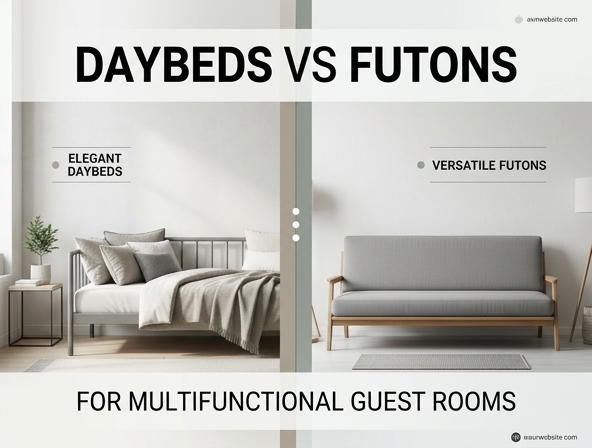
When deciding between these two options, aesthetic harmony plays a major role in how your guest room feels. A daybed often presents a more elegant, furniture-like appearance. Because of its wooden or upholstered three-sided frame, it looks like a high-end couch or a day lounge, fitting beautifully into traditional, farmhouse, or classic decor styles.
On the other hand, futons typically lean toward a minimalist, modern, or casual vibe. Their streamlined frames and exposed hinges align well with industrial, contemporary, or dormitory-style aesthetics. Choosing between them depends on whether you want your guest room to feel like a sophisticated second living room or a casual, clean-lined lounge space.
Comfort Analysis: Sitting vs. Sleeping Experience
The comfort of your guests is paramount, and here, the two options diverge significantly. A daybed offers superior sleeping comfort because it utilizes a real mattress. Your guests will rest on the same supportive coils or memory foam found in standard beds, making it ideal for multi-night stays. However, as a seat, a daybed can feel exceptionally deep, often requiring extra throw pillows to support a person's back comfortably while sitting upright.
Conversely, a futon features a thick, foldable cushion designed to balance sitting and sleeping. While modern futon cushions are quite supportive, they may feel firmer and less cushioned than a traditional mattress over a long night. For sitting, however, the futon behaves exactly like a regular couch, providing standard seat depth and proper back support for daytime relaxing.
Space Efficiency: Footprint and Room Layout
Understanding how each option utilizes physical floor space is essential for small room layouts. A daybed occupies a fixed footprint. Because it does not fold out, its dimensions remain the same day and night. This makes layout planning highly predictable. Additionally, daybeds often leverage vertical space below the frame, offering excellent potential for built-in storage drawers or a pull-out trundle bed to double your sleeping capacity.
A futon operates on a variable footprint. While it takes up less floor space when folded into its upright sofa position, it requires a significant amount of clear clearance space in front of it to expand. When unfolded into a flat sleeping surface, the futon extends outward into the room. You must ensure that nearby furniture, such as coffee tables or desks, can be easily moved to accommodate this expanded footprint at night.
Ease of Conversion: Nighttime Setup
When the evening winds down, the ease of preparing the bed can make a big difference for both you and your visitors. A daybed requires virtually zero effort to convert. Because it uses a standard mattress that remains flat at all times, it is always ready for sleep. You simply add a pillow and a blanket, and your guest can climb right in. There are no mechanisms to lift or frames to slide.
A futon requires a manual conversion process to transition into a bed. You must remove any decorative cushions, unlock the frame mechanism, and guide the backrest down until it clicks into a flat position. While modern designs have made this transition smoother, it still requires a degree of physical effort and space clearance every time your guest wants to switch between sitting and sleeping.
Durability and Investment Value
Investing in guest room furniture requires thinking about long-term value and wear. Daybeds generally offer superior durability and investment value because of their interchangeable components. If the mattress wears out or your comfort preferences change, you can simply replace the standard twin mattress without having to discard the entire wooden or metal frame.
Futons tend to have a shorter lifespan due to the integrated design of their frames and mattresses. The constant folding and unfolding can put stress on the frame's moving joints over time. Additionally, because the mattress must bend, it can develop wear points along the fold lines. Replacing a custom futon mattress can sometimes cost as much as buying a whole new set, making it a less flexible long-term investment.
Quick Comparison: Pros and Cons
| Furniture Type | Key Advantages | Potential Disadvantages |
|---|---|---|
| Daybed | Uses a real mattress for superior sleep comfort; always ready to use; storage or trundle options. | Fixed footprint cannot be shrunk; seating is often too deep without extra back pillows. |
| Futon | Saves floor space when folded; provides an ergonomic sitting angle; budget-friendly. | Requires physical effort to convert; foldable mattress can wear out; sleep surface is firmer. |
Conclusion: Which is Best for Your Guest Room?
Choosing between these two versatile space-savers comes down to how you prioritize your space. If your primary goal is to provide maximum sleeping comfort for frequent, multi-day guests and you prefer a classic, furniture-like look, a daybed is the superior choice. Its ability to host a standard mattress and conceal a trundle makes it a highly functional long-term asset.
If you operate on a tighter budget, prioritize daytime floor space, and expect to host guests only occasionally, a futon is an excellent, practical alternative. It serves as a true comfortable sofa for daily use and transitions easily when called upon. Weighing your room's style, your budget, and how often the bed will be occupied will guide you to the perfect fit for your home.
Leave a comment