
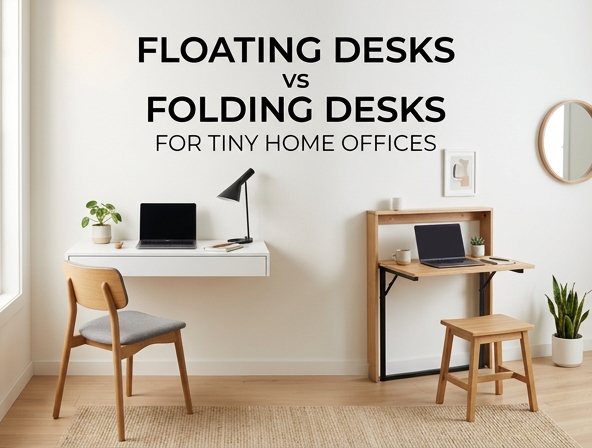
Remote work has permanently redefined the modern household, yet squeezing a fully functional workspace into a cramped apartment remains a daily, frustrating struggle. When square footage is at a premium, a standard desk quickly turns a room into a cluttered obstacle course. While early remote-work strategies relied on makeshift kitchen tables, today's mature market demands dedicated, space-efficient engineering.
Choosing the right compact workspace does more than clear physical floor space; it grants you a vital psychological boundary between professional focus and domestic relaxation, ultimately restoring aesthetic harmony to your home.
However, successful space-saving is never one-size-fits-all. Your ideal setup depends on aligning furniture mechanics with your specific workflow. For instance, a sleek, wall-mounted floating shelf serves paperless laptop users perfectly, whereas a heavy-duty, fold-down Murphy desk is required for those needing a temporary, expansive layout for physical paperwork.
In this guide, we analyze the structural pros and cons of floating versus folding desks, comparing installation complexity, weight capacity, and daily usability to help you select the ultimate foundation for your tiny home office.
Introduction: The Tiny Home Office Dilemma
The global shift toward remote work has transformed the modern household, forcing many professionals to carve out workspace in tight quarters. From studio apartments to shared bedrooms, finding room for a full-sized desk can feel nearly impossible. This spatial crunch has sparked a demand for innovative furniture designed to optimize limited square footage.
To solve this dilemma, two primary space-saving solutions have emerged: floating desks and folding desks. Both options promise to reclaim your floor space, but they go about it in fundamentally different ways. Understanding their unique advantages is key to building a highly productive, distraction-free workspace in a compact home.
Understanding the Floating Desk: Sleek and Permanent
A floating desk is a wall-mounted workstation that requires no legs for support. By securing the unit directly into wall studs, these desks create a clean, modern aesthetic that immediately elevates any room. This design completely eliminates under-desk leg clutter, allowing you to slide a chair completely underneath when not in use.
- Minimalist Design: The absence of desk legs provides a streamlined, architectural look that blends seamlessly into modern decor.
- Floor Space Illusion: By leaving the floor beneath the desk entirely clear, floating desks make small rooms feel significantly larger and less congested.
- Permanent Workstation: Provides a designated, reliable zone dedicated entirely to productivity without daily setup hassles.
Understanding the Folding Desk: Versatile and Temporary
A folding desk relies on collapsible hinge mechanisms and foldable legs, allowing the entire structure to pack flat in seconds. Designed for maximum adaptability, these desks can be set up whenever duty calls and stowed away when the workday ends. They are the ideal choice for spaces that must serve multiple purposes throughout the day.
- Collapsible Frame: Engineered with easy-to-use latch or hinge systems that allow the desk to fold down to a thickness of just a few inches.
- Effortless Portability: Light enough to be carried from room to room, allowing you to change your work environment on a whim.
- Discreet Storage: Easily slides under a bed, inside a closet, or behind a sofa, keeping your workspace out of sight when guests arrive.
The Footprint Battle: Real Estate vs. Visual Space
Physical Floor Space and Storage
When it comes to physical floor space, folding desks are hard to beat. When the workday concludes, you can fold the desk flat and store it completely out of sight. This allows you to reclaim one hundred percent of your floor real estate for evening relaxation or exercise.
Vertical Use and Visual Weight
On the other hand, floating desks utilize vertical wall space permanently. While they never touch the floor, they occupy a fixed visual plane in the room. This means your work setup remains a constant visual fixture, though the open space underneath helps maintain a light, airy atmosphere that prevents the room from feeling cramped.
Installation and Portability: DIY Wall-Mounting vs. Out-of-the-Box Setup
The installation of a floating desk is a permanent, hands-on DIY project. Because these desks must hold the weight of laptops, monitors, and leaning arms, they require secure mounting directly into wall studs. This process involves using tools like a stud finder, a level, and heavy-duty drywall anchors, which can be challenging for those lacking DIY experience. Once installed, moving a floating desk is a major chore that leaves behind unsightly holes.
In stark contrast, folding desks offer a zero-assembly, out-of-the-box setup. Most models arrive fully assembled and simply need to be unfolded. They require absolutely no drilling, making them instantly portable. You can work in the living room in the morning, move to the bedroom in the afternoon, and pack the entire desk away by evening without ever picking up a drill.
Storage Capabilities and Clutter Management
Storage needs vary wildly depending on your job. Floating desks excel at integrated organization, as many models feature built-in cubbies, overhead shelves, or small drawers. Because they are permanently anchored, you can utilize this vertical storage to keep your essential office supplies, books, and decor beautifully arranged and always within arm's reach.
Conversely, folding desks generally offer a clean slate with no built-in storage. Adding shelves or drawers would compromise their ability to fold flat. Using a folding desk forces you to adopt a minimalist work style, keeping only your immediate laptop and notepad on the surface and storing other supplies in separate storage bins.
Durability, Weight Limits, and Structural Stability
The structural stability of a floating desk is directly dependent on the quality of its installation. When properly mounted into wall studs, a floating desk is incredibly sturdy and can easily support heavy desktop setups, large monitors, and multiple books. However, if mounted only to drywall, the weight limit drops drastically, risking damage to both your wall and your expensive electronics.
Folding desks, while convenient, naturally possess more joint movement due to their collapsible legs. High-quality models feature locking brackets to ensure solid stability, but they are generally not built for extreme loads. They are perfect for lightweight laptops and tablets, but they may wobble slightly under heavy typing or if bumped, making them less ideal for heavy monitor mounts.
Cost, Value, and Long-Term Investment
When considering the financial commitment, both desk styles offer distinct value propositions based on your living situation. Renters and homeowners must weigh upfront prices against long-term practical costs.
- Upfront Purchase Price: Folding desks are generally more affordable, offering high utility with minimal financial investment.
- Tool and Hardware Requirements: Floating desks may require extra purchases, such as high-quality anchors, drill bits, or professional installation help.
- Rental Property Damage: Floating desks require drilling substantial holes in walls. Repairing this drywall damage upon moving out can lead to security deposit deductions, making folding desks the more cost-effective choice for renters.
Quick-Reference Comparison: Floating vs. Folding Desks
| Feature | Floating Desks | Folding Desks |
|---|---|---|
| Space Saving | Saves floor space, uses vertical space permanently | Saves complete floor and wall space when folded |
| Mobility | None (Permanent wall-mount) | High (Can be moved anywhere) |
| Price Range | Moderate to High (Plus installation costs) | Budget-Friendly to Moderate |
| Durability | Very High (When stud-mounted) | Moderate (Subject to hinge wear) |
| Installation | High (Requires tools and stud-mounting) | None (Out-of-the-box assembly) |
The Verdict: Which Desk Fits Your Tiny Home Office?
Choosing the perfect workspace comes down to analyzing your physical environment, your work style, and your housing status. If you own your home, crave a dedicated, styled workspace, and love a sleek modern aesthetic, a floating desk is an outstanding permanent upgrade. It establishes a clear boundary for productivity while keeping your floor clear and visually spacious.
If you rent your home, work from multiple rooms, or need your space to transition back into a living area when you are off the clock, a folding desk is the superior option. It offers immediate flexibility with zero setup hassle. By selecting the desk that fits your lifestyle, you can turn even the smallest corner into a highly efficient and comfortable home office.
Leave a comment