
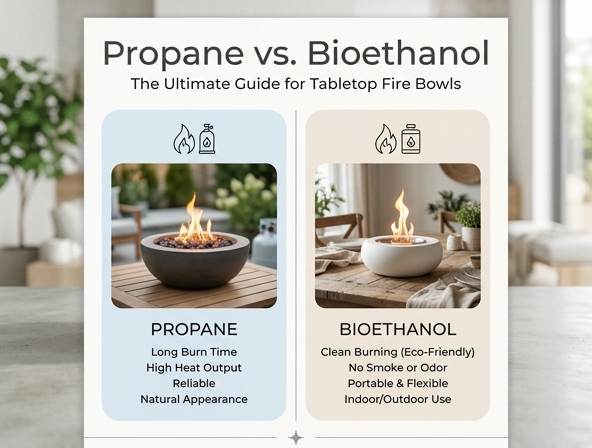
Finding the perfect balance between cozy ambiance and practical maintenance for a tabletop fire bowl is a surprisingly frustrating challenge. Many homeowners struggle with unexpected soot, chemical odors, or fuel canisters that empty far too quickly. While these compact accent pieces have revolutionized modern indoor-outdoor living, unlocking their true potential requires choosing the correct energy source.
Selecting the right fuel grants you a clean, low-maintenance warmth that instantly elevates any social gathering. However, as an essential stipulation, the "best" choice is highly subjective, depending heavily on your specific ventilation setup and heating expectations. For example, pressurized liquid propane delivers a robust, high-BTU flame perfect for breezy outdoor patios, whereas denatured bioethanol offers a completely ventless, eco-friendly burn suited for indoor dining tables.
To help you make the right investment, this guide will compare propane and bioethanol across key performance indicators, including safety, heat output, operating costs, and environmental impact.
Introduction: The Rise of Tabletop Fire Bowls
Tabletop fire bowls have quickly transitioned from trendy outdoor accents to staple elements of modern interior and exterior design. These compact, stylish fixtures offer the mesmerizing dance of real flames without the space requirements, smoke, or mess of a traditional wood-burning fire pit. As homeowners seek to elevate their patios, dining tables, and living rooms, they find themselves comparing different fuel technologies to power these miniature hearths.
The critical decision that home designers must make is choosing between a propane-powered system or a bioethanol-based system. This fundamental choice dictates not only where the fire bowl can be safely positioned but also the visual character of the flame, the heat output, and the overall effort required for ongoing maintenance.
Understanding Propane as a Fire Bowl Fuel
Propane is a liquefied petroleum gas stored under pressure in highly portable metal canisters. When used in a tabletop fire bowl, the pressurized liquid converts to a gas as it is released, traveling through a regulator to feed a specialized burner ring. The resulting flame is robust, steady, and highly responsive to manual control valves. It mimics a traditional campfire flame with its lively movement and steady heat production, usually issuing from a bed of lava rocks or decorative glass beads.
To set up a typical tabletop propane fire bowl, several key mechanical components are required to manage fuel delivery safely:
- A high-pressure regulator hose to manage gas flow
- A brass burner orifice or ring for even flame distribution
- A 1-pound (16 oz) propane canister connection adapter
- An adjustable control valve for flame height modulation
Understanding Bioethanol as a Fire Bowl Fuel
Bioethanol is a clean-burning, fully renewable fuel source created through the fermentation of biological materials, primarily agricultural byproducts such as corn, sugarcane, or wheat. Because of its plant-derived origin, it produces no harmful fumes. Utilizing bioethanol is exceptionally straightforward: the liquid fuel is poured directly into a stainless-steel burner reservoir. Once filled, the liquid is ignited using a long-reach lighter, burning cleanly without the need for pipes, lines, or external tanks.
This process ensures that a bioethanol burner functions with zero emission of harmful chemicals, virtually eliminating the risk of releasing toxic combustion products into enclosed living spaces.
Flame Aesthetics: Visual Appeal and Ambiance
The visual characteristics of propane and bioethanol flames differ dramatically, offering distinct moods for different environments. Propane produces a classic, bright yellow-and-orange flame that flickers dynamically. This high-visibility fire resembles a traditional campfire, casting a warm, flickering glow that interacts beautifully with outdoor landscaping, natural wood, and stone textures.
In contrast, bioethanol creates a highly modern, sophisticated flame pattern. When first lit, bioethanol burns with a subtle, low-visibility blue hue, which transitions into a steady, elegant golden-yellow as the burner reaches its optimal operating temperature. The flame is smoother and less turbulent than propane, offering a minimalist aesthetic that aligns perfectly with contemporary interior design.
"The choice of fuel shapes the entire sensory experience of a room. While propane delivers a rustic, dynamic flicker that commands attention outdoors, bioethanol provides a sleek, architectural ribbon of light that enhances indoor serenity." - Sophia Thorne, Lead Interior Architect
Heat Output: Which Fuel Keeps You Warmer?
When comparing heat output, propane is the clear winner for physical warmth, while bioethanol is optimized primarily for visual ambiance. Propane fire bowls generate significantly higher British Thermal Units (BTUs), making them capable of warding off the chill on a cool autumn evening. Bioethanol, though it produces real heat, operates at a lower thermal capacity, making it perfect for indoor spaces where excessive heat would become uncomfortable.
| Fuel Type | Average BTU Output | Primary Heat Suitability | Recommended Environment |
|---|---|---|---|
| Propane | 10,000 - 60,000 BTUs | High (Generates noticeable radiant warmth) | Outdoor Patios & Open Decks |
| Bioethanol | 3,000 - 10,000 BTUs | Low to Moderate (Provides mild ambient warmth) | Indoor Living Rooms & Shielded Balconies |
Safety First: Indoor vs. Outdoor Usability
Safety is the most critical differentiator when choosing between these two fuel types. Propane requires complete combustion in an open-air environment. Because propane combustion releases trace carbon monoxide and requires a high volume of oxygen, it is strictly classified for outdoor use only. Operating a propane tabletop unit inside a closed home can lead to dangerous gas accumulation and oxygen depletion.
Conversely, bioethanol burns completely clean. The only combustion byproducts of pure bioethanol are water vapor and a minimal amount of carbon dioxide-roughly equivalent to the breath of two human beings. This makes bioethanol completely safe for indoor environments, requiring no chimneys, vents, or external flues.
Environmental Impact: Eco-Friendliness Compared
As ecological awareness dictates modern home buying decisions, the environmental footprint of your fuel choice is a vital consideration. Propane is a byproduct of natural gas processing and crude oil refining. While it is cleaner than wood or coal, it remains a non-renewable fossil fuel that releases stored carbon into the atmosphere upon combustion.
Bioethanol shines as a highly sustainable option. Because it is harvested from crops that absorb carbon dioxide during their growth cycle, burning bioethanol is considered a carbon-neutral process. The plants grown to create the fuel pull equivalent carbon out of the atmosphere, offsetting the emissions released during burning. Choosing bioethanol represents a commitment to renewable energy utilization and reduces your household's overall carbon footprint.
Operating Costs and Fuel Availability
Operating costs can vary significantly depending on how frequently you light your tabletop fire bowl. Propane is highly accessible, with 1-pound canisters sold at almost every hardware and camping goods store for a relatively low cost. Bioethanol must typically be purchased in specialty bottles or ordered online, which incurs a higher cost per fluid ounce. However, bioethanol burners tend to consume fuel at a much slower rate than propane burners.
To determine which option is more economical for your lifestyle, you can estimate the running costs using this simple process:
- Determine the cost of a single fuel container (e.g., a $6 propane canister or a $10 bottle of bioethanol).
- Check the manufacturer's specified burn time per full reservoir or canister.
- Divide the total container cost by the estimated burn hours to find the hourly rate.
- Multiply this hourly rate by your projected weekly usage hours to evaluate long-term affordability.
Setup, Maintenance, and Ease of Use
The physical setup of a propane fire bowl is more complex due to the external fuel components. Users must route a gas hose from the bowl to a hidden tank, requiring creative design choices to conceal the connection. However, once connected, operation is as simple as turning a dial and clicking an igniter. Maintenance is minimal, though you must occasionally check hoses for wear and wipe soot from the burner ring.
Bioethanol units offer unparalleled simplicity. There are no hoses, tanks, or valves. You simply pour the liquid fuel directly into the open burner reservoir using a funnel. After burning, bioethanol leaves absolutely zero soot, ash, or residue behind, completely eliminating the need for post-burn scrubbing or cleanup.
The Verdict: Choosing the Best Fuel for Your Space
Selecting the ideal fuel source depends entirely on your architectural setup and functional needs. If your primary goal is to generate cozy warmth on an open outdoor patio while enjoying a classic campfire vibe, propane is the recommended choice due to its high BTU output and rugged reliability.
If you prefer a sleek, modern visual display that can transition seamlessly from your outdoor dining table to your indoor living room, bioethanol is the ideal selection because of its clean-burning, carbon-neutral performance and simple setup. By aligning your choice with your design priorities, you can enjoy the beautiful, warm glow of a tabletop fire bowl safely and efficiently.

Leave a comment