
Homeowners investing in a premium deck renovation often face a frustrating dilemma: how to secure their outdoor living space without sacrificing the very view that inspired the project in the first place. In modern architectural design, the deck is no longer just an add-on, but a seamless extension of the home's interior, demanding safety barriers that blend into the landscape rather than obstruct it.
Upgrading to a minimalist system elevates your home's aesthetic and maximizes property value by unlocking uninterrupted panoramic vistas. However, the right choice depends on your specific environment; factors such as local wind loads, regional building codes, and your tolerance for routine cleaning must guide your decision.
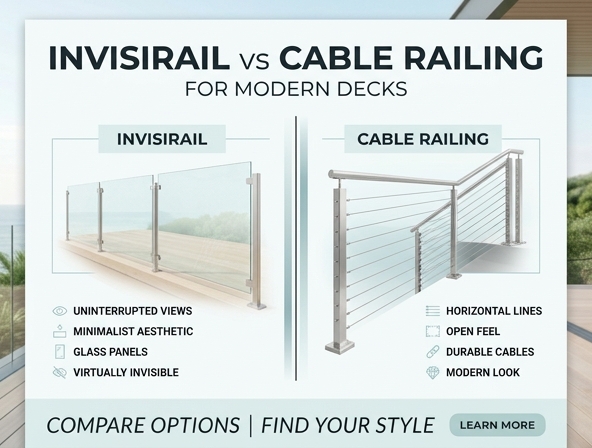
To clarify your options, we compare the ultra-clear, tempered glass panels of Invisirail against the sleek, marine-grade stainless steel lines of Cable Railing. Below, we break down their costs, durability, maintenance requirements, and installation complexity to help you choose the perfect fit for your renovation.
Introduction: Elevating Your Outdoor Living Space
For decades, traditional wooden railings served as the standard boundary for backyard decks. While functional, their bulky wooden balusters often segment beautiful landscapes, confining your vision to narrow vertical strips. Modern architectural design demands more. Today, homeowners seek to merge indoor comfort with the raw beauty of nature, driving a massive demand for unobstructed views. If you want to transform your deck into a high-end viewing platform, two premium contenders stand out: Invisirail glass railing and cable railing systems. Both offer a sophisticated, contemporary aesthetic, but they achieve it in fundamentally different ways.
Understanding Invisirail: The Clear Choice
Invisirail represents the peak of minimalist design by utilizing engineered tempered glass panels that provide an incredibly strong barrier without sacrificing your sightlines. Unlike bulky traditional systems, Invisirail uses specialized, low-profile support posts to clamp the glass securely in place. Because these posts are highly streamlined, the visual barrier is practically non-existent. This innovative system maximizes visibility, allowing natural sunlight to flood your deck and offering a completely seamless transition between your living space and the surrounding horizon. For those who prioritize a sleek, near-invisible profile, this glass railing technology delivers unparalleled clarity.
Exploring Cable Railing: Industrial Chic
If your design goals lean toward clean architectural lines and structural textures, cable railing systems offer an exceptional alternative. These setups utilize robust stainless steel posts paired with highly tensioned horizontal or vertical steel cables. Rather than disappearing completely, cable railings embrace their materials to craft a distinct modern, industrial, or maritime aesthetic. They provide excellent ventilation and a clear sense of boundary without ever feeling heavy or dark. This makes them highly popular for coastal properties, modern urban lofts, and rustic-modern mountain retreats where structural durability is key.
Aesthetic Duel: Panoramic Views vs. Linear Accents
Invisirail's Seamless Horizon
Invisirail excels at creating a truly boundless outdoor experience. Because the tempered glass panels lack top and bottom rails in many configurations, your eyes pass through the barrier without stopping. This makes it perfect for properties overlooking lakes, oceans, mountains, or meticulously manicured gardens, where any visual interruption detracts from the environment.
Cable Railing's Structured Symmetry
In contrast, cable railing systems do not attempt to hide. Instead, they frame the landscape with precise, linear accents. The thin stainless steel cables create a rhythmic pattern that complements contemporary home exteriors. They define the boundaries of your outdoor space with a crisp, geometric elegance that adds sophisticated architectural interest to your deck.
Maintenance and Durability: Wind, Weather, and Upkeep
When investing in high-end deck upgrades, understanding long-term maintenance is critical for choosing the right system. Both materials are highly durable, but they demand very different care routines over their lifespans.
- Invisirail requires regular washing with glass cleaner or mild soap and water to remove water spots, dirt, pollen, and fingerprints. However, the glass panels provide excellent windbreak protection, which is highly beneficial on exposed, windy decks.
- Cable railing demands far less frequent cleaning, as dust and rain pass right through. Upkeep is limited to occasional checks on cable tension and wiping down the stainless steel components with a corrosion-inhibiting cleaner to prevent tea-staining, especially in saltwater environments.
Safety and Building Codes: What You Need to Know
Safety is the primary function of any deck railing, and both systems must meet strict local building codes. Invisirail utilizes thick, heavy-duty tempered safety glass designed to withstand severe impacts without shattering. If it does break, it crumbles into small, dull chunks rather than sharp shards. On the other hand, cable railings present unique structural considerations regarding cable spacing and tensioning to prevent pets or children from slipping through.
Installation Process: DIY-Friendly or Pro Required?
Invisirail: Heavy and High Precision
Installing Invisirail is a labor-intensive process that demands exact measurements. Because tempered glass panels cannot be cut or modified on-site, your framing must be perfectly square and plumb from the start. Additionally, the sheer weight of thick glass panels typically requires a two-person team or professional installers equipped with heavy-duty glass suction cups to ensure safe handling and damage-free mounting.
Cable Railing: Specialized Tensioning Tools
Cable railing installation is often considered more DIY-friendly, but it comes with its own technical challenges. You will need specialized tools, including cable cutters and hydraulic crimpers, to securely attach and tension the steel strands. Ensuring that each cable is tensioned to the exact specification is vital to prevent sagging, which would compromise both safety and code compliance.
Cost Comparison: Upfront Investment vs. Long-Term Value
Upfront costs for both premium systems are higher than standard wood or composite railings, but they offer incredible long-term value by boosting property appraisal and curb appeal.
| Railing Type | Average Material Cost | Installation Complexity | Long-Term Value |
|---|---|---|---|
| Invisirail (Glass) | High to Premium | Professional Recommended | Excellent for views and wind protection |
| Cable Railing | Moderate to High | Moderate DIY / Professional | Low maintenance and extreme durability |
Quick Comparison: Invisirail vs. Cable Railing at a Glance
Invisirail Glass Railing
- Pro: Completely uninterrupted views and acts as an effective wind blocker.
- Pro: High safety rating with tempered, impact-resistant glass.
- Con: Requires frequent cleaning to remove smudges, dust, and spots.
Cable Railing Systems
- Pro: Highly durable, low maintenance, and excellent airflow.
- Pro: Creates a sleek, modern, industrial-inspired look.
- Con: Horizontal layouts can be climbed by children and may face code restrictions.
The Verdict: Choosing the Best Railing for Your Renovation
Your choice between these two premium options hinges on your property's environment and your lifestyle goals. If your deck looks out over a jaw-dropping landscape and you want to feel completely connected to nature, the unobstructed clarity of Invisirail is unmatched. Additionally, if you live in a windy area, the glass provides a comfortable wind barrier that extends your outdoor season. Conversely, if you prefer a low-maintenance, industrial-chic style that lets the breeze flow through, cable railing is the superior option. By weighing local building codes, your budget, and how much time you want to spend on cleaning, you can confidently invest in a railing system that will elevate your outdoor living space for years to come.
Leave a comment