
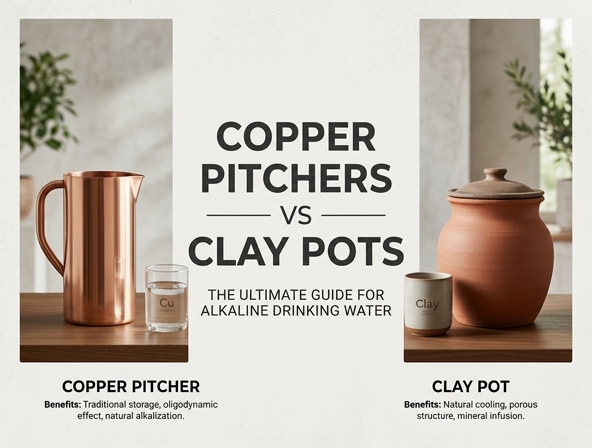
Many wellness enthusiasts struggle to maintain a consistent alkaline lifestyle, often finding premium bottled waters financially unsustainable and electronic ionizers overly complex. Before investing in high-tech machinery, however, it is crucial to understand how ancient storage traditions naturally optimized hydration. Utilizing these time-tested vessels grants you a self-sustaining, chemical-free method to gently raise your water's pH and improve its bio-availability.
Yet, we must stipulate that natural vessels are not instant purifiers; their alkalizing efficiency depends heavily on water contact time and baseline source water chemistry. For example, porous terracotta clay pots cool and alkalize water through natural mineral exchange, while Ayurvedic copper pitchers infuse essential trace minerals and offer proven oligodynamic, antibacterial benefits.
This comprehensive comparison evaluates the mineralizing mechanisms, maintenance requirements, and distinct taste profiles of both copper and clay, guiding you to the ultimate wellness vessel for your household needs.
Introduction: The Ancient Quest for Pure, Alkaline Water
In our modern pursuit of optimal health, alkaline water has emerged as a major wellness trend, praised for its ability to neutralize acidity in the body and boost hydration. While commercial ionizing machines dominate the luxury market, ancient civilizations solved this hydration puzzle thousands of years ago using simple, earth-derived materials. Long before synthetic filtration systems existed, two traditional vessels reigned supreme in storing and purifying drinking water: the copper pitcher, known in Ayurvedic tradition as Tamra Jal, and the humble clay pot, traditionally referred to as the Matka.
Both of these historic vessels do far more than just hold water; they actively transform its chemical structure. As health-conscious individuals seek sustainable, plastic-free alternatives to modern water systems, the debate between copper and clay has gained renewed momentum. Understanding the distinct properties of these ancient vessels allows us to tap into time-tested wellness practices that naturally optimize our daily hydration.
The Science Behind Vessel-Based Water Alkalization
The transition of water from a neutral or slightly acidic state to a healthy alkaline state within these vessels is governed by basic chemistry. When water is stored in copper or clay, it initiates a passive, natural process of mineral leaching and ion exchange that slowly adjusts the liquid's pH level over several hours.
The chemical and physical interactions differ significantly between the two materials:
- Active Ionization in Copper: Storing water in a copper vessel causes microscopic amounts of copper ions to dissolve into the liquid. This release of charged particles gently shifts the water's electrical charge, raising the pH to a slightly alkaline state.
- Mineral Infusion in Clay: Unglazed clay is naturally alkaline. When acidic or neutral water contacts the porous clay walls, the vessel releases basic oxides such as calcium, magnesium, and sodium into the water, neutralizing acidity through mineral dissolution.
- Porous Micro-Filtration: Clay behaves as a semi-permeable membrane. Its microscopic pores block larger impurities while allowing pure water molecules to interact directly with the mineral-rich earthen surface.
Copper Pitchers: The Oligodynamic Powerhouse
Copper pitchers are celebrated not just for their brilliant metallic luster, but for a remarkable scientific phenomenon known as the oligodynamic effect. This term describes the ability of minute concentrations of metal ions to exert a devastating, sterilizing effect on microorganisms. Storing water in a copper vessel for eight to twelve hours destroys harmful pathogens, making the water exceptionally safe to consume.
"Water stored in a copper vessel has the ability to balance all three doshas in your body (vata, kapha, and pitta) by gently infusing the water with the positive health properties of copper."
This ancient Ayurvedic practice of drinking Tamra Jal first thing in the morning has been validated by modern microbiology. Copper ions physically bind to the cell walls of bacteria, viruses, and fungi, disrupting their cellular membranes and neutralizing them. This natural purification system requires no electricity, no chemical additives, and zero synthetic filters, delivering clean, bio-available water through historical wisdom.
Clay Pots: Nature's Porous Cooling Filter
The traditional clay pot, or Matka, operates as a thermodynamic masterpiece. Crafted from natural silt and clay, these vessels are inherently porous. This porosity drives a continuous process of evaporative cooling, where tiny droplets of water seep to the outer surface of the pot and evaporate, absorbing heat from the surrounding environment and lowering the temperature of the water inside by several degrees.
Beyond natural cooling, clay acts as a chemical buffer. Because clay is highly alkaline, it actively interacts with acidic elements in water, neutralizing the overall pH. The porous structure also acts as a natural, low-intensity filter, adsorbing suspended toxins and micro-impurities while enriching the water with essential alkaline earth minerals that soften the water and provide a remarkably smooth, refreshing taste.
Head-to-Head: pH Alteration and Alkalizing Efficiency
While both vessels successfully elevate the pH of stored water, their efficiency, consistency, and the time required to achieve optimal alkalinity differ. Copper relies on a slow metallic ionization process, whereas clay relies on mineral dissolution and physical contact with its porous, alkaline surfaces.
The following table illustrates how these two materials compare across key alkalizing parameters:
| Alkalizing Parameter | Copper Pitcher (Tamra Jal) | Clay Pot (Matka) |
|---|---|---|
| Average pH Shift | Increases pH by 0.5 to 1.5 units | Increases pH by 0.4 to 1.0 units |
| Required Storage Time | 8 to 12 hours (optimal overnight) | 4 to 6 hours |
| Primary Mechanism | Oligodynamic ionization | Mineral dissolution & acid neutralization |
| Water Temperature | Room temperature | Naturally cooled (5-10°F below room temp) |
Nutritional Value: Copper Infusion vs. Earthy Minerals
The primary health advantage of using these traditional vessels lies in the specific micronutrients they introduce to your daily drinking water. Rather than stripping water of all substances like reverse osmosis systems do, copper and clay replenish the water with essential minerals.
A copper pitcher infuses water with microscopic copper ions, an essential trace mineral that the human body cannot produce on its own. Copper plays a vital role in stimulating melanin production, synthesizing collagen, boosting iron absorption, and supporting cardiovascular health. Conversely, an unglazed clay pot enriches water with a broader spectrum of earthy minerals, including calcium, magnesium, and silica. Calcium and magnesium are foundational for skeletal health and muscular function, while silica promotes healthy, glowing skin and strong connective tissues, offering a highly balanced mineral profile.
Usability, Cleaning, and Longevity
Integrating these ancient vessels into a modern lifestyle requires an understanding of their physical maintenance, cleaning protocols, and overall lifespan.
- Copper Maintenance: Pure copper naturally oxidizes when exposed to oxygen and water, developing a dark patina or greenish spots. To restore its shine, you must regularly clean the interior using a natural acidic paste made of lemon juice and salt, scrubbing gently before rinsing.
- Copper Longevity: High-quality copper pitchers are incredibly durable. They do not shatter, crack, or degrade over time, meaning a single solid copper vessel can last for decades with proper maintenance.
- Clay Pot Maintenance: Clay pots require delicate handling. Because they are porous, you must never use dishwashing soaps or chemical detergents, which will absorb into the clay and contaminate your drinking water. Instead, scrub the vessel using warm water and a stiff, clean brush.
- Clay Pot Longevity: Clay is fragile and prone to cracking if dropped. Furthermore, the microscopic pores of a clay pot gradually clog with mineral deposits over one to two years, reducing its natural cooling and alkalizing efficiency and necessitating replacement.
Safety First: Toxicity Risks and Quality Control
While natural alkalization offers outstanding health benefits, consumers must be aware of potential safety risks associated with substandard materials. Copper toxicity is a real medical concern if water is stored improperly or if the vessel is of low quality. Acidic liquids, such as citrus juices or carbonated beverages, should never be stored in copper, as they cause rapid, excessive copper leaching that can lead to nausea, vomiting, and liver strain. Keep your copper storage limited strictly to pure, neutral water.
With clay pots, the primary risk involves chemical contamination from lead-based glazes or heavy metals present in the source clay. Many decorative clay pots are treated with chemicals to make them shiny or durable. It is vital to use only completely unglazed, lead-free, and chemical-free terracotta to prevent toxic elements from leaching into your drinking water.
How to Identify Authentic Copper and Genuine Clay
To ensure your safety and maximize the health benefits of natural alkalization, use this practical buying checklist to find authentic products:
- Authentic Copper Verification: Look for pitchers labeled as 100% pure, unlined copper. Avoid vessels with interior lacquer coatings or secondary metal linings like tin, stainless steel, or nickel, as these block the water from interacting with the copper.
- The Oxidation Test: Genuine copper will tarnish and change color over time when exposed to moisture. If your new copper pitcher remains pristine and shiny after weeks of containing water, it likely has a synthetic protective coating on the inside.
- Genuine Clay Verification: Choose unglazed terracotta or earthen clay that features a matte, slightly rough texture and a natural earthy scent when wet. Avoid any clay pots that have a glossy, painted, or smooth, varnished finish.
- Sourcing Integrity: Purchase clay vessels from reputable local artisans or certified vendors who explicitly guarantee lead-free, heavy-metal-tested clay harvested from clean, unpolluted soils.
The Verdict: Choosing the Best Vessel for Your Wellness Goals
Selecting between a copper pitcher and a clay pot depends on your personal health priorities, lifestyle, and local climate. If you prioritize strong antimicrobial properties, a highly durable vessel, and a convenient way to meet your daily copper micronutrient requirements, the copper pitcher is an exceptional investment. Its structural longevity makes it a reliable companion for lifelong wellness.
If you live in a hot, dry climate and desire naturally chilled, refreshing water enriched with a broad spectrum of earth-derived minerals, the clay pot is the ideal choice. The earthy flavor and natural cooling properties offer an unmatched sensory experience. By matching your unique health goals and daily habits to the properties of these ancient vessels, you can enjoy a sustainable, time-tested approach to natural alkalization.

Leave a comment