
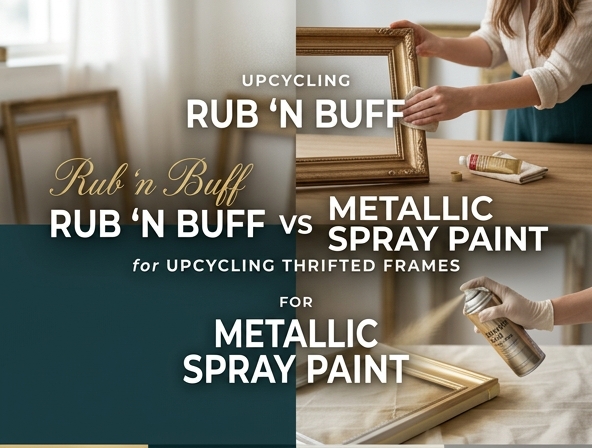
Finding the perfect vintage frame at a thrift store is an exhilarating thrill, but realizing its dingy, outdated finish clashes with your modern decor can be incredibly frustrating. As budget-conscious decorators turn to secondhand finds to add character to their spaces, the challenge lies in transforming these worn pieces without spending more on restoration than the frame itself cost.
Fortunately, achieving a luxurious, designer-level metallic finish on a shoestring budget is entirely possible. However, results vary based on the substrate; a highly ornate plaster-of-Paris frame demands a different technique than a sleek, flat plastic or wooden border. To ensure your upcycling project looks professional rather than amateurish, we will evaluate the two leading contenders: Rub 'n Buff and metallic spray paint. This comparison analyzes their application methods, coverage quality, and long-term durability, guiding you to the absolute best choice for your next DIY masterpiece.
Introduction: The Thrift Store Frame Dilemma
Thrift store shopping is a thrilling, budget-friendly treasure hunt, especially when searching for old picture frames. Often, you will find sturdy, beautifully shaped wooden or plaster frames that are held back only by their dated finishes. Upcycling these discarded pieces is an incredibly rewarding hobby that breathes new life into home decor without breaking the bank.
To transform these finds, DIY enthusiasts rely on two main contenders to achieve a premium metallic look. Rub 'n Buff offers a hand-applied, artisanal wax finish, while metallic spray paint delivers a fast, modern coating. This comparison will put these two popular finishing methods head-to-head to help you choose the absolute best option for your next thrift flip.
What is Rub 'n Buff? The Magic Wax Finish
Rub 'n Buff is a uniquely formulated metallic finish paste that behaves like magic on porous and semi-porous surfaces. Crafted from a blend of premium carnauba wax, fine metallic pigments, and select solvents, this metallic wax paste is incredibly concentrated. A tiny dab of the product yields a surprisingly rich, lustrous coverage that resembles real gilded metal.
What makes this product so beloved in the upcycling community is the way it bonds to surfaces. Instead of sitting on top like a heavy layer of plastic, it sinks into the grain of wood and clings to plaster. It is renowned for creating an authentic, antique-like metallic luster that is nearly impossible to replicate with modern synthetic coatings.
What is Metallic Spray Paint? The Modern Quick-Fix
Metallic spray paint is the go-to aerosol solution for rapid DIY transformations. Engineered for speed and ease of use, these pressurized spray cans disperse a fine mist of acrylic or enamel paint infused with reflective metallic flecks. This method allows upcyclers to coat entire frames in a matter of seconds, making it ideal for large-scale projects or multi-frame gallery walls.
The primary appeal of aerosol metallic paint lies in its uniform delivery system. It flows seamlessly over flat surfaces and hard-to-reach angles, curing to a sleek, modern, and highly reflective finish. With minimal physical exertion, spray paint offers a clean and contemporary appearance that modernizes even the most dated thrift store finds.
Cost and Budget Comparison: Pennies vs. Cans
When you are flipping thrift store finds on a budget, every penny counts. Evaluating the real-world value of these materials requires looking beyond the initial purchase price to consider actual coverage and shelf life.
- The Wax Paste Tube: A tiny tube of wax paste generally costs between six and eight dollars. Because it is highly concentrated, a single tube can easily cover dozens of frames, costing mere pennies per project. It also has an incredibly long shelf life, lasting for years without drying out if capped properly.
- The Aerosol Spray Can: A high-quality metallic spray can ranges from seven to twelve dollars. A single can typically covers only two to three medium-sized frames before running out. Additionally, spray nozzles can easily clog, sometimes rendering a half-full can unusable.
For budget-conscious crafters who flip frames frequently, the wax paste offers far superior long-term value and minimal product waste.
Step-by-Step: How to Apply Rub 'n Buff for Best Results
Preparation and Clean Up
- Clean the frame thoroughly with soap and water to remove any grease, dust, or thrifty grime.
- Squeeze a tiny, pea-sized bead of the metallic wax onto your finger or a clean, lint-free cloth.
- Apply the wax directly to the frame, rubbing it gently over the surface to build thin, even layers.
- Work the paste meticulously into all the carved details, scrollwork, and crevices using a small stencil brush.
- Allow the wax to dry for three to five minutes until it feels dry to the touch and looks slightly matte.
- Buff the frame firmly with a clean microfiber cloth to bring out a brilliant, professional metallic shine.
Step-by-Step: How to Prep and Metallic Spray Paint
Aerosol Application Instructions
- Wipe down the entire frame surface and lightly sand any glossy spots with fine-grit sandpaper.
- Apply a light, even layer of primer to seal the substrate and ensure maximum paint adhesion.
- Shake the spray can vigorously for at least sixty seconds to thoroughly distribute the metallic flakes.
- Maintain a distance of ten to twelve inches from the frame while spraying in continuous, sweeping motions.
- Apply multiple extremely thin coats, waiting a few minutes between each to prevent unsightly drips.
- Place the frame in a well-ventilated, dry area and let it cure undisturbed for twenty-four hours.
Texture and Appearance: Antique Elegance vs. Factory Smooth
The visual distinction between these two finishes is night and day. Rub 'n Buff acts like a highlight, accentuating every grain of wood and carved flourish on an ornate frame. Because it is applied by hand, it creates subtle, natural-looking variations in depth, giving the piece the heavy, solid look of aged cast metal or genuine gold leafing.
Metallic spray paint, on the other hand, delivers a uniform blanket of color that minimizes texture. It provides a flawless, contemporary, and highly reflective surface. This yields a crisp, factory-smooth appearance that is perfect for clean lines, modern design aesthetics, and sleek interiors.
Durability, Sealants, and Long-Term Wear
Once fully cured, the durability of your frame finish depends greatly on how it is handled. Rub 'n Buff bonds directly to the material and hardens into a highly durable finish. It is exceptionally scratch-resistant and does not require a topcoat, as clear sealers can actually dissolve the wax and ruin the metallic finish.
Metallic spray paint is also durable, but it is much more prone to chipping if bumped, particularly on non-porous surfaces like plastic. To protect the paint, you can apply a clear protective sealer, though you run the risk of altering the metallic sheen.
Matchmaker: Which Finish Wins for Your Specific Frame?
Detailed and Ornate Frames
- Rub 'n Buff is the undisputed champion for highly carved plaster, scrollwork, and detailed wooden frames.
Flat and Modern Frames
- Metallic spray paint is the ideal choice for wide, flat surfaces that require a perfectly uniform coating.
Metal and Plastic Frames
- Spray paint paired with a high-quality primer is superior for smooth metal or cheap plastic frames.
Final Verdict: The Best Budget Upcycling Champion
Choosing between these two legendary finishing methods comes down to the character of your thrift store find. For vintage frames with rich histories and ornate details, Rub 'n Buff is the clear winner, offering unmatched depth, an authentic antique feel, and superior value per ounce. For clean, minimalist projects that demand a flawless, contemporary gloss, metallic spray paint takes the crown.
Now that you know the strengths of each medium, you are ready to conquer the thrift aisles with confidence. Grab your keys, head to your local secondhand shop, and unleash your creativity on a forgotten frame today!
Leave a comment