
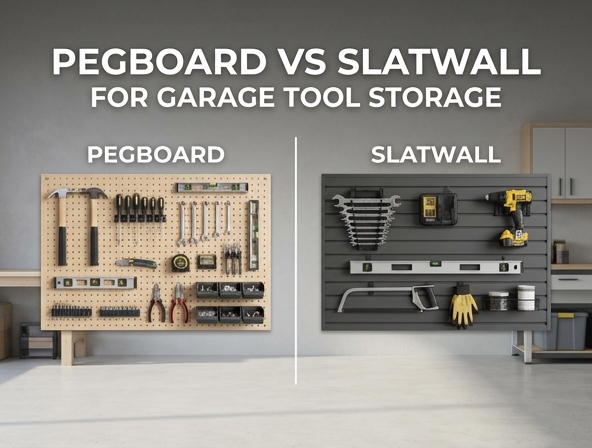
Stepping into a cluttered garage and spending twenty minutes searching for a single wrench is a frustration most homeowners know all too well. As we invest more in home workshop setups, maximizing vertical wall space has transitioned from a luxury to an absolute organizational necessity.
Getting your gear off the floor not only reclaims valuable square footage but also extends the lifespan of your expensive equipment by keeping it dry and damage-free. However, choosing the right system depends heavily on your specific inventory; a setup designed for lightweight hand tools may fail under the weight of heavier gear. For instance, while a cordless drill or heavy weed wacker requires heavy-duty support, delicate screwdrivers and tape measures need high-density, accessible placement.
In this guide, we will compare pegboard and slatwall systems across durability, load capacity, cost, and installation difficulty to help you choose the ultimate storage solution for your space.
Introduction: The Great Garage Storage Debate
For many homeowners, the garage is a chaotic battleground of misplaced tools, tangled cords, and cluttered workbenches. Reclaiming this valuable square footage requires more than just moving boxes; it demands a strategic wall storage system. Choosing the right system to maximize space and efficiency is the key to transforming your garage from a chaotic storage locker into an organized, highly functional workspace.
In this arena, two heavyweights dominate the conversation: the classic pegboard and the modern slatwall. Both options promise to lift your gear off the floor and place it within arm's reach, but they do so in completely different ways. Finding the perfect fit for your specific needs will define how you utilize your garage for years to come.
Understanding Pegboard: The Classic Choice
Pegboard has been a staple of workshops and garages for generations. Characterized by its grid of small, evenly spaced holes, this storage system offers a straightforward way to hang tools using metal hooks. Its simplicity made it the go-to choice for post-war suburban DIYers who needed an affordable, accessible way to organize hand tools.
Traditionally made from tempered masonite (a type of hardboard), pegboards have evolved over time. Today, homeowners can also choose from durable metal panels-often made of galvanized steel or aluminum-and lightweight, moisture-resistant plastic variants. Despite these material upgrades, the core design remains unchanged, continuing to serve as the classic backdrop for traditional garage workshops.
Exploring Slatwall: The Modern Contender
Slatwall is a high-density wall storage system that utilizes horizontal grooves, or slats, to hold various hooks, shelves, and bins. Originally designed for commercial retail displays to easily showcase merchandise, slatwall has made a massive transition into residential garages. Its clean lines and hidden mounting hardware offer a streamlined appearance that appeals to modern homeowners.
Slatwall panels are constructed from several robust materials, including cellular PVC, Medium-Density Fiberboard (MDF), and heavy-duty metal such as aluminum. The horizontal grooved design allows users to slide accessories anywhere along the channel, creating a highly adjustable layout. This continuous slot system eliminates the rigid grid limitations of older organizing methods, making it incredibly easy to configure and reconfigure tool storage on the fly.
Weight Capacity and Durability Comparison
Analyzing Load-Bearing Performance
When it comes to supporting heavy gear, the differences between these two systems become stark. Traditional masonite pegboard is susceptible to sagging, warping, and tear-outs if overloaded with heavy equipment. While metal pegboard panels offer a significant upgrade in strength, they still rely on small, localized contact points for hooks, which limits their absolute weight limit.
Slatwall, conversely, distributes weight across the entire length of its horizontal grooves. High-quality PVC and metal slatwalls can support hundreds of pounds per square foot. This superior load distribution makes slatwall the clear choice for holding heavy power tools, ladders, leaf blowers, and loaded storage bins without bending or breaking.
Long-Term Material Durability
Durability also depends on environmental resistance. Garages are prone to humidity, temperature fluctuations, and occasional spills. Standard wood-fiber pegboard can absorb moisture, leading to rot or mold over time. Slatwall panels made of PVC or metal are completely waterproof, impervious to pests, and easy to wipe down, ensuring they retain their structural integrity for decades.
Aesthetic Appeal and Garage Styling
The visual impact of your chosen storage system plays a major role in the overall feel of your home. Pegboard offers a utilitarian, industrial look that screams "working shop." While functional, it can sometimes look cluttered and busy, especially if the board itself starts to wear or stain. Metal pegboards in various colors can modernize this look, but the visible hole grid always maintains a distinctly retro, workshop vibe.
Slatwall delivers a high-end, professionally finished look. Because it mounts flush to the wall and covers entire studs from floor to ceiling, it mimics premium wall paneling. Slatwall comes in a wide array of finishes, including solid colors, wood grains, and metallic textures. This sleek, clean aesthetic can turn a dingy garage into an extension of the home's living space, which can significantly boost your home's appeal and resale value.
Versatility and Accessory Ecosystems
The World of Pegboard Hooks
Pegboard relies on a massive, universal ecosystem of affordable accessories. Because pegboard hole sizing is standardized (typically 1/4-inch or 1/8-inch), you can purchase hooks, baskets, and tool holders from almost any hardware store. However, these basic metal hooks can be unstable, often lifting out of the hole when you remove a tool.
The Premium Slatwall Range
Slatwall systems feature a highly versatile but often proprietary accessory ecosystem. While some standard hooks fit multiple slatwall brands, many manufacturers design specialized, heavy-duty brackets, deep wire baskets, magnetic tool strips, and shelving units that lock securely into their specific groove designs. This security prevents accessories from wobbling or falling off when retrieving your gear.
- Universal pegboard accessories are cheap and easy to source anywhere.
- Slatwall accessories lock tightly into place, preventing accidental falls.
- Slatwall supports larger, bulkier items like heavy-duty shelves, bike racks, and storage bins.
- Pegboard excels at organizing small hand tools like wrenches, screwdrivers, and pliers.
Installation Process: DIY vs. Professional Help
Installing pegboard is a relatively straightforward DIY project that most homeowners can tackle in an afternoon. Because pegboard requires a small gap behind it for the hooks to insert, you cannot mount it flush against a drywall surface. You must first install wooden furring strips to the wall studs, and then screw the pegboard sheets to those strips. Standard woodworking tools, a level, and a drill are all you need to get the job done.
Slatwall installation is more labor-intensive and demands greater precision. The heavy panels must be leveled perfectly and screwed directly into wall studs to ensure maximum load capacity. Cutting tongue-and-groove PVC or heavy MDF panels requires specialized saws, and handling large sections often requires two people. While a confident DIYer can install slatwall, many choose professional installation to guarantee a seamless, structurally sound finish across large wall spans.
Cost Analysis: Budget-Friendly vs. Premium Investment
| Factor | Pegboard System | Slatwall System |
|---|---|---|
| Initial Panel Cost | Low (Very budget-friendly) | Moderate to High |
| Accessory Prices | Inexpensive and widely available | Premium pricing for proprietary hooks |
| Installation Expenses | Minimal DIY costs | Higher material and potential labor costs |
| Overall Value | Excellent for basic tool storage | High return on aesthetic and durability |
Best Use Cases: Which Should You Choose?
When Pegboard is the Ideal Choice
Pegboard is the clear winner for budget-conscious homeowners who want a classic, functional setup. If your primary goal is to organize a collection of lightweight hand tools-such as wrenches, hammers, screwdrivers, and pliers-directly above a dedicated workbench, pegboard offers a highly efficient, cost-effective solution. It is also perfect for small workspaces where heavy equipment storage is not a priority.
When Slatwall is the Superior Option
Slatwall is the premier choice if you have a larger budget and want to transform your entire garage into a pristine, high-capacity storage zone. It is the superior option for storing heavy power tools, bulky lawn equipment, sporting goods, and large storage bins. Additionally, if you prioritize modern aesthetics, durability against humidity, and a system that adds long-term value to your home, slatwall is the clear victor.
Final Verdict: Organizing Your Ultimate Garage
Deciding between these two exceptional storage systems comes down to a balance of your financial budget, the weight of the items you need to store, and your personal style preferences. You do not have to settle for a messy, disorganized garage when these highly customizable options are ready to streamline your workspace.
For a cost-effective, time-tested approach to small tool organization, the humble pegboard remains an outstanding ally. For those seeking a heavy-duty, visually stunning, and highly versatile transformation, investing in a robust slatwall system will pay dividends in both performance and aesthetics. Evaluate your unique garage needs and select the system that will help you build your ultimate organized space.

Leave a comment