
Struggling to select the perfect texture for your living room accent wall can feel overwhelming, especially when trying to avoid a look that feels quickly dated or poorly executed. As interior design shifts toward organic modern aesthetics, tactile walls have transitioned from a niche luxury into an essential design element.
Investing in an artisanal finish not only elevates your daily living experience but also significantly boosts your home's perceived value. However, we must stipulate that neither material is a magic, one-size-fits-all solution; both demand specific substrate preparation and distinct application techniques to achieve their signature depth.
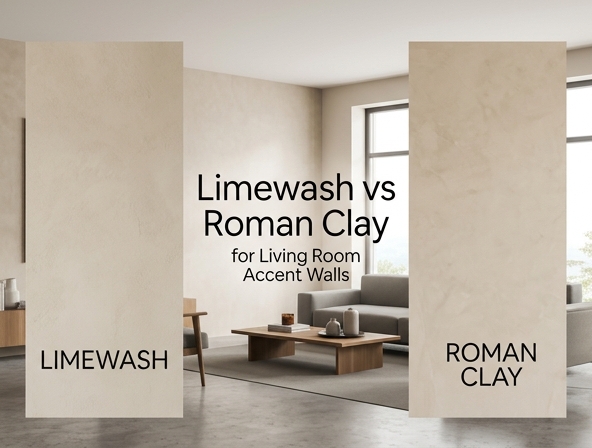
For example, while chalky, feathered limewash evokes the sun-drenched, weathered warmth of a Mediterranean villa, the marble-dust composition of Roman clay delivers a smooth, suede-like finish reminiscent of contemporary gallery plaster. To guide your decision, this comparison will evaluate limewash versus Roman clay across durability, cost, and DIY-friendliness, ensuring you select the ideal finish for your space.
Introduction: Elevating Your Living Room with Textured Walls
Modern living room design is undergoing a tactile revolution. Homeowners and interior designers are moving away from flat, sterile paint in favor of depth, character, and organic warmth. Textured accent walls have emerged as the premier way to introduce personality into a space without cluttering it. When it comes to achieving this high-end, tactile look, two outstanding finishes lead the industry: limewash and Roman clay. Both materials offer a breathtaking alternative to standard latex paint, turning simple drywall into an artistic statement.
Understanding Limewash: Old-World Charm Meets Modern Minimalist
Limewash is one of the oldest decorative finishes in human history, dating back to Roman times, yet it feels perfectly at home in contemporary minimalist interiors. This ancient paint alternative offers a unique, breathable surface that ages beautifully over time. Its key characteristics include:
- Natural Composition: Made from crushed, slaked limestone mixed with water and natural mineral pigments, making it completely non-toxic and eco-friendly.
- Chalky Suede Texture: It penetrates the surface to create a soft, matte, and chalky texture that mimics the appearance of weathered stone or suede.
- Breathability: The high pH of the lime makes it naturally mold-resistant and highly breathable, improving indoor air quality.
Demystifying Roman Clay: The Smooth, Plaster-Like Alternative
Roman clay is a modern plaster finish designed to bring the luxurious look of stone and plaster to interior walls. Unlike heavy traditional plasters, it is applied in thin, delicate layers to create a sophisticated, tactile surface with subtle movement. Its defining features include:
- Composition: It is formulated from real plaster, clay, and marble dust, resulting in a smooth, spreadable compound.
- Smooth Finish: It dries to a smooth, warm-to-the-touch finish that resembles polished marble or fine Venetian stucco.
- Subtle Movement: The variation in thickness during application creates organic, cloudy patterns that capture depth beautifully.
Aesthetic Showdown: Chalky Clouds vs. Marbled Depth
Choosing between these two materials depends on the specific visual mood you want to create. Limewash delivers a highly diffuse, ultra-matte texture that absorbs light, creating a cloudy, historic feel. Roman clay, on the other hand, offers a more polished appearance with subtle sheen and physical depth, feeling more like smooth stone.
| Feature | Limewash | Roman Clay |
|---|---|---|
| Visual Effect | Cloudy, matte, and weathered | Smooth, marbled, and polished |
| Texture to Touch | Chalky and suede-like | Smooth and plaster-like |
| Sheen Level | Ultra-flat matte | Subtle, satin-like sheen |
DIY Friendliness: Brush Strokes vs. Trowel Techniques
The application process for these two finishes requires entirely different tools and techniques, which is a major consideration for DIY enthusiasts.
- Applying Limewash: Limewash is applied using a specialty block brush. The applicator paints in a cross-hatch or random X pattern. This technique builds up the characteristic cloudy variations as the wet paint overlaps.
- Applying Roman Clay: Roman clay is applied using a putty knife or a flexible plastic trowel. You must apply the clay in thin, sweeping motions, scraping off excess material to create a flat but textured layer.
Durability and Maintenance: Which Finish Stands the Test of Time?
Maintenance is a crucial factor for busy living rooms. Because both finishes are more delicate than standard latex paint, they require different approaches to upkeep and protection.
Limewash can be easily touched up by diluting some of the original mixture and brushing it over scuffs, whereas Roman clay requires a light sanding and a fresh troweled layer to seamlessly blend repairs.
Limewash is naturally breathable but can absorb oils and water easily. To protect it in high-traffic living areas, applying a specialized mineral sealer is highly recommended. Roman clay is inherently more durable due to its plaster base, but it also benefits from an acrylic sealer to prevent staining and allow for gentle wiping.
The Role of Light: How Sunlight Transforms the Texture
Lighting plays a transformative role in how these textured finishes appear throughout the day. Natural sunlight streaming through a window will catch the micro-textures of limewash, highlighting its chalky, multi-toned depths. The matte quality of limewash absorbs light, reducing glare and casting a soft, serene glow across the living room.
In contrast, Roman clay interacts with light through its smooth surface. Under direct sunlight or warm artificial lighting, the plaster-like finish reflects light across its varying levels of thickness. This creates a striking play of shadows and highlights, showcasing a marbled movement that changes dynamically as you walk through the room.
Budget Breakdown: Material and Labor Costs Compared
Understanding the financial investment is key to planning your living room redesign. Limewash is generally the more economical choice. A single bucket of limewash covers a massive surface area because it is applied thin and often diluted with water. The material cost for a DIY limewash project remains very budget-friendly, while hiring a professional applicator will run higher due to the specialty labor required.
Roman clay is a premium specialty plaster product, making the initial material costs higher than limewash. Additionally, because Roman clay application is highly labor-intensive-requiring multiple coats troweled by hand-hiring a professional to apply Roman clay will significantly increase your overall budget compared to limewash.
The Verdict: Choosing the Perfect Finish for Your Living Room Style
Deciding between these two stunning finishes comes down to the design style of your home. Each finish complements specific aesthetics, elevating your living room accordingly.
- Limewash pairs beautifully with rustic, wabi-sabi, farmhouse, or bohemian design styles, where imperfect, earthy, and organic textures are celebrated.
- Roman clay is the ideal match for contemporary, transitional, minimalist, or high-end modern styles, where a sleek, stone-like elegance is desired.
Conclusion: Transform Your Space with Texture
Incorporating texture into your living room is one of the most impactful design choices you can make. Limewash offers an airy, historic charm with its cloudy matte finish, while Roman clay brings a refined, luxurious depth reminiscent of polished plaster.
To make the best choice for your unique space, order samples of both finishes. Paint or trowel a small test patch on your living room wall to see how the textures interact with your lighting and furniture. By taking this step, you will confidently select the finish that turns your living room into a sophisticated sanctuary.
Leave a comment