
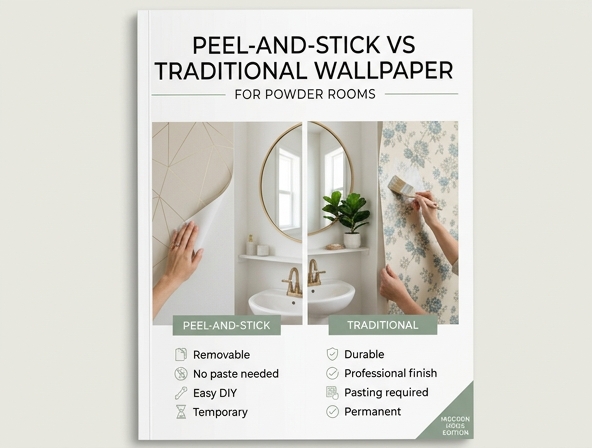
Designing a powder room often sparks a frustrating creative dilemma: you want to make a bold design statement, but the fear of peeling edges and intensive installation can stall your project entirely. Before choosing a pattern, it is essential to analyze the unique microclimate of these compact spaces. While powder rooms lack the intense steam of a full bath, frequent handwashing still subjects walls to localized humidity.
Selecting the right wallcovering guarantees a stunning, high-impact aesthetic without the headache of premature peeling. However, this success hinges on a critical stipulation: the material must align with your wall texture and ventilation limits. For instance, while a moisture-resistant vinyl peel-and-stick suits quick updates, traditional non-woven pasted paper offers unmatched durability near splash zones.
To help you navigate this decision, we will compare both options across key criteria, including installation complexity, moisture resistance, lifespan, and removal ease.
The Powder Room Wallpaper Dilemma
The powder room is often the most overlooked yet high-potential space in a home. Because of its small footprint, this half-bath serves as the perfect canvas for bold design experiments that might feel overwhelming in larger living areas. It is a place where you can unleash your creativity and make a lasting impression on guests. When it comes to transforming these walls, two main contenders dominate the design world: peel-and-stick wallpaper and traditional wallpaper.
Choosing between these two options involves weighing convenience against permanence, and modern innovation against time-tested craftsmanship. This comparison will help you navigate the benefits and drawbacks of each method so you can confidently select the perfect backdrop for your half-bath.
What is Peel-and-Stick Wallpaper?
Peel-and-stick wallpaper, also known as self-adhesive wallpaper, is a modern design solution that functions essentially like a giant sticker for your walls. It features a decorative front side and a pre-applied adhesive backing protected by a paper liner. To install it, you simply pull off the backing and smooth the sheet directly onto a clean, flat surface.
This product has gained immense popularity for several key reasons:
- It requires no messy glues, water, or specialized pasting tables.
- It is highly forgiving, allowing you to pull it off and reposition it during installation.
- It offers a low-commitment option perfect for renters or those who love to change their decor frequently.
The Classic Appeal of Traditional Wallpaper
Traditional wallpaper represents the heritage of interior decoration. Unlike self-adhesive varieties, classic wallpaper relies on external adhesives. This generally involves either the paste-the-paper method, where glue is applied directly to the backing of the wallpaper sheets, or the modern paste-the-wall technique, where the adhesive is rolled straight onto the drywall before hanging the dry sheets.
Despite the rise of temporary options, traditional wallpaper remains the undisputed industry standard for high-end interior design. It offers an unparalleled level of luxury, weight, and seamless integration with the architecture of a home, making it the preferred choice for historic restorations and luxury residences alike.
The Moisture and Humidity Factor in Powder Rooms
A powder room is unique because it lacks a bathtub or shower, meaning it does not experience the intense, billowy steam of a full bathroom. However, it is not entirely dry. Splash zones around the sink, damp hand towels, and minor humidity shifts from running hot water still present environmental challenges.
Peel-and-stick wallpaper relies on pressure-sensitive adhesives that can struggle in damp environments. If moisture creeps behind the edges, the adhesive can degrade quickly, leading to peeling seams.
In contrast, traditional wallpaper utilizes heavy-duty paste that cures and bonds chemically with the wall. Once dry, this bond is highly resistant to minor humidity, making it far more reliable near sinks where water splashes are common.
Installation Battle: DIY vs. Professional Help
Hanging wallpaper in a confined powder room requires precision around tight corners, pipes, and vanity mirrors. The application process for these two materials could not be more different.
- With peel-and-stick wallpaper, the adhesive is immediately sticky. If you make a mistake, you must peel the entire sheet off to realign it. This dry adhesive can stretch the vinyl material, making pattern matching difficult as you progress.
- Traditional wallpaper uses wet paste, which actually works to your advantage. The wet glue allows the paper to slide easily across the wall surface. This "slip-and-slide" quality makes it incredibly easy to nudge seams together perfectly before the paste begins to dry.
While many homeowners attempt peel-and-stick as a weekend DIY project, traditional wallpaper often benefits from the expertise of a professional installer to ensure flawless alignment and long-term stability.
Durability and Longevity Over Time
When investing time and money into decorating your home, lifespan is a critical consideration. Peel-and-stick wallpaper is designed with temporary installations in mind. Over time, the self-adhesive backing can dry out, lose its grip, or shrink due to temperature fluctuations, meaning you may see peeling within two to five years.
Traditional wallpaper, when installed correctly with high-quality adhesive, is built to last for decades. The paste creates a permanent bond that resists lifting and curling at the seams, keeping your powder room looking pristine for fifteen years or more.
If you want a quick fix, temporary works beautifully, but long-term endurance always favors the classic pasting method.
Aesthetics, Texture, and Material Quality
The visual impact of your powder room depends heavily on the materials used. Traditional wallpaper shines in this category, offering a massive variety of tactile options. It is available in luxurious textures such as genuine grasscloth, embossed silk, heavy-weight non-woven fibers, and metallic foils. These materials catch the light beautifully and add a sense of three-dimensional depth that immediately elevates a small space.
On the other hand, peel-and-stick wallpaper is largely printed on flat vinyl or polyester. While the print quality of modern self-adhesive paper can be incredibly sharp, it lacks the rich texture and heavy feel of natural fibers. Up close, peel-and-stick often retains a slight sheen that can look less sophisticated under direct bathroom lighting.
Removal Process and Rental-Friendly Considerations
Eventually, every design style needs an update, or a lease agreement comes to an end. Understanding how these wallpapers come down is just as important as knowing how they go up.
- Peel-and-Stick: This is the undisputed champion of easy removal. You can simply grab a corner and pull the entire sheet down in seconds. It rarely leaves sticky residue and keeps the underlying drywall completely undamaged, making it the premier choice for renters.
- Traditional Wallpaper: Removing this is a labor of love. It represents a long-term commitment that requires scoring the surface, applying chemical stripping agents, or using a steam machine to liquefy the old paste before scraping it off.
If you anticipate changing your style frequently or do not own the property, the removal effort is a major deciding factor.
Cost Comparison: Initial Price vs. Long-Term Value
To evaluate the financial aspect of this project, you must look at both the upfront investment and the longevity of your choice. While peel-and-stick is cheaper to install yourself, traditional paper can offer better value over its lifespan.
| Factor | Peel-and-Stick Wallpaper | Traditional Wallpaper |
|---|---|---|
| Average Roll Price | Low to Moderate ($30 - $60 per roll) | Moderate to High ($50 - $200+ per roll) |
| Required Tools | Utility knife, smoothing tool | Paste, rollers, primer, pasting table, smoother |
| Installation Cost | Usually free (DIY-friendly) | High (Professional installer recommended) |
| Lifespan Value | Lower (needs replacing every few years) | High (lasts decades with proper care) |
The Final Verdict: Which is Better for Your Powder Room?
The ideal choice for your powder room hinges on your long-term goals, design taste, and living situation. If you are a renter who wants to personalize your bathroom without risking your security deposit, or if you love changing your home decor with the seasons, peel-and-stick wallpaper is the perfect, low-risk option for you.
However, if you own your home, crave tactile luxury, and want a durable design statement that will stand the test of time, investing in traditional wallpaper is the superior path. Whichever option you choose, a bold pattern in the powder room is guaranteed to transform a small functional space into a stunning design destination.
Leave a comment