
Navigating the world of eco-friendly home renovations can often feel like an overwhelming minefield. You want a beautiful, non-toxic space for your family, yet standard "low-VOC" options still off-gas synthetic chemical residues that compromise your indoor air quality.
Before selecting a replacement, it is vital to understand how traditional acrylic paints trap moisture in a synthetic, plastic-like envelope. Opting for mineral-based alternatives instead grants your living space a naturally breathable barrier that actively regulates humidity and deters mold. However, we must stipulate that these raw mediums behave differently than modern latex; they require specific prep work and porous substrates to cure properly. For instance, while a velvety Roman clay adds plaster-like depth to primed drywall, a traditional slaked lime wash relies on a chemical carbonation process to bond beautifully with raw brick or plaster.
In this guide, we will compare lime wash and clay paint across composition, durability, and ease of application to help you select the ideal, health-first finish for your home.
Introduction: The Rise of Breathable, Non-Toxic Walls
For decades, standard synthetic latex paints have dominated the home improvement market. While convenient, these petroleum-based coatings act like a plastic wrap over your home, sealing in moisture and continuously off-gassing synthetic chemicals into your living spaces. As awareness of indoor environmental health grows, conscious homeowners and designers are turning back to nature for solutions. Natural wall finishes offer a clean break from synthetic alternatives, prioritizing both ecological sustainability and human health.
Among the most celebrated natural alternatives are lime wash and clay paint. Unlike their chemical-laden counterparts, these finishes are entirely VOC-free, eliminating the risk of toxic off-gassing. Their exceptional breathability allows moisture to move freely through walls, preventing trapped dampness and supporting a healthier indoor climate. By choosing these ancient, mineral-rich finishes, you can transform your home into a beautiful, toxin-free sanctuary that breathes alongside you.
Understanding Lime Wash: Old-World Charm and Chemistry
Lime wash is one of the world's oldest decorative finishes, dating back to ancient Egypt and Rome. Far from modern paint, it is a simple, mineral-based mixture made from crushed, slaked limestone and water. When applied to a surface, it does not merely dry; it undergoes a remarkable chemical transformation that bonds it permanently to the substrate.
The unique performance of lime wash is driven by its natural mineral properties:
- Chemical Calcification: As lime wash cures, it absorbs carbon dioxide from the surrounding air, turning the calcium hydroxide back into solid calcium carbonate (limestone). This process bonds the finish directly into the mineral substrate of the wall.
- High pH Level: With a naturally high alkaline pH of around 12, lime wash is a natural fungicide and biocide, making it highly resistant to mold, mildew, and bacteria without the need for synthetic additives.
- Luminescent Aesthetic: Because of the flat, microscopic crystals in the cured limestone, light refracts off the surface in a unique, glowing, and multi-dimensional pattern.
Exploring Clay Paint: Earthy Textures and Natural Pigments
Clay paint is a highly tactile, breathable wall finish crafted from one of the earth's most abundant raw materials. It is formulated by blending unprocessed clays with natural mineral pigments, fine sands, and organic plant-based binders like starch or cellulose. This simple recipe yields a finish that is completely free of synthetic resins, oils, and petrochemicals.
The sensory and functional appeal of clay paint lies in its raw composition:
- Natural Clay Minerals: Selected for their purity, structural integrity, and natural binding capabilities.
- Plant-Based Binders: Water-soluble binders derived from agricultural byproducts ensure the paint adheres safely to plaster and drywall.
- Earthy Pigments: Sourced directly from iron oxides, ochres, and siennas, offering a rich color palette that synthetic pigments cannot replicate.
Applying clay paint introduces an incredibly *velvety*, *ultra-matte* aesthetic to interior spaces. Beyond its *soft*, light-absorbing look, clay operates as a natural hygrometer. Its porous structure allows it to absorb excess moisture from the air during high humidity and release it back when the air drys, naturally balancing your home's indoor humidity levels.
Health Benefits: VOCs, Breathability, and Indoor Air Quality
Modern indoor spaces often harbor concentrations of pollutants up to five times higher than outdoor air, largely due to synthetic building materials. Both lime wash and clay paint offer powerful remedies to this modern problem by establishing a healthier indoor microbiome.
Eliminating Toxic Off-gassing
Standard paints release Volatile Organic Compounds (VOCs) for years after application, contributing to headaches, respiratory issues, and allergic reactions. Both lime wash and clay paint are 100% VOC-free. Because they contain no synthetic solvents or plasticizers, they release zero toxic emissions into your home, ensuring the air you breathe remains clean from day one.
Preventing Mold and Enhancing Breathability
Synthetic paints create a vapor barrier that traps humidity inside wall cavities, creating a breeding ground for toxic black mold. The high vapor permeability of lime wash and clay paint allows moisture to pass through walls effortlessly. Lime wash goes a step further by using its high alkaline pH to actively prevent mold spores from taking root, making it an exceptional choice for asthma and allergy sufferers seeking a clean, allergen-free environment.
Visual Comparison: Mottled Patina vs. Velvety Matte
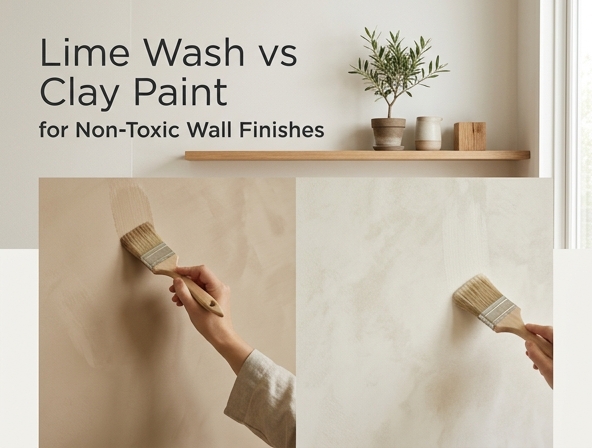
While both finishes are deeply rooted in nature, they offer distinct, beautiful visual styles. Lime wash is celebrated for its historic, weathered charm. As it is applied with a brush, it dries to reveal a suede-like, mottled patina with subtle color variations. The way the cured limestone crystals reflect light gives the walls a dynamic, glowing quality that shifts throughout the day as natural sunlight moves across the room.
In contrast, clay paint delivers a sense of serene, quiet minimalism. It dries to an incredibly flat, ultra-matte finish that absorbs light rather than reflecting it. This creates a deeply saturated, uniform field of color with a rich, velvety texture that feels warm and grounding to the touch.
"While lime wash dances actively with daylight, casting shifting shadows and historic depth, clay paint quietly cradles the light, wrapping a room in a soft, steady cocoon of mineral color."
Application and DIY Friendliness: Which Is Easier to Apply?
When deciding between these two natural finishes, understanding the application process and your comfort level with DIY projects is key. Both require different tools, prep work, and techniques to achieve their signature look.
The Art of Applying Lime Wash
Lime wash cannot be applied with a standard roller; it requires a specialized block brush and a dynamic, loose application technique. To ensure proper bonding, the surface must be highly porous or coated with a specialized mineral primer. Painters must work in random, overlapping cross-hatch strokes, keeping a wet edge to avoid harsh seams. This requires a bit of practice and an artistic eye to get the mottled patina just right.
The Simplicity of Clay Paint
Clay paint is incredibly user-friendly and behaves much like standard wall paint. It can be applied directly to primed drywall or plaster using a standard roller or brush. It flows smoothly, covers exceptionally well, and does not require specialized artistic techniques to look uniform and professional. This makes clay paint the clear winner for traditional DIYers looking for an easy weekend upgrade.
- Preparation: Clay paint requires standard drywall priming; lime wash requires a specialized mineral primer to ensure chemical bonding.
- Application Tool: Clay paint works beautifully with standard rollers; lime wash requires a mineral-resistant block brush.
- Technique Complexity: Clay paint applies in standard uniform passes; lime wash requires active, cross-hatch brush strokes to build depth.
Durability, Lifespan, and Maintenance
The long-term performance of these finishes depends heavily on the mineral science behind them. Lime wash is incredibly durable because it undergoes calcification, curing into a stone-like layer of calcium carbonate. Over time, it does not peel or flake; instead, it gracefully wears down. Because it is highly breathable and mineral-dense, it handles exterior and high-humidity interior walls with ease. To clean lime wash, you can gently wipe it with a damp sponge, and any scuffs can be easily touched up by brushing a fresh, diluted layer of lime wash over the affected area.
Clay paint, while highly durable in dry environments, is sensitive to water because its binders are water-soluble. Exposure to heavy water spray or scrubbing will dissolve the clay. Therefore, you must never scrub clay paint with water or harsh chemical cleaners. To clean clay paint, gently vacuum away dust or wipe with a dry, soft microfiber cloth. For high-traffic areas prone to splashes, clay paint can be sealed with a specialized breathable natural sealer, though this may slightly reduce its natural matte texture and humidity-regulating properties.
Cost and Budget: Natural Paint Pricing Demystified
Investing in natural wall finishes often comes with a higher upfront material cost compared to cheap synthetic latex paints, but the benefits to your health and the longevity of your walls make it a worthwhile investment. To help plan your budget, the table below outlines the financial differences between the two finishes, factoring in coverage and accessory needs.
| Factor | Lime Wash | Clay Paint |
|---|---|---|
| Average Cost per Gallon | $70 - $110 | $80 - $120 |
| Coverage per Gallon | 250 - 350 sq. ft. (requires 2-3 thin coats) | 300 - 400 sq. ft. (requires 2 coats) |
| Primer Requirements | Specialized mineral or quartz primer ($60-$80/gal) | Standard breathable universal primer ($40-$60/gal) |
| Protective Sealer Needed? | Optional (breathable mineral sealer for wet areas) | Highly recommended in high-traffic/moist areas |
| DIY Friendliness | Moderate (requires specific brushing technique) | High (applies easily with roller or brush) |
Room-by-Room Guide: Best Matches for Your Home
Every room in your home has a unique microclimate and functional demand. Selecting the right natural finish ensures that your walls perform beautifully while looking their best.
Bathrooms and Powder Rooms
Due to high humidity and the risk of mold, Lime Wash is the ideal choice here. Its high pH actively prevents mold and mildew from growing in damp environments, and its mineral structure allows steam to escape without causing the finish to peel or bubble.
Bedrooms and Nurseries
For cozy, intimate spaces, Clay Paint is unmatched. Its velvety, light-absorbing qualities create a serene, restful atmosphere, while its ability to regulate moisture levels helps maintain a comfortable air balance through the night, supporting deep, restorative sleep.
Living Rooms and Hallways
Both finishes work beautifully here, but your choice depends on your design goals. If you want a striking, plaster-like accent wall with movement, choose Lime Wash. If you prefer a clean, warm, minimalist backdrop that highlights art and furniture, choose Clay Paint.
Kitchens
Kitchens face grease, steam, and spills. Lime Wash protected with a breathable mineral sealer is highly recommended for kitchen walls, as it can withstand light wiping and humidity far better than unsealed clay paint.
The Final Verdict: Choosing the Perfect Finish for Your Space
Both lime wash and clay paint represent an elegant return to safe, breathable, and earth-friendly design. By eliminating toxic chemicals and supporting your home's natural moisture balance, both finishes create a healthier indoor environment that supports long-term wellness.
To help you make your final choice, use this quick-reference checklist:
- Choose Lime Wash if you love dynamic, textured walls with a historic, mottled patina, need a mold-resistant finish for high-humidity areas, and enjoy the artistic process of brush application.
- Choose Clay Paint if you prefer a rich, uniform, ultra-matte finish, want an easy DIY application using standard rollers, and desire a soft, grounding color palette that actively balances room humidity.

Leave a comment