
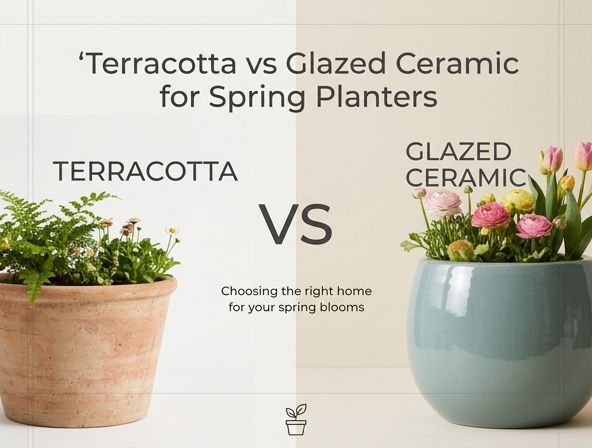
Every spring, gardeners face the frustrating disappointment of watching healthy plants wither, unaware that the culprit is often the container itself. Before selecting premium soil or fertilizers, understanding how a pot's material regulates root moisture and temperature is the critical foundation of container gardening. Selecting the ideal vessel grants your plants the precise microclimate they need to flourish with minimal daily intervention.
However, there is no one-size-fits-all container; success depends entirely on matching the pot's physical properties to your specific plant's anatomy. For instance, moisture-loving ferns will quickly desiccate in porous terracotta, while desert succulents risk root rot in non-breathable glazed ceramic.
This comprehensive comparison examines the structural differences, moisture retention capabilities, and durability of both terracotta and glazed ceramic, providing you with the clear criteria needed to optimize your spring planting strategy.
Introduction to Spring Pot Selection
As spring approaches, gardeners everywhere prepare to dust off their trowels and welcome new life into their yards and homes. While choosing the right soil and seeds is vital, the container holding your plants plays an equally critical role in their survival. The debate between classic terracotta and vibrant glazed ceramic pots remains a hot topic in the horticultural world. The core decision gardeners face is balancing root health with aesthetic design, as your container choice directly dictates moisture levels, temperature regulation, and overall plant vitality.
What is Terracotta? The Clay Classic
Terracotta, which translates to "baked earth" in Italian, is a time-tested material loved by gardeners for generations. Made from natural, iron-rich clay fired at relatively low temperatures, these pots feature a warm, reddish-brown hue. Their unglazed finish leaves the clay's natural pores completely open, allowing air and water to pass through the pot's walls seamlessly.
- Composition: Natural, iron-rich earthenware clay fired in a kiln.
- Appearance: Matte, earthy, reddish-orange finish that develops a natural patina over time.
- Texture: Coarse, highly porous surface that allows for natural breathability.
What is Glazed Ceramic? The Colorful Competitor
Glazed ceramic pots offer a glossy, colorful alternative to traditional clay. These containers undergo a secondary process where a liquid glass coating is applied to the clay body before it is fired again at high temperatures. This intense heating vitrifies the glaze, sealing the porous clay body underneath and creating a smooth, impervious outer layer.
- Composition: Heavy clay coated with a liquid glass finish and fired at extreme temperatures.
- Appearance: Glossy or matte glazed finish available in an endless array of vibrant colors and intricate patterns.
- Texture: Non-porous, waterproof surface that prevents any air or water transfer through the walls.
Moisture Control: Porosity vs. Retention
The fundamental difference between these two vessels lies in how they manage water. Terracotta's highly porous walls act like a natural wick, pulling excess moisture out of the soil and releasing it into the air. This active evaporation prevents waterlogged soil, drastically reducing the risk of root rot. Conversely, glazed ceramic pots are entirely non-porous. The glass seal locks water inside the container, keeping the soil damp for much longer periods.
Temperature and Climate Resilience
Spring weather can be notoriously unpredictable, swinging from sunny afternoons to sudden overnight frost. Terracotta pots, because they absorb water into their clay walls, are highly susceptible to freeze-thaw cycles. When the absorbed water freezes, it expands, causing the clay to crack or flake. Glazed ceramic pots, especially high-fired stoneware options, resist water absorption and offer better soil insulation, shielding delicate spring roots from rapid temperature drops.
Weight and Durability
| Feature | Terracotta Pots | Glazed Ceramic Pots |
|---|---|---|
| Weight | Lightweight to medium, making them easy to rearrange when dry. | Heavy and highly stable, anchoring plants against strong spring winds. |
| Lifespan | Fragile; easily chips or shatters if dropped or exposed to frost. | Sturdy and highly durable, though still susceptible to hard impacts. |
Aesthetic Influence on Garden Design
The pots you choose define the visual character of your garden or home interior, working as design elements in their own right.
The Rustic Charm of Terracotta
Terracotta effortlessly channels a warm, Mediterranean or Southwestern aesthetic. Over time, these pots accumulate mineral salts, developing a beautiful, chalky white patina that adds antique character and blends seamlessly into natural, cottage-style landscapes.
The Modern Flair of Glazed Ceramic
Glazed ceramic brings a bold, contemporary energy to any setting. With an infinite spectrum of colors, high-gloss finishes, and artistic patterns, these pots serve as vibrant statement pieces that complement eclectic, modern, or minimalist garden designs.
Cost and Accessibility
Budget is a major consideration for any gardener planning a spring setup. Standard unglazed terracotta pots are incredibly inexpensive and widely available at almost any garden center, making them perfect for large-scale planting. In contrast, glazed ceramic pots are artisanal and highly decorative, requiring a larger financial investment up front due to the complex manufacturing process.
Budget Tip: Buy basic terracotta pots in bulk for your seedlings and propagation projects, and save your budget to invest in one or two stunning glazed ceramic showcase pots for your patio.
Matching Plants to Pot Types
Not all plants thrive in the same environment. Matching your botanical collection to the correct pot material ensures successful spring growth.
- Succulents, Cacti, and Mediterranean Herbs
- These plants thrive in dry, fast-draining soil. Terracotta's porous walls pull excess water away, mimicking their natural arid habitats and preventing root damage.
- Ferns, Calatheas, and Tropical Houseplants
- These species require consistently moist, humid conditions. Glazed ceramic pots lock in moisture, preventing the roots from drying out between waterings.
Making Your Final Spring Selection
Choosing the right container depends on your gardening habits, the local climate, and the specific plant varieties you wish to grow. By analyzing your unique environment, you can make an informed choice that guarantees a lush, blooming garden.
- Assess your watering habits to determine if you are prone to overwatering or underwatering.
- Identify your plant's moisture needs, grouping drought-tolerant plants separately from moisture-loving varieties.
- Check your local spring climate for late frost warnings and choose frost-resistant glazed pots if keeping plants outdoors.
- Coordinate your garden style, choosing rustic terracotta for a natural look or glazed ceramic for vibrant focal points.
Leave a comment