
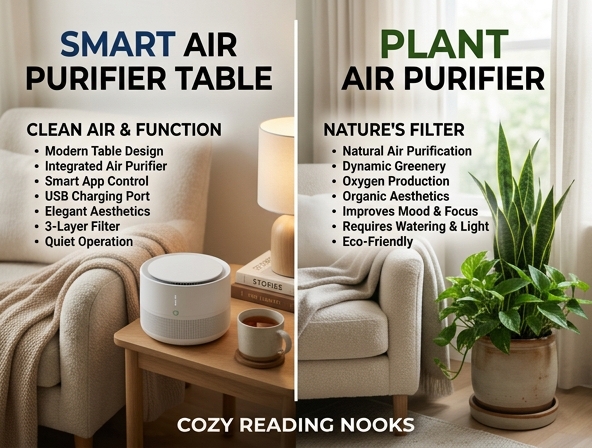
Creating the perfect reading nook is an art, yet many book lovers find their quiet sanctuaries disrupted by stagnant air, floating dust, and seasonal allergens that trigger sneezes instead of serenity. Before investing in standard, bulky appliances that disrupt your decor, it is essential to consider how air-cleaning technology can seamlessly integrate into small, curated spaces. Selecting a dual-purpose system grants you both pristine breathing zones and an elevated aesthetic, turning functional utility into a design statement.
However, we must stipulate that while both tech-forward and botanical options capture particulate matter, their filtration capacities differ. For instance, a smart table like the IKEA Starkvind offers active HEPA filtration, whereas a living Peace Lily relies on passive phytoremediation. To help you make an informed decision, this comparison will evaluate smart purifier tables against plant-based alternatives, analyzing their footprint, maintenance, and air-cleansing power for your cozy escape.
Setting the Scene: The Ultimate Cozy Reading Nook
Picture this: a rainy Sunday afternoon, a plush armchair draped with a soft knit blanket, and a steaming mug of chamomile tea resting nearby. You open your favorite novel, ready to lose yourself in another world. However, to truly sink into a state of deep relaxation, the atmosphere must be pristine. Clean, fresh air is the silent foundation of comfort, but how do you achieve it in your personal sanctuary? The choice often boils down to a modern dilemma: do you opt for a sleek, high-tech smart air purifier table that blends seamlessly with your electronic lifestyle, or do you embrace the living, breathing tranquility of a natural plant air purifier? Both promise to banish dust and toxins, but they do so in completely different ways.
Unveiling the Smart Air Purifier Table
A smart air purifier table represents the intersection of modern home decor and advanced environmental engineering. It functions as a dual-purpose side table, offering a flat surface for your books and mugs while silently housing a high-efficiency particulate air filtration system underneath.
- True HEPA Filtration: Capable of capturing 99.97% of airborne particles, including dust, pollen, and pet dander.
- Dual-Purpose Design: Acts as a functional piece of furniture while cleaning the air, saving valuable floor space.
- Real-Time Air Monitoring: Built-in sensors detect air quality levels and adjust fan speeds automatically.
Discovering the Plant Air Purifier
On the other end of the spectrum is the plant air purifier, a clever innovation that upgrades natural greenery with modern physics. Instead of relying solely on slow, passive leaves, these devices use quiet, active ventilation to pull air directly through the plant's root system, where the real magic happens.
- Phytoremediation Booster: The active fan directs airflow to the roots, speeding up the biological breakdown of toxins.
- Living Ecosystem: Employs real, air-purifying indoor plants like peace lilies or snake plants.
- Natural Humidification: Transpiration from the living foliage gently adds moisture to dry indoor environments.
Aesthetics and Design: High-Tech vs. Natural Ambiance
Visual harmony is vital when curating a reading nook. A smart air purifier table brings a sleek, minimalist aesthetic with clean lines, smooth wood-grain finishes, and concealed touch-sensitive controls. It is designed to blend effortlessly into a contemporary home, acting as a functional pedestal for your reading lamp.
"Bringing living elements into a space reduces stress levels, making natural plant purifiers an organic addition to any sanctuary." - Interior Design Guide
Conversely, a plant air purifier adds vibrant organic textures, rich green hues, and a dynamic, living energy that no plastic or metal housing can replicate. It softens the room, making your reading space feel grounded, earthy, and intrinsically peaceful.
Performance and Filtration: HEPA vs. Phytoremediation
When comparing pure air-cleaning power, the mechanical performance of a smart table is highly measurable. These units utilize True HEPA filters and active carbon layers, achieving high Clean Air Delivery Rate (CADR) ratings. They are incredibly effective at trapping physical particulates like smoke, dust, and microscopic allergens almost instantly.
Plant-based purifiers leverage phytoremediation, a biological process where microbes in the soil and root system consume organic compounds. While slower at clearing heavy dust particles compared to a HEPA fan, living root systems excel at breaking down gaseous pollutants and volatile organic compounds (VOCs) like formaldehyde and benzene without producing any synthetic waste.
The Sound of Silence: Noise Levels During Reading
A reading nook requires quietude, making operational noise a make-or-break factor. Smart air purifier tables contain multi-speed mechanical fans. While their sleep modes are engineered to operate at low decibel levels, high pollution spikes can trigger a louder, noticeable hum as the fan ramps up to clean the air.
A natural plant purifier, by contrast, operates with an ultra-low-power fan designed specifically to gently whisper air through moist soil. Because it does not rely on forcing air through dense, paper-thick HEPA sheets, it maintains an almost silent profile, preserving the peaceful quiet of your literary escape.
Maintenance and Upkeep: Filter Replacements vs. Watering
Every air cleaning system demands a commitment to upkeep, though the nature of that work varies wildly between these two choices.
- For the smart table, maintenance is predictable: you must buy and install replacement HEPA and carbon filters every six to twelve months.
- You also need to wipe down the exterior surface and occasionally vacuum the dust pre-filters.
- For the plant purifier, maintenance involves living care: watering the plant, pruning yellow leaves, and ensuring it gets adequate indirect sunlight.
- You must also occasionally check the soil health and ensure the ventilation base remains clear of debris.
Smart Features and Extra Functionality
The smart purifier table is a multi-functional powerhouse. It frequently comes equipped with wireless charging pads integrated directly into the tabletop, allowing you to charge your phone or e-reader without messy cables. Some premium models even feature built-in Bluetooth speakers for playing ambient soundscapes or soft jazz while you read, all controlled via a user-friendly smartphone app.
While the plant purifier lacks digital connectivity, its extra functionality is biological. Living plants have been scientifically proven to lower cortisol levels, improve cognitive focus, and boost mood. The simple act of tending to a living organism provides a mindful pause from the digital world, offering a sensory depth that no app can match.
Cost Analysis: Long-Term Value and Investment
Understanding the financial commitment involves looking at both the upfront purchase price and the recurring costs of ownership over time.
| Purifier Type | Initial Cost | Recurring Expenses | Energy Consumption |
|---|---|---|---|
| Smart Purifier Table | Moderate to High | Annual filter replacements ($40 - $80) | Low to Moderate (constant fan & sensors) |
| Plant Air Purifier | Low to Moderate | Occasional plant food, soil, or water | Minimal (ultra-low wattage fan) |
The Verdict: Choosing the Perfect Companion for Your Nook
Selecting the right air cleaning companion depends entirely on your personal style and daily habits. If you value seamless tech integration, rapid dust removal, and modern convenience, the smart air purifier table is an exceptional investment that elevates your reading setup into the digital age.
If you prefer to foster a calming, biophilic sanctuary that helps you disconnect from technology, the organic charm and quiet operation of a plant air purifier will make your reading nook feel like a true natural escape. Assess your space, weigh your willingness to care for a living plant versus changing a filter, and choose the companion that best clears your mind and your air.
Leave a comment