
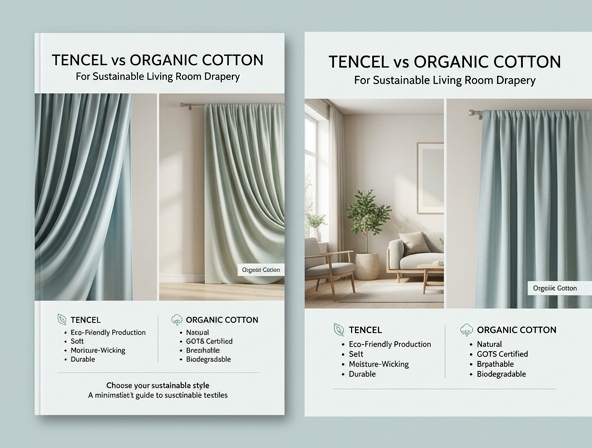
Designing a sustainable home often feels like a series of frustrating compromises. You want beautiful, functional window treatments, but finding curtains that align with your ecological values without sacrificing elegance or durability is a common struggle. Before comparing specific fabrics, we must recognize that home textiles significantly impact both indoor air quality and global environmental health. Fortunately, making an informed material choice grants you a living space that is both aesthetically refined and genuinely non-toxic, protecting both your family and the planet.
However, "eco-friendly" is not a one-size-fits-all label; performance depends heavily on your specific household needs. For instance, choosing between the fluid, silky drape of Tencel (lyocell) and the breathable, structured feel of GOTS-certified organic cotton requires looking closely at fiber sourcing, water usage, and light-filtering capabilities.
In this guide, we will compare Tencel and organic cotton across key categories-including environmental footprint, durability, aesthetics, and maintenance-to help you select the ideal sustainable curtains for your home.
Introduction: Elevating Your Home with Sustainable Window Treatments
Creating an eco-conscious living space involves evaluating every design choice, from the energy-efficient appliances you install to the textile choices dressing your windows. Window treatments play a critical role in temperature regulation, light filtration, and overall design. Choosing sustainable options helps minimize your environmental footprint while moving closer to a zero-waste home. By selecting materials grown and manufactured with planetary health in mind, you can actively reduce the chemical load in your living areas and drastically improve your indoor air quality.
Among the array of sustainable textiles available, Tencel and Organic Cotton stand out as the top two eco-conscious choices for modern curtains. Both fibers offer exceptional benefits, yet they differ significantly in their production methods, physical textures, and functional performance. This in-depth comparison will explore the unique properties of each material, helping you choose the perfect window treatments to complement both your lifestyle and your design aesthetic.
What is Tencel? The Modern Eco-Fabric
Tencel is a brand name for a type of lyocell fiber produced by the Austrian company Lenzing. This modern semi-synthetic textile is harvested from natural wood sources, specifically the wood pulp of sustainably managed eucalyptus trees. These trees grow rapidly on marginal land unsuitable for food crops, requiring no artificial irrigation or gene manipulation. The harvested pulp is dissolved in an organic solvent and extruded through fine holes to form continuous cellulosic filaments in a highly efficient processing method known as solvent spinning.
What sets Tencel apart in the eco-textile market is its revolutionary closed-loop manufacturing process. During production, up to 99.7% of the non-toxic solvent and water used in the spinning process is recovered, recycled, and reused in subsequent batches, leaving virtually zero waste. Physically, Tencel fibers are incredibly smooth, inherently strong, and highly absorbent. These traits translate into a textile that boasts a luxurious, silk-like drape, a soft touch against the skin, and a natural resistance to dust mites and bacterial growth, making it an exceptional candidate for high-end home textiles.
What is Organic Cotton? The Timeless Natural Classic
Organic cotton represents a traditional, reliable natural fiber grown without the hazardous chemical inputs that plague conventional agriculture. In the production of organic cotton, farmers utilize crop rotation, mechanical weeding, and natural biological controls rather than synthetic pesticides, herbicides, or genetically modified organisms (GMOs). This preserves local soil fertility, protects nearby water tables from toxic runoff, and reduces the water footprint of farming through rainwater retention techniques.
To ensure authentic ecological integrity, look for textiles certified by the Global Organic Textile Standard (GOTS). This certification guarantees that the cotton has met rigorous ecological and social criteria throughout the entire supply chain, from harvesting to labeling. Organic cotton window treatments offer a comforting, familiar feel that synthetic or heavily processed fibers cannot easily replicate. Its long-staple fibers provide a robust structure, natural breathability, and a relaxed, inviting texture that infuses spaces with warmth and timeless beauty.
Aesthetics and Drape: Silky Elegance vs. Matte Texture
The visual impact of your window treatments sets the tone for an entire room. Tencel and organic cotton offer distinct visual styles, catering to different interior design languages.
The Tencel Look
Tencel curtains are celebrated for their sophisticated, fluid drape. They fall in elegant, liquid-like folds, cascading gracefully from the rod to the floor. The fiber has a subtle, sophisticated sheen that catches and gently diffuses natural light throughout the day. This luxurious drape and semi-lustrous finish make Tencel ideal for modern, contemporary, or transitional spaces where a touch of refined elegance is desired.
The Organic Cotton Vibe
Organic cotton curtains bring a structured, matte finish to your windows. Rather than draping fluidly, cotton hangs with a heavier, more defined body, offering clean lines and a rustic warmth. It possesses a textured, matte surface that feels organic and down-to-earth. This casual elegance makes organic cotton perfectly suited for farmhouse, bohemian, traditional, or coastal interior styles where comfort and tactile richness are prioritized.
Maintenance and Durability: Which Fabric Holds Up Best?
Because curtains are exposed to daily sunlight, temperature fluctuations, and dust, understanding how each fabric holds up over time is crucial for making a wise investment.
Tencel is highly resistant to wrinkling and maintains its structural integrity well over time, resisting stretching or misshaping. However, its silky fibers can occasionally suffer from sun-bleaching if exposed to intense, direct UV rays without a protective lining. Organic cotton is highly durable and handles frequent washing beautifully, though it is prone to wrinkling and can shrink during its initial wash if not pre-shrunk or washed on cold cycles.
- Tencel Care: Wash on a gentle cycle using cool water and mild detergent. Line dry or tumble dry on low heat. Warm iron if necessary, though steaming is usually sufficient to release minor wrinkles.
- Organic Cotton Care: Machine wash in cold water to prevent shrinkage and color fading. Tumble dry on medium heat. Cotton can handle a hotter iron setting, which is helpful for removing persistent crease marks.
- Sun Protection: For south- or west-facing windows, consider adding a biodegradable lining to both fabrics to protect the face fibers from sun damage and prolong their lifespan.
The Eco-Scorecard: Water, Land, and Chemical Footprint
While both options are far superior to petroleum-based synthetic polyesters, a closer look at their resource footprints reveals unique environmental advantages for each material.
Tencel boasts an exceptionally low land and water footprint. Eucalyptus trees thrive on dry, non-arable land where food crops cannot grow, and they rely entirely on natural rainfall rather than intensive agricultural irrigation. Additionally, the closed-loop processing of Tencel prevents chemical runoff into local ecosystems. Organic cotton, while free from toxic agricultural chemicals, typically requires more land and freshwater to cultivate. However, organic farming practices store carbon in the soil far more effectively than industrial tree plantations, keeping the Earth's soil microbiomes healthy and intact.
"According to ecological impact studies, producing Tencel requires up to 80% less water and roughly half the land area compared to conventional cotton cultivation, making it one of the most resource-efficient cellulosic fibers on the planet."
Health and Wellness: Hypoallergenic and Breathable Qualities
Window treatments act as air filters in our homes, capturing dust, pollen, and airborne moisture. The fibers you choose can directly influence your indoor microclimate and physical well-being.
Tencel excels at moisture management. Its microscopic fibrils absorb moisture efficiently and release it quickly back into the air. This rapid moisture transfer keeps the surface of your curtains dry, preventing the growth of mold, mildew, and odor-causing bacteria. This makes Tencel an outstanding choice for humid climates or damp rooms.
Organic cotton offers an unparalleled level of purity. Because it is grown and processed without harmful chemical agents, it is inherently non-toxic and completely free of toxic pesticide residues. This pure, chemical-free profile is highly hypoallergenic, making organic cotton curtains the ideal selection for children's bedrooms, nurseries, and homes of individuals suffering from asthma, chemical sensitivities, or severe environmental allergies.
Cost vs. Value: Budgeting for Sustainable Curtains
When selecting eco-friendly curtains, balancing the initial retail price with the long-term utility of the fabric helps ensure a smart investment.
Tencel curtains generally carry a higher upfront cost due to the proprietary, high-tech manufacturing process managed by Lenzing. However, this premium cost is balanced by the material's longevity, superior color retention, and natural resistance to wear and piling. For eco-conscious shoppers seeking a low-maintenance, long-lasting fabric with a high-end look, the investment pays off over years of use without requiring frequent dry cleaning or replacement.
Organic cotton curtains are often more accessible and available in a wider range of price points. While they may require more frequent ironing and careful washing to manage shrinkage, their classic durability means they can withstand years of active household use. Cotton's exceptional versatility allows it to transition effortlessly through different decor styles, delivering outstanding long-term value for budget-conscious decorators.
Quick Comparison: Tencel vs. Organic Cotton at a Glance
To help you weigh your options easily, the following table summarizes how these two eco-conscious textiles perform across key household performance factors:
| Feature | Tencel (Lyocell) Curtains | Organic Cotton Curtains |
|---|---|---|
| Texture & Feel | Silky, smooth, cool to the touch | Soft, structured, textured, warm |
| Drape Quality | Fluid, heavy, liquid-like flow | Crisp, structured, defined folds |
| Wrinkle Resistance | High; naturally resists creases | Low; prone to natural wrinkling |
| Water Footprint | Extremely low (rain-fed eucalyptus) | Moderate (requires natural irrigation) |
| Chemical Profile | Processed with non-toxic, recycled solvents | Grown entirely without synthetic pesticides |
| Average Price Point | Moderate to Premium | Accessible to Moderate |
The Verdict: How to Choose the Perfect Curtains for Your Home
Deciding between Tencel and organic cotton comes down to identifying your home's unique aesthetic goals and functional needs. Both fabrics represent an excellent step forward for sustainable interior design, moving away from harmful synthetics and toxic agricultural practices. Choosing either option is a positive choice for the planet.
Select Tencel if you prefer a modern, elegant aesthetic with a silky drape, subtle sheen, and low-maintenance wrinkle resistance. Tencel is also highly recommended for humid environments due to its exceptional moisture-wicking and anti-bacterial properties.
Select organic cotton if your heart lies with a classic, relaxed look that prioritizes matte textures, structured folds, and hypoallergenic purity. Organic cotton offers a cozy, timeless appeal that fits beautifully into active family homes where natural comfort is the ultimate luxury.
Leave a comment