
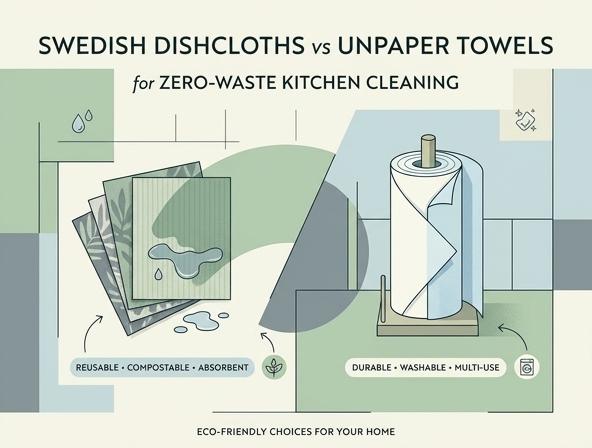
Maintaining a clean kitchen shouldn't come at the expense of the planet, yet many households remain trapped in a costly, waste-heavy cycle of tearing through endless rolls of single-use paper towels. As the movement toward sustainable homegoods grows, navigating the transition to eco-friendly alternatives can feel overwhelming. Fortunately, investing in reusable options not only drastically reduces your environmental footprint but also saves hundreds of dollars annually while simplifying your under-sink storage.
However, successful zero-waste cleaning requires understanding that no single product is a universal cure-all. For instance, while tackling a sudden morning coffee spill requires rapid liquid absorption, scrubbing dried-on countertop grime demands structural durability. In this guide, we will directly compare Swedish dishcloths and unpaper towels-evaluating their absorbency, lifetime cost, and maintenance-to help you curate the ultimate sustainable cleaning toolkit.
Introduction: The True Cost of Kitchen Paper Waste
Every single day, millions of single-use paper towels end up in landfills, contributing to massive deforestation, water consumption, and chemical pollution. This disposable habit continuously drains your household budget while stripping our forests of vital resources. Transitioning to a eco-friendly alternative is one of the most effective ways to lower your carbon footprint.
Fortunately, two leading zero-waste alternatives have risen to prominence: Swedish dishcloths and unpaper towels. Both offer powerful ways to eliminate paper waste, but they function in very different ways to keep your home pristine.
Meet the Swedish Dishcloth: The Sponge Reimagined
Swedish dishcloths are a brilliant hybrid of a sponge and a cloth. Invented in Sweden in the 1940s, these innovative cleaning tools are designed to replace paper towels and plastic sponges alike. When they are dry, they have a stiff, cardboard-like texture, but they soften instantly when wet.
Here are the key characteristics of these unique kitchen tools:
- Composition: Made from 70% cellulose (wood pulp) and 30% cotton, making them entirely natural.
- Absorbency: They can absorb up to twenty times their weight in water, effortlessly handling large spills.
- Quick Drying: They dry much faster than standard sponges, which prevents the buildup of odor-causing bacteria.
Meet Unpaper Towels: The Reusable Fabric Roll
Unpaper towels are fabric-based sheets designed to mimic the exact experience, shape, and convenience of standard paper towels. Typically made from 100% cotton flannel, they offer a familiar transition for households trying to break their single-use habits.
What makes unpaper towels so unique is how they behave:
- They naturally cling to one another due to the texture of the cotton flannel, allowing them to be rolled up onto a standard paper towel holder.
- They are soft, pliable, and work exactly like the rags or wipes you are already used to.
- They become softer and more absorbent with every wash, improving in performance over time.
Absorbency and Performance: Which Wipes Better?
When comparing real-world cleaning power, both choices shine in different scenarios depending on the mess you are dealing with.
Swedish Dishcloths: The Heavy Spills and Scrubbing Champion
If you are dealing with a flood of spilled milk, coffee, or sticky countertop messes, the Swedish dishcloth is unmatched. Because it operates like a super-absorbent sponge, it collects vast amounts of liquid in a single swipe. Its textured surface also makes it perfect for scrubbing dried-on grime without scratching delicate surfaces.
Unpaper Towels: The Best for Drying and Polishing
For lighter tasks, unpaper towels are the superior option. They are perfect for drying hands, wiping messy faces, and buffing glass or stainless steel to a streak-free shine. While they do not absorb deep puddles as fast as a cellulose cloth, their flexibility makes them much easier to use for general drying and wrapping around food items.
Washing and Sanitizing: Keeping Your Reusables Fresh
To ensure your reusable kitchen products stay sanitary and free of odors, proper washing routines are essential.
Sanitizing Swedish Dishcloths
Swedish dishcloths are incredibly versatile when it comes to sanitization. Because of their unique material composition, they can be cleaned using quick, heat-based methods:
- Place a damp dishcloth in the microwave for sixty seconds to kill bacteria.
- Boil the dishcloth in water for a few minutes to deep clean it.
- Lay it flat on the top rack of your dishwasher during a standard cycle.
Laundering Unpaper Towels
Unpaper towels require a laundry-based approach due to their fabric structure:
- Collect dirty towels in a wet bag or laundry hamper.
- Wash them in a standard washing machine with warm water and your favorite detergent.
- Dry them in the dryer or hang them on a drying rack to maintain their shape.
Aesthetics and Kitchen Storage
Transitioning to zero-waste products does not mean you have to sacrifice the look of your kitchen. Both options come in beautiful colors, patterns, and designs that can elevate your home decor.
Unpaper towels are beloved for their ability to maintain the classic kitchen look. They can be wrapped tightly around a standard paper towel holder, allowing them to cling to one another and sit upright on your counter. This makes the switch feel completely natural for family members and guests.
Swedish dishcloths, on the other hand, are stored flat or folded. Because they dry stiff, they cannot be rolled. Instead, they can be stored in a drawer, draped over the edge of the sink, or hung on a small drying rack. Their beautiful, often Scandinavian-inspired illustrations make them look like miniature works of art when displayed.
Lifecycle and End-of-Life: Biodegradability vs. Longevity
Evaluating the environmental impact of your kitchen choices means looking at how long a product lasts and what happens to it when it can no longer be used.
Swedish dishcloths have a lifespan of about nine to twelve months depending on use. When they eventually wear out, they offer a perfect circular solution. Because they are made of 100% natural cellulose and cotton, they can be tossed straight into your backyard compost bin, where they will fully decompose in just a few weeks.
Unpaper towels offer incredible long-term durability, often lasting for years before showing signs of wear. While they cannot be composted if they contain synthetic threads, cotton flannel sheets can be recycled with textiles or repurposed as cleaning rags. Their long lifespan means you will avoid buying replacement kitchen goods for a very long time.
Financial Breakdown: Initial Cost vs. Long-Term Savings
While making the switch to reusable alternatives requires a small upfront investment, the long-term financial savings of eliminating paper towels are substantial.
| Product Type | Average Upfront Cost | Lifespan | Estimated Annual Savings |
|---|---|---|---|
| Disposable Paper Towels | $15 - $30 (per month) | Single Use | $0 (Continuous Cost) |
| Swedish Dishcloths (10-pack) | $15 - $25 | 1 Year | Up to $250 |
| Unpaper Towels (24-pack) | $30 - $45 | 3+ Years | Up to $300+ per year |
Quick Comparison: Swedish Dishcloths vs. Unpaper Towels
Use this simple breakdown to see how these two sustainable products stack up against each other.
Swedish Dishcloths
- Pros: Ultra-absorbent, compostable, quick-drying, great for heavy scrubbing.
- Cons: Dry stiffly, cannot be rolled on a standard holder, need replacement sooner.
Unpaper Towels
- Pros: Long-lasting, mimics traditional paper rolls, soft on skin, easily machine washable.
- Cons: Requires regular laundry cycles, less absorbent for deep spills, higher initial cost.
The Verdict: Which Zero-Waste Solution is Right for You?
Choosing the right eco-friendly solution depends heavily on your daily cleaning habits and lifestyle preferences. If you routinely deal with liquid spills, sticky kitchen surfaces, and heavy-duty wiping, the Swedish dishcloth is the natural choice to replace your sponges and kitchen rolls.
If you prefer a seamless transition that mirrors your current habits, love the look of a traditional roll on your counter, and do not mind tossing kitchen cloths into your regular laundry, unpaper towels will fit perfectly into your home. For the best of both worlds, many households choose to keep a roll of unpaper towels for drying and light wiping, alongside a few Swedish dishcloths for managing heavy spills and countertop deep cleans.
Leave a comment