
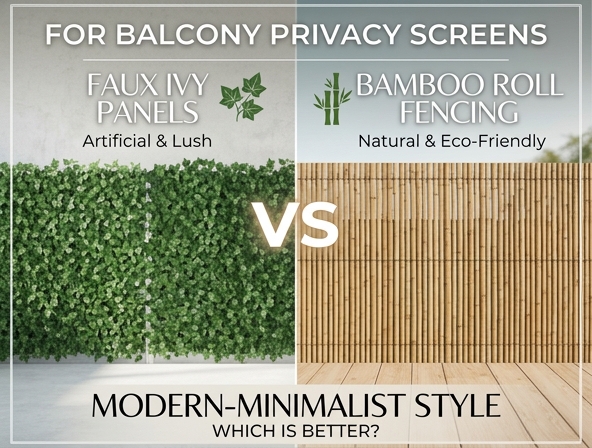
Living in a bustling urban apartment often means your balcony feels more like a public stage than a private sanctuary. Trying to unwind while feeling fully exposed to neighbors and passersby can easily ruin your outdoor experience. With metropolitan spaces shrinking and rental agreements strictly restricting permanent modifications, finding a non-invasive, cost-effective barrier has become a common challenge for city dwellers.
Fortunately, temporary screening allows you to instantly reclaim your personal space and elevate your home's aesthetic without risking your security deposit. However, managing expectations is crucial, as budget-friendly materials differ significantly in wind resistance and longevity. For instance, while zip-tied natural bamboo rolls offer sturdy, organic shielding, UV-protected faux ivy panels provide instant, maintenance-free greenery. This guide compares faux ivy and bamboo fencing across installation ease, durability, and overall value to help you select the perfect privacy solution.
Introduction: The Quest for Balcony Privacy
Urban balconies offer a precious slice of outdoor living, yet they often lack the seclusion needed to truly relax. Living in close proximity to neighbors can turn a quiet morning coffee or a relaxing evening read into an unintentionally public affair. Fortunately, creating a personal sanctuary high above the bustling streets does not require expensive construction or permanent remodeling. Instead, budget-friendly and easy-to-install solutions like faux ivy panels and natural bamboo fencing have emerged as the premier choices for city dwellers looking to reclaim their personal space instantly.
Understanding Faux Ivy Fencing: Artificial Greenery Demystified
Faux ivy fencing is a highly versatile, engineered privacy screen designed to replicate the vibrant look of real climbing plants. Constructed using durable, high-grade synthetic materials like polyethylene (PE) or polyvinyl chloride (PVC), these artificial leaves are securely attached to a flexible, heavy-duty plastic mesh backing. Because the leaves are pre-arranged to maximize coverage, they mimic natural English ivy foliage with stunning accuracy, offering a lush, dense green barrier that blocks unwanted onlookers immediately upon setup.
Exploring Bamboo Fencing: Natural and Rustic Screening
Bamboo fencing offers a highly appealing, organic alternative for those seeking a more traditional, earth-friendly look. This product consists of natural, whole, or split *bamboo stalks* that are tightly woven together using galvanized steel wire to ensure structural integrity. Its primary appeal lies in its *authentic texture* and natural color variations, providing a rustic, tropical, and warm aesthetic that blends seamlessly with outdoor plants, making your balcony feel like a peaceful backyard oasis.
Aesthetic Appeal: Lush Greenery vs. Tropical Warmth
The Evergreen Elegance of Faux Ivy
Faux ivy provides an intense, vibrant green backdrop that remains perfectly manicured throughout every season. It delivers a modern, clean garden-wall aesthetic that contrasts beautifully with concrete urban environments, maintaining its lively look even in the dead of winter.
The Warm, Organic Appeal of Bamboo
Bamboo, on the other hand, exudes a relaxed, tropical vibe characterized by rich earthy tones ranging from light beige to deep amber. It creates a warm, textured, and cozy environment that pairs wonderfully with wooden patio furniture, terracotta planters, and natural potted plants.
Installation Battle: Which Is Easier to Mount on a Balcony?
Mounting a privacy screen on standard metal balcony railings is a straightforward DIY project that requires no heavy tools or professional help. Both faux ivy and bamboo fencing can be easily secured, but they require slightly different approaches to ensure they stay taut and secure under windy conditions.
- Faux Ivy Installation: Unroll the lightweight faux ivy mesh against the inner side of your railing and secure it using outdoor-grade nylon zip ties every 12 inches along the top, middle, and bottom rails.
- Bamboo Fencing Installation: Stand the heavier bamboo roll upright against the railing, securing it with heavy-duty wire fasteners or industrial zip ties wrapped around individual thick bamboo stalks to support its weight.
- Applying Tension: For both materials, pull the screen tight as you attach it to eliminate sagging and ensure a smooth, professional-looking finish.
Durability and Weather Resistance: Facing the Elements
When facing the outdoor elements, these two materials behave very differently over time. Faux ivy is specifically engineered with UV-resistant inhibitors infused into the plastics, allowing it to withstand prolonged sun exposure without fading or turning brittle. In contrast, natural bamboo, as an organic wood product, reacts directly to ambient moisture, rain, and intense sunlight. Over time, untreated bamboo will naturally weather to a soft silvery-gray patina and may develop minor hairline splits, though its structural core remains robust if properly installed.
Maintenance Requirements: Set-and-Forget vs. Natural Care
Maintenance demands represent a major point of divergence between these two popular options. Faux ivy is the epitome of *set-and-forget* home improvement; it requires absolutely no watering, trimming, or sealing, needing only an occasional quick rinse with a garden hose to wash away urban dust. Conversely, natural bamboo requires *periodic maintenance* to preserve its original golden-brown warmth, which involves washing away dirt or mold and applying a clear, water-resistant outdoor wood sealant every year or two to protect against moisture intrusion.
Budget Breakdown: Upfront Cost vs. Long-Term Value
To make an informed financial decision, it is helpful to look closely at both the initial purchase price and the projected longevity of each option. The table below outlines the retail price averages and expected lifespan for typical balcony installations.
| Privacy Screen Type | Average Cost per Sq. Ft. | Expected Lifespan | Long-Term Value Profile |
|---|---|---|---|
| Faux Ivy Fencing | $2.50 - $5.00 | 3 - 5 Years | High (Zero maintenance offsets initial cost) |
| Natural Bamboo Fencing | $1.50 - $3.50 | 5 - 10 Years | Outstanding (Highly durable if properly sealed) |
Environmental Impact: Synthetic Plastics vs. Renewable Bamboo
Evaluating the ecological footprint of your balcony upgrades reveals a sharp contrast in sustainability. Faux ivy is made from petroleum-derived plastics like PVC or polyethylene, which involve energy-intensive manufacturing processes and are non-biodegradable, meaning they will eventually contribute to landfill waste. Bamboo, on the other hand, is one of the most sustainable, rapidly renewable plants on Earth, absorbing carbon dioxide as it grows and breaking down naturally at the end of its lifecycle.
The Final Verdict: Which Balcony Screen Should You Choose?
Choosing the ideal balcony privacy screen comes down to aligning your personal style with your willingness to perform upkeep and your environmental values. Both options offer outstanding privacy, but they cater to entirely different preferences.
If you prioritize a vibrant green garden wall aesthetic, minimal effort, and a true "install-it-and-forget-it" setup, then faux ivy fencing is your perfect match.
If you prefer a natural, tropical aesthetic, highly sustainable materials, and do not mind occasional light maintenance to preserve rich wood tones, then natural bamboo fencing is the superior choice for your outdoor sanctuary.
Leave a comment