
Living in a rental often means constantly choosing between daily clutter and losing your security deposit. When square footage is limited, drilling into drywall to mount traditional shelving simply isn't a viable option. Fortunately, reclaiming your vertical space is entirely possible without making permanent modifications to your walls.
However, successful organizing requires a key stipulation: damage-free tools are only effective when matched to the correct environment, as surface textures and moisture levels heavily dictate success. For example, while heavy winter coats and damp bathroom towels demand robust, fail-safe support, lightweight keys and kitchen utensils require a more delicate, hidden touch.
To help you navigate these organizational challenges, this guide directly compares Command Strips and over-the-door hooks. We will analyze their load capacities, installation constraints, and long-term damage risks, equipping you to make the optimal choice for your small space.
Introduction: The Battle for Renter-Friendly Wall Space
Living in a rental apartment often feels like a constant balancing act between personalizing your living space and preserving your security deposit. Small spaces require clever organizational hacks to maximize vertical real estate, yet standard solutions like drilling, nailing, and screwing into walls are strictly off-limits. Renters are forced to find creative, damage-free alternatives that keep their homes organized without leaving behind a trail of holes and angry landlords.
Fortunately, two dominant contenders have emerged to solve this vertical storage dilemma: adhesive hooks and hanging brackets. To help you navigate your options, we are diving deep into a comparison of Command Strips and over-the-door hooks. These two renter-friendly giants offer distinct advantages for decluttering your apartment while keeping your walls pristine and your deposit secure.
Command Strips: The Versatile, Invisible Organizers
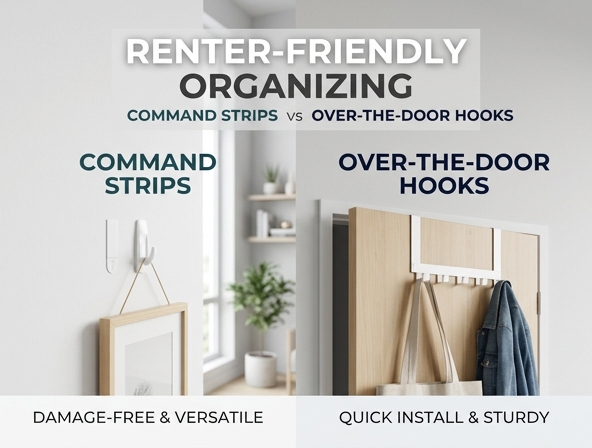
Command Strips have revolutionized home organization by offering a clean, minimalist aesthetic. Powered by pressure-sensitive adhesive, these strips bond tightly to walls but peel away cleanly when it is time to pack up. Their low-profile design allows hooks and frames to sit flush against the wall, making them practically invisible and ideal for modern interiors.
The Advantages of Command Strips
- High Versatility: They work on painted drywall, finished wood, tile, metal, and glass, allowing you to mount items almost anywhere.
- Aesthetic Flexibility: Available in transparent options, various colors, and metallic finishes to match any home decor style.
- Damage-Free Technology: When removed correctly, they leave behind no sticky residue, nail holes, or peeled paint.
The Disadvantages of Command Strips
- Weight Restrictions: Even heavy-duty variations struggle to support bulky, high-friction items like winter coats or fully loaded backpacks.
- Strict Wall Preparation: Success depends entirely on cleaning the surface with rubbing alcohol and waiting for the adhesive to cure properly before hanging anything.
- Environmental Sensitivity: Humidity, extreme heat, and textured walls can cause the adhesive bond to fail over time.
Over-the-Door Hooks: The Heavy-Duty Instant Storage Solution
If you want a storage solution that requires zero prep work and can handle substantial weight, over-the-door hooks are the traditional powerhouse. By leveraging the structural strength of your home's doors, these metal or plastic brackets turn underutilized vertical planes into high-capacity storage zones instantly.
Fit, Sizing, and Usability
Unlike adhesive solutions, over-the-door hooks rely entirely on physical gravity and precise sizing. They fit over the top edge of standard interior doors, utilizing a bracket that hangs down to support single or multiple hooks. While incredibly straightforward, users must ensure the bracket is thin enough to allow the door to latch shut properly without rubbing against the frame.
The Benefits of Over-the-Door Hooks
- Zero Installation Time: Simply unpack, place the bracket over the door, and start hanging your items immediately.
- High Weight Capacity: Easily supports heavy winter coats, damp bath towels, packed backpacks, and shoe organizers without bending or breaking.
- Infinite Reusability: Can be moved from door to door or apartment to apartment instantly with zero extra cost.
The Drawbacks of Over-the-Door Hooks
- Door Clearance Issues: Thick brackets can prevent doors from closing, damage the upper door frame, or create loud scraping noises.
- Visual Clutter: Because they hang in plain sight on your doors, they can break up the clean visual flow of a room.
- Rattling Noise: Items can swing and slam against the door panel whenever the door is opened or closed.
Weight Capacity and Durability: A Side-by-Side Comparison
Choosing between these two tools requires understanding what you plan to hang. Putting a heavy backpack on an adhesive strip is a recipe for broken drywall, while using an over-the-door hook for a light picture frame is physically impossible. Below is a breakdown of how they compare across weight and durability metrics.
| Feature Metric | Command Strips (Adhesive) | Over-the-Door Hooks (Mechanical) |
|---|---|---|
| Average Weight Capacity | 0.5 lbs to 15 lbs (depending on strip size) | 10 lbs to 40 lbs (determined by door strength) |
| Durability in High Humidity | Low (requires specialized water-resistant strips) | High (rust-resistant metal or plastic) |
| Best Use Case | Keys, picture frames, lightweight kitchen utensils | Heavy winter coats, bags, bath towels, robes |
| Longevity of Hold | Can degrade over years as adhesive cures and dries | Virtually permanent and physically unbreakable |
Risk of Damage: Which Option is Truly Renter-Safe?
While both products market themselves as damage-free, improper application or design flaws can still put your security deposit at risk. Understanding these failure points is essential for keeping your apartment walls and doors in pristine condition.
Command Strips are incredibly safe, but they are highly vulnerable to user error. If you pull the strip outward instead of straight down along the wall during removal, the high-strength adhesive will easily rip off a chunk of drywall paint. Never pull the tab toward you, as this sudden tension is the leading cause of torn plaster and drywall damage in rentals. Additionally, applying them to freshly painted walls (less than 30 days old) or textured surfaces often leads to paint peeling.
On the other hand, over-the-door hooks pose physical scratch risks. Metal brackets that lack padding will scratch the wood paint on top of your door and grind against the door frame. Unpadded hooks can cause doors to stick, warping the frame over time or scraping off thick layers of enamel paint along the top casing.
Small Space Showdown: Room-by-Room Applications
To maximize your limited apartment square footage, you should strategically deploy both organizers based on the unique environments and challenges of each room.
The Bathroom
High humidity and wet towels make the bathroom a challenging environment. Over-the-door hooks are the superior choice here for hanging heavy, wet bath towels and thick robes, as they will not slip under moisture. Use water-resistant Command Strips specifically for lighter accessories like squeegees, hanging loofahs, or decorative hand towels inside the shower enclosure or on tiled walls.
The Kitchen
Kitchens require easy access to tools while cooking. Use Command Strips inside cabinet doors to hang measuring cups, oven mitts, and lightweight pot lids, keeping your countertops completely clear. Reserve over-the-door hooks for a pantry door to support a heavy, multi-pocket hanging spice rack or snack organizer.
The Entryway
The entryway is your first line of defense against clutter. Over-the-door hooks placed over the main coat closet door are unmatched for holding heavy winter jackets, umbrellas, and work bags. Meanwhile, Command Strips excel near the door lock for holding lightweight keyrings, pet leashes, and small outgoing mail baskets.
The Bedroom
In the bedroom, aesthetic style is just as important as storage utility. Use Command Strips to curate damage-free gallery walls, mount fairy lights, or hang light accessories like hats and jewelry. Put over-the-door hooks on the backside of your bedroom door to hide bulky pajamas, laundry bags, and everyday jackets from sight.
Step-by-Step Installation and Safe Removal Guide
To guarantee that your walls remain flawless and your doors remain unscratched, follow these precise, step-by-step methods for setting up and removing your organizing tools.
How to Install and Remove Command Strips
- Clean the wall surface thoroughly with isopropyl rubbing alcohol (avoid household sprays, which leave a slippery residue) and let it dry.
- Remove the red liner and press the adhesive strip firmly to the hook or mounting bracket.
- Remove the black liner, position the hook on the wall, and press the entire base firmly against the wall for at least 30 seconds.
- Slide the hook body up and off the mounting base, then press the base directly against the wall for another 30 seconds to cure.
- Slide the hook body back onto the base and wait 1 full hour before hanging any weight on it.
- To remove: Hold the hook gently in place, grab the exposed stretch tab, and pull it slowly straight down toward the floor, stretching it up to 15 inches until the base releases.
How to Prepare and Install Over-the-Door Hooks
- Measure the thickness of your door to ensure the hook bracket will fit snugly without sliding around.
- Check the gap at the top of the door by placing a penny on top; if the door closes over the penny, there is enough clearance for a metal bracket.
- Apply small pieces of adhesive felt padding or foam tape to the underside of the bracket to prevent scratching and eliminate rattling.
- Slide the bracket over the top of the door, adjusting its position so it does not interfere with the latch mechanism.
Cost and Reusability: Making a Budget-Friendly Choice
When decorating and organizing on a budget, it is important to calculate the lifetime cost of your tools. While both options are highly affordable upfront, their long-term economic profiles look very different.
Over-the-door hooks are a one-time investment. A single steel hanger can last a lifetime, surviving moves across multiple apartments without requiring any additional parts or maintenance. This makes them the champion of long-term value. Command Strips, conversely, are single-use consumables. While the plastic hooks themselves can be reused, you must purchase replacement adhesive strips every time you want to rearrange your space. Over time, the cost of buying refill packs can add up, making adhesive hooks a more expensive choice for chronic redecorators.
The Hybrid Approach: Combining Both Tools for Maximum Efficiency
You do not have to choose just one tool. In fact, the most organized rental apartments rely on a hybrid strategy that uses both tools to play to their respective strengths. By combining these systems, you can build a highly customized, layered home layout.
- The Entryway Station: Hang a sturdy over-the-door bracket on your coat closet door for heavy parkas and backpacks, then place Command Strips on the adjacent wall for car keys, sunglasses, and a dog leash.
- The Closet Maximize System: Use an over-the-door shoe organizer to free up floor space, and apply Command Strips to the interior walls of the closet to display jewelry, scarves, and belts.
- The Ultimate Bathroom Setup: Keep damp towels on an over-the-door rack where air circulates freely, and use specialized water-resistant Command Hooks inside the shower cabinet to keep loofahs off the tub edge.
Final Verdict: Choosing the Right Tool for Your Rental
Deciding between Command Strips and over-the-door hooks comes down to analyzing the weight of your items and the surface you plan to use. Both are essential assets in the quest for a clutter-free apartment, but they serve completely different purposes.
To make the best choice for your home, remember these two simple rules: Use Command Strips when you want a highly aesthetic, custom-placed, and invisible look for lightweight objects on open walls. Choose over-the-door hooks when you need heavy-duty, instant load capacity for bulky daily gear on your closet, bathroom, or entry doors. By matching the right tool to the right task, you can enjoy a perfectly structured, beautiful home while keeping your security deposit entirely safe.

Leave a comment