
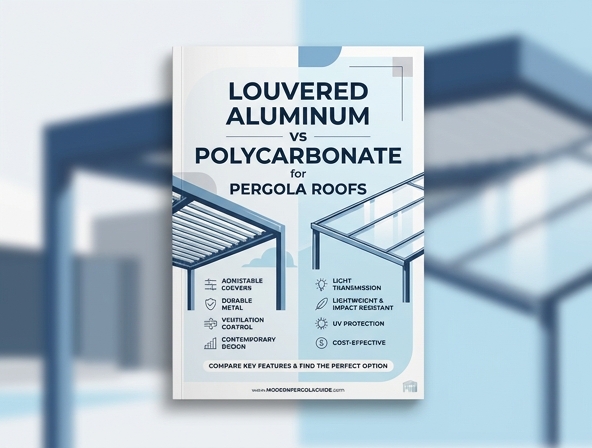
Homeowners often struggle to find the perfect balance between open-air freedom and reliable weather protection when designing an outdoor living space. Before investing in high-end patio furniture or hardscaping, selecting the right overhead structure is critical to ensuring year-round usability. A well-chosen pergola roof grants you ultimate control over sun, wind, and rain, instantly elevating your property's functional footprint.
While both louvered aluminum and polycarbonate offer distinct advantages, your final choice must balance local climate demands against your long-term maintenance preferences. For instance, adjustable aluminum louvers excel at blocking scorching mid-day heat in sunny regions, whereas translucent polycarbonate panels keep a patio bright and dry during gloomy coastal winters.
To help you make the right investment, this guide will compare these two leading materials across durability, thermal comfort, aesthetics, and cost, ensuring you select the ideal roof for your backyard retreat.
Introduction: Elevating Your Outdoor Living Space
An outdoor living area acts as a personal sanctuary, bridging the comfort of your indoor space with the natural beauty of the outdoors. Creating the perfect backyard oasis requires careful consideration of structural elements, particularly your pergola cover. The roof you choose plays a vital role in determining how often you use the space, how comfortable it remains throughout the seasons, and how much value it adds to your property.
As homeowners look for the perfect balance of style and utility, a key design debate has emerged: louvered aluminum vs. polycarbonate pergola roofs. Both materials offer distinct advantages, yet they cater to very different lifestyles, aesthetic preferences, and budgets. Deciding between the advanced control of adjustable aluminum slats and the bright, budget-friendly appeal of translucent polycarbonate panels requires a deep dive into how each material performs under real-world conditions.
Understanding Louvered Aluminum Pergolas: Modern Flexibility
Louvered aluminum pergolas represent the pinnacle of modern outdoor engineering, featuring a system of motorized or manual parallel slats. These slats can be rotated to various angles, giving you complete command over your outdoor environment. By simply adjusting the louvers, you can easily control how much sun or shade enters your living space.
- Customizable Shade: Angle the slats to block direct sunlight during peak hours while keeping your patio bright.
- Dynamic Ventilation: Open the louvers slightly to let hot air escape, creating a cool breeze underneath.
- Complete Rain Protection: Close the slats fully to form an interlocking, watertight seal that channels rainwater into an integrated gutter system.
Understanding Polycarbonate Pergolas: Bright and Budget-Friendly
Polycarbonate pergola roofs are constructed from a high-performance thermoplastic material known for its extreme toughness and lightweight build. Unlike solid covers, polycarbonate sheets are translucent, allowing a beautiful wash of natural light to illuminate your deck or patio while keeping the elements at bay. This option is highly favored by those who want to retain a bright, open feel in their outdoor areas.
- Lightweight Durability: Easy to install on various structures without requiring heavy-duty structural support.
- Translucent Nature: Brightens up shaded areas of your yard, making your outdoor living room feel spacious.
- UV Protection: Built-in co-extruded layers block harmful ultraviolet rays, protecting your skin and patio furniture from sun damage.
Durability and Weather Resistance Face-Off
Structural Strength and Wind Resistance
When it comes to raw structural integrity, aluminum is incredibly tough. Powder-coated aluminum frames and louvers are designed to withstand high-velocity winds without bending or rattling. Polycarbonate is also highly impact-resistant-often cited as being virtually unbreakable-but its lightweight nature makes it more susceptible to uplift during severe windstorms if not properly anchored to a robust frame.
Performance Under Heavy Snow and Rain
Aluminum louvered systems excel in heavy weather. When closed, they handle heavy snow loads easily and channel torrential rain away through hidden internal gutters. Polycarbonate panels can flex under heavy snow accumulation, requiring a steeper slope to shed snow effectively. Over time, standing water or heavy debris can cause polycarbonate panels to sag if the underlying support rafters are spaced too far apart. For long-term weather resistance in harsh climates, louvered aluminum provides superior peace of mind.
Light Control and Aesthetic Appeal
Sleek Modern Aesthetics vs. Soft Natural Illumination
Louvered aluminum pergolas offer a clean, architectural look that complements contemporary home designs. The sharp, clean lines of the metal slats create a sophisticated focal point in any backyard. In contrast, polycarbonate roofs deliver a softer, more traditional aesthetic, especially when paired with timber frames, offering a seamless view of the sky while diffusing harsh sunlight into a gentle glow.
Versatile Light Control Capabilities
The standout feature of the louvered system is its adaptability. With the touch of a button, you can shift from full shade to dappled sunlight, or open the roof entirely to view the stars at night. Polycarbonate, while excellent at letting light in, lacks this adjustability. Once installed, the level of light transmission remains constant, meaning you cannot increase shade on an exceptionally bright summer day or open up the roof on a mild spring afternoon.
Temperature Regulation and Thermal Comfort
During the peak of summer, temperature regulation determines whether your outdoor space is usable or sits empty. Louvered aluminum roofs are highly effective at preventing heat buildup. Because the metal slats can be opened partially, they facilitate a chimney effect, allowing hot air to rise and escape while drawing cooler air in from the sides. This constant air circulation keeps the area underneath significantly cooler than the surrounding ambient temperature.
Polycarbonate roofs, despite their UV-blocking layers, can sometimes create a greenhouse effect. Because the panels are solid and fixed, warm air gets trapped underneath them with no way to escape upward. Choosing tinted or multi-wall polycarbonate panels can help mitigate this heat transfer, but the active ventilation provided by adjustable aluminum louvers remains unmatched for overall thermal comfort during hot summer days.
Maintenance Requirements and Lifespan
Cleaning and Long-Term Upkeep
Maintaining your pergola roof ensures it continues to look and function beautifully for decades. The maintenance profiles of these two materials differ significantly in effort and frequency.
- Aluminum requires minimal upkeep, usually needing only an occasional rinse with a garden hose to clear dust and leaves.
- Polycarbonate panels require more frequent cleaning, as pollen, leaves, and water spots are highly visible through the translucent material.
- Special non-abrasive cleaners must be used on polycarbonate to prevent scratching the protective UV coating.
Expected Lifespan and Degradation
Aluminum is rust-proof, warp-resistant, and immune to insect damage, allowing a high-quality louvered roof to last for thirty years or more. Polycarbonate is highly durable but has a shorter lifespan, typically ranging from ten to fifteen years. Over time, exposure to intense sunlight and harsh weather can cause polycarbonate to yellow, become brittle, or lose its clarity, eventually requiring a full replacement of the panels.
Cost Analysis: Upfront Investment vs. Long-Term Value
| Feature | Louvered Aluminum | Polycarbonate |
|---|---|---|
| Initial Cost | High premium investment | Budget-friendly to moderate |
| Installation Complexity | Professional assembly required | DIY-friendly lightweight panels |
| Lifespan | 30+ years | 10 to 15 years |
| Property Value Addition | High ROI, premium feature | Moderate ROI, practical addition |
Quick Comparison: Which Roof Fits Your Lifestyle?
Choosing the perfect roof material depends on your specific priorities, climate, and how you plan to use your outdoor living area. Use this quick guide to determine which option aligns best with your goals.
- Choose Louvered Aluminum if: You want total control over sunlight and rain, prefer a sleek modern aesthetic, live in an area with extreme wind or snow, and view your pergola as a long-term investment in your home's value.
- Choose Polycarbonate if: You have a strict project budget, want to maximize natural light throughout the year, prefer a quick and easy installation, and want a simple cover to block rain and UV rays without losing brightness.
Conclusion: Making the Final Decision for Your Backyard
Selecting the right roof is the most important decision you will make for your pergola, transforming it from a simple backyard structure into a highly functional extension of your home. Your final choice hinges on balancing immediate budget considerations with your long-term vision for comfort, maintenance, and durability.
By weighing the modern versatility and enduring strength of louvered aluminum against the bright, cost-effective simplicity of polycarbonate, you can confidently select the material that best matches your outdoor lifestyle. Whichever path you choose, investing in a high-quality pergola roof will reward you with a beautiful, comfortable space to gather with family and friends for many years to come.
Leave a comment