
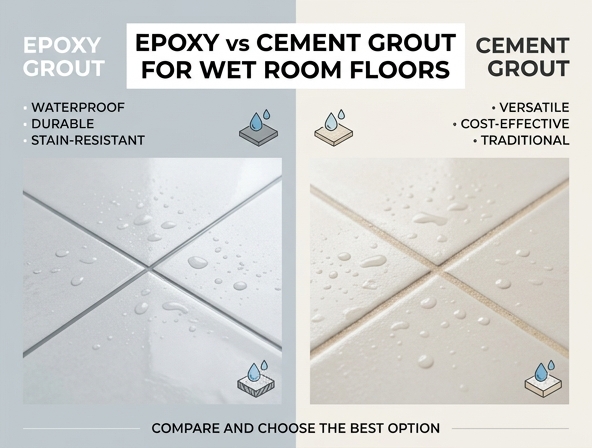
For interior designers and architects, specifying finishes for wet rooms is a high-stakes balancing act. Nothing ruins a bespoke shower design faster than discolored joints, water ingress, or crumbling grout lines. As modern wet room designs lean toward flush, barrier-free transitions, the structural integrity of the installation relies heavily on the invisible workhorse: the grout.
Selecting the right compound preserves your aesthetic vision while ensuring long-term durability and client satisfaction. However, it is crucial to stipulate that the choice between epoxy and cement isn't merely about cost; it requires weighing curing schedules, chemical resistance, and installer skill levels.
For instance, specifying standard cementitious grout in a high-traffic steam shower with porous marble tiles can lead to rapid efflorescence or mold growth. This guide will compare epoxy and cement grout across performance metrics, aesthetic flexibility, and installation demands, helping you make the definitive specification for your next project.
Introduction: The Foundation of Wet Room Design
In the realm of high-end interior architecture, the wet room represents the pinnacle of minimalist luxury and functional design. While designers spend hours selecting the perfect bookmatched marble or artisanal porcelain tile, the true success of these curbless sanctuaries rests on a far more humble element: the grout. Grout is not merely a filler; it is the critical structural liaison that safeguards the integrity of the entire installation. In wet room floors, where water exposure is constant and direct, the choice of grout can mean the difference between a pristine, enduring spa-like retreat and a costly structural failure. Today, luxury designers find themselves at a crossroads, weighing the time-honored, tactile beauty of traditional cement grout against the impervious, high-tech performance of modern epoxy grout.
What is Cement Grout? The Traditional Choice
Understanding Cementitious Formulas
Cement-based grout is the historical standard for tile installations, composed primarily of Portland cement, water, and colored pigments. It is typically specified in two distinct formulations: sanded and unsanded. Sanded grout contains fine silica sand, which adds strength and prevents shrinkage, making it ideal for joint widths wider than one-eighth of an inch. Unsanded grout, which lacks aggregate, is smoother and is reserved for narrow joints and highly delicate surfaces like polished marble or glass tiles that might otherwise scratch.
The Organic Appeal and Breathability
From a designer's perspective, cement grout offers a classic, matte texture that integrates seamlessly with natural stone and handmade terracotta. Its organic finish provides a soft, authentic look that synthetic alternatives struggle to replicate. Furthermore, cement grout possesses an inherent breathability, allowing moisture trapped beneath the tiles to escape via vapor transmission, a characteristics prized in traditional building methodologies.
What is Epoxy Grout? The Modern Powerhouse
The Science of Resin-Based Jointing
Unlike its cementitious counterpart, epoxy grout is a completely non-porous material formed through a chemical reaction. It is formulated by mixing epoxy resins, a silica filler, and an organic hardener. This chemical curing process creates a dense, plastic-like bond that is virtually impervious to liquids, acid attacks, and staining. This molecular structure makes epoxy grout inherently waterproof, eliminating the need for post-installation sealers.
The Designer's Specification of Choice
Modern wet room designers frequently specify epoxy grout because it resolves the age-old vulnerabilities of tiled wet areas. Its ability to repel water completely prevents the growth of mold and mildew within the joints, ensuring that the clean, crisp lines of a minimalist wet room remain pristine for decades without degradation.
The Ultimate Waterproofing Showdown
When evaluated solely on moisture resistance, cement and epoxy grout exist in entirely different categories. Cement grout is naturally porous, acting like a hard sponge that slowly absorbs water during every shower cycle. While waterproofing membranes beneath the tile protect the subfloor, constant water saturation of the cement grout joints keeps the assembly damp, potentially leading to efflorescence-unsightly white mineral deposits on the surface-and gradual erosion of the joint itself.
"While cement grout relies entirely on the underlying waterproofing system to protect the home's structure, epoxy grout acts as a secondary waterproof barrier in its own right, actively repelling water at the surface level."
Epoxy grout absorbs virtually zero water. By preventing moisture from penetrating the tile joints, it keeps the thinset mortar dry and reduces the moisture load on the primary waterproofing membrane. This lack of water absorption protects the structural integrity of the floor over time, preventing wood rot in joists and curbing the silent spread of sub-tile mold in high-use residential or commercial wet rooms.
Aesthetics, Color Consistency, and Design Flexibility
A beautiful tile layout can be ruined by inconsistent grout joints. Designers must balance the initial visual impact with how the wet room floor will age under daily use.
- Color Consistency: Cement grout can suffer from color shading variations during installation if too much water is used during cleanup. Epoxy grout delivers absolute color consistency across the entire floor, as its pigment is locked within the resin matrix.
- Stain Resistance: Pigments in hair dyes, body washes, and hard water minerals easily penetrate porous cement joints, leading to stubborn discoloration. Epoxy is completely chemically inert, resisting staining from even the most aggressive shower products.
- Joint Width Flexibility: Cement grout is highly versatile for varying joint widths, whereas epoxy can be more challenging to pack into ultra-thin joints, though modern fine-aggregate epoxies have bridged this gap.
- Luxe Tile Compatibility: For sensitive stones like white Carrara marble, cement grout can cause shadow staining along the edges due to moisture absorption. Epoxy prevents this edge-bleed, maintaining the pristine look of luxury slabs.
Durability, Cracking, and Structural Longevity
Wet room floors are subject to constant thermal shock, slight structural settling, and the abrasive action of foot traffic. Cement-based grout, while strong, is rigid and brittle. Over time, subtle building movements or the natural expansion and contraction of tiles under hot water can cause cement joints to develop micro-cracks. Once a crack forms, water ingress accelerates, destabilizing the tile bond and requiring eventual re-grouting.
Epoxy grout offers superior structural longevity. It possesses high compressive strength and a degree of inherent flexibility that allows it to withstand minor structural deflections without cracking. Furthermore, epoxy is highly resistant to harsh cleaning chemicals, acids, and disinfectants, which would otherwise erode the calcium carbonate structure of standard cement grout over years of maintenance.
Installation Realities: Complexity, Time, and Labor Costs
For all its superior performance, epoxy grout comes with significant installation hurdles. Unlike cement grout, which is easily mixed with water and has a forgiving working time, epoxy is a two- or three-part chemical system with a very limited pot life. Tile installers must work in small batches and with extreme speed, as the chemical reaction generates heat and cures rapidly. Cleaning the residue from the tile face is an exacting process; any leftover epoxy haze becomes nearly impossible to remove once cured, requiring specialized acid washes or physical scraping that can damage delicate tiles.
These complexities translate directly into higher labor costs. Installing epoxy grout requires highly skilled, certified installers who charge a premium for their precision. Additionally, the material cost of epoxy can be three to five times that of standard cement. When planning a luxury wet room project, designers must account for this substantial budget line item, recognizing that the long-term structural benefits require a higher upfront investment.
Maintenance and Cleaning: The Homeowner's Experience
The long-term satisfaction of a homeowner relies heavily on how easily their wet room can be kept clean. The difference between these two materials in daily life is profound.
- The Cement Sealing Cycle: Cement grout must be sealed upon installation and re-sealed every one to two years to maintain some level of moisture and stain resistance. If the homeowner neglects this maintenance cycle, the grout will quickly absorb dirt and require aggressive scrubbing.
- The Epoxy Freedom: Epoxy grout requires absolutely no sealing. Its surface remains slick and impermeable, meaning mold and grime can be wiped away with mild soap and water, eliminating the need for harsh chemical scrubbers.
- Restoration vs. Longevity: While dirty cement grout can sometimes be refreshed with grout stain or deep steam cleaning, epoxy joints preserve their original appearance effortlessly for decades, protecting the homeowner's investment without ongoing labor.
Specification Guide: When to Choose Which
| Design & Site Scenario | Recommended Grout Choice | Rationale for Selection |
|---|---|---|
| Steam showers and high-use wet rooms | Epoxy Grout | Zero vapor transmission prevents structural moisture damage. |
| Highly sensitive or porous natural stone | Cement Grout | Prevents potential resin bleeding or staining into the stone edges. |
| Minimalist wet rooms with crisp, bright white joints | Epoxy Grout | Guarantees permanent stain resistance and color consistency. |
| Traditional design with handmade terracotta tiles | Cement Grout | Provides the authentic, matte, and rustic textured appearance. |
| Strict project budgets with complex tile mosaics | Cement Grout | Reduces installation labor time and specialized labor expenses. |
The Final Verdict: Making the Right Call for Your Wet Room
Specifying the perfect grout for a luxury wet room floor requires a careful balancing act between immediate installation parameters and long-term durability goals. Cement grout remains an excellent option for classic designs, historic renovations, or projects where the natural texture of stone demands a traditional matte finish. Its breathability and forgiving installation process make it a budget-friendly and reliable choice, provided the client is prepared for a lifetime of routine sealing and maintenance.
For high-performance, contemporary wet rooms where clean lines, absolute waterproofing, and effortless maintenance are non-negotiable, epoxy grout is the superior engineering choice. While the upfront investment in materials and skilled labor is considerably higher, the elimination of structural moisture risks, stubborn stains, and mold growth delivers unparalleled peace of mind. A well-executed design harmonizes these factors, ensuring that the foundation of the wet room is just as enduring as the beautiful tiles that define its surface.

Leave a comment