
Hosting should be effortless, yet many homeowners find themselves trapped in a crowded kitchen, bumping elbows with guests while trying to mix drinks on cluttered countertops. As modern residential architecture increasingly prioritizes open-concept layouts, the demand for dedicated entertaining zones has surged, shifting the design focus toward intentional social flow.
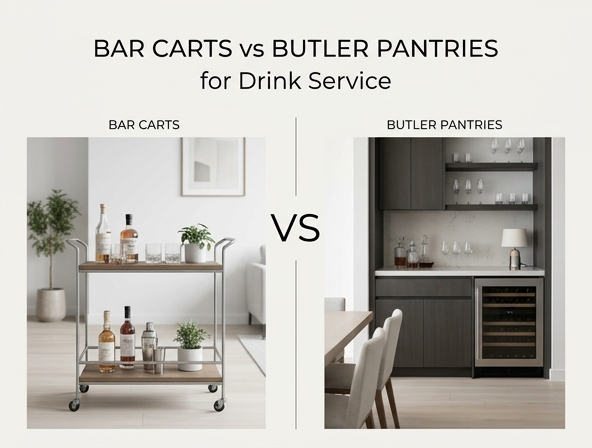
Establishing a specialized beverage station resolves this friction, granting hosts the freedom to engage with company while seamlessly serving drinks. However, success depends on matching your spatial reality with design intent: while a compact, brass-trimmed bar cart offers mobile styling and flexibility for tight living rooms, a bespoke butler's pantry featuring integrated wine coolers and custom cabinetry demands a permanent structural footprint.
In this guide, we will analyze the utility, cost, and spatial requirements of both options, helping you design the ultimate beverage hub tailored to your entertaining style.
Introduction: The Art of the Home Beverage Station
In recent years, the landscape of residential design has shifted dramatically toward custom entertainment spaces. Modern homeowners are no longer content with simply serving drinks from a kitchen counter; instead, they seek to create dedicated zones that celebrate the ritual of hospitality. This evolution in home entertaining has sparked a fascinating debate between two distinct design methodologies: the dynamic agility of a mobile bar cart and the architectural permanence of a dedicated butler's pantry.
While both solutions aim to elevate the hosting experience, they cater to vastly different spatial capacities, budgets, and lifestyles. Choosing between them requires balancing spatial fluidity, aesthetic expression, and the level of hosting sophistication you wish to project within your living environment.
The Bar Cart: Mobile, Chic, and Versatile
The bar cart is a celebrated design icon with roots stretching back to the Victorian tea trolley, later reimagined during the mid-century cocktail era. Today, it stands as a testament to space-saving elegance, offering an accessible entry point for those who love to entertain but lack the footprint for major architectural renovations. Its primary appeal lies in its flexibility; a bar cart can easily transition from a quiet corner in the living room to the center of a lively patio gathering.
For smaller homes, apartments, or open-plan spaces, the bar cart provides a striking visual anchor without requiring a permanent commitment. Utilizing a compact footprint, these mobile units allow hosts to curate a seasonal selection of spirits and glassware. They act as a canvas for personal style, blending visual minimalism with immediate functionality, making them a favorite for design-conscious urban dwellers.
The Butler's Pantry: Grandeur, Storage, and Permanent Luxury
Steeped in architectural history, the butler's pantry was traditionally a secure utility space situated between the kitchen and dining room, used to store valuable silver and fine china. In contemporary home design, it has evolved into the ultimate luxury amenity-a transition zone that marries heavy-duty utility with high-end aesthetic appeal. Unlike its mobile counterpart, a butler's pantry is built directly into the home's floor plan, offering unparalleled storage and prep space.
Unmatched Storage and Utility
A custom butler's pantry excels in its capacity to keep the primary kitchen free of clutter. With expansive cabinetry, custom shelving, and deep countertops, it easily houses bulk glassware, specialized serving platters, and seasonal dinnerware that would otherwise crowd standard kitchen cabinets.
Seamless Appliance Integration
Beyond simple storage, the modern iteration of this space acts as a secondary prep kitchen. It frequently incorporates built-in luxury appliances, transforming the pantry into a fully functional workspace where caterers or hosts can prepare complex refreshments away from the guests' line of sight.
Spatial Analysis: Assessing Your Floor Plan
Before committing to either option, a rigorous evaluation of your home's layout and daily traffic patterns is essential. A bar cart requires minimal square footage and can be easily tucked away when not in use, making it ideal for flexible environments. Conversely, a butler's pantry demands a permanent architectural footprint, typically requiring a minimum of 30 to 50 square feet of dedicated space adjacent to your main kitchen or dining area.
Consider how guests move through your home during a gathering. If your layout is prone to bottlenecks, adding a permanent walk-in structure could disrupt the natural flow of movement, whereas a mobile cart can be positioned to direct traffic away from busy food-prep areas.
"Traffic flow is the invisible hand of successful home design. Before you build or buy, map out your guests' movement; a beautiful station that blocks a primary walkway will quickly become a source of frustration rather than joy."
Financial Blueprint: Budget vs. Investment
The financial commitment required for these two options represents two entirely different categories of spending. A high-quality, designer bar cart can range from a few hundred dollars to several thousand for artisan-crafted or antique models. This makes it a highly accessible, low-risk styling choice that can be purchased and enjoyed immediately without disrupting your daily life or home equity.
In contrast, constructing a custom butler's pantry is a significant capital improvement project. This route involves architectural planning, custom cabinetry, premium countertop materials, and professional installation. While the upfront costs are substantial, a well-executed pantry can yield a high return on investment, noticeably boosting your home's resale value and overall market appeal.
Curating the Perfect Bar Cart: Styling Tips
Styling a bar cart is an art form that balances utility with visual composition. Because every item on a cart is fully visible, careful curation is necessary to prevent the display from looking cluttered or disorganized. The goal is to create a layered, intentional look that invites guests to interact with the setup.
To achieve a balanced look, consider the following styling guidelines:
- The Rule of Threes: Group items in clusters of three, mixing heights and textures to create visual interest.
- Vary Your Glassware: Display a mix of highball glasses, coupe glasses, and crystal decanters to catch and reflect light.
- Incorporate Greenery: Add a small vase of fresh botanicals, eucalyptus, or a bowl of fresh citrus fruits to bring natural color and life to the metal and glass frame.
- Keep Tools Organized: Use a handsome metallic tray to corral your cocktail shaker, jigger, strainer, and bar spoon.
Engineering the Butler's Pantry: Must-Have Features
Designing a butler's pantry requires careful planning to ensure the space is as functional as it is beautiful. Because this area is stationary, you must anticipate your long-term entertaining needs and integrate the proper infrastructure during the initial design and framing phases of construction.
To maximize the utility of your walk-in beverage center, prioritize your appliance and structural installations using this step-by-step approach:
- Install dedicated plumbing lines to accommodate a deep undermount prep sink and an integrated water filtration system.
- Incorporate specialized refrigeration, such as dual-zone wine coolers and dedicated beverage drawers, to keep drinks at their optimal serving temperatures.
- Plan for high-capacity ice makers, particularly sonic or clear ice machines, which are highly coveted for premium cocktail presentation.
- Incorporate under-cabinet LED task lighting and soft interior cabinet lighting to illuminate prep surfaces and showcase your glassware collection.
Hosting Dynamics: How Your Choice Dictates the Party Flow
The way you entertain should dictate your choice of beverage station. A bar cart encourages a participatory hosting style. Because of its open design and mobility, the cart is usually situated directly within the social hub of the home. This allows the host to mix drinks while remaining fully engaged in conversations, making the act of craft cocktail preparation a central element of the evening's entertainment.
On the other hand, a butler's pantry supports a discreet staging method. This setup allows you to keep the mess of cocktail shaker cleanups, dirty blender pitchers, and discarded citrus peels completely hidden from your guests. It provides a quiet sanctuary where you or hired caterers can assemble beautiful drinks and appetizers in private, maintaining a serene, clutter-free environment in the main living and dining zones.
Head-to-Head Comparison: Bar Cart vs. Butler's Pantry
To help synthesize your options, this comparative breakdown evaluates the critical metrics of both entertaining setups, allowing you to weigh immediate practicality against long-term structural value.
| Feature | Mobile Bar Cart | Custom Butler's Pantry |
|---|---|---|
| Average Cost | $150 – $2,000 | $5,000 – $30,000+ |
| Mobility | High (easily moved room to room) | None (permanent architectural fixture) |
| Storage Capacity | Minimal (curated bottles and basic tools) | Maximum (bulk cabinetry, drawers, shelving) |
| Installation Impact | Zero (ready-made or simple assembly) | High (requires permits, plumbing, electrical) |
| Property Value Contribution | None (personal property) | High (adds permanent home equity) |
The Verdict: Choosing Your Ideal Entertaining Station
Your ideal choice depends on a realistic assessment of your current living situation, your budget, and how you prefer to connect with your guests. If you reside in a compact urban space, appreciate design flexibility, or want an immediate stylistic upgrade without the headache of construction dust, the bar cart is an elegant, high-impact solution that fits seamlessly into your lifestyle.
If you are planning a long-term home investment, have the physical square footage to spare, and desire a highly organized, professional-grade prep area that keeps entertaining messes out of sight, a custom butler's pantry represents the height of residential luxury. By aligning your spatial realities with your hosting aspirations, you can craft a home beverage station that serves as a beautiful backdrop for memorable gatherings for years to come.
Leave a comment