
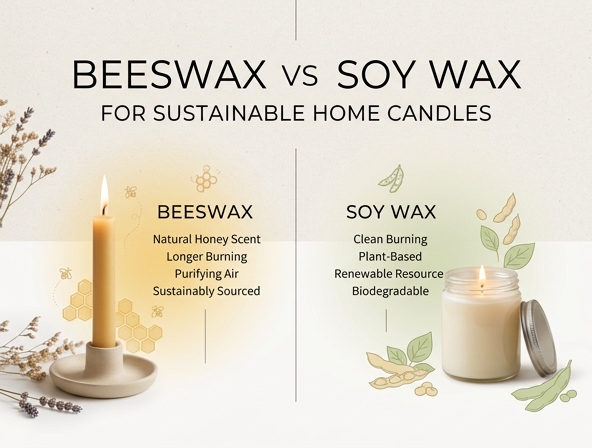
Creating a truly sustainable home is often more frustrating than it looks, especially when cozy rituals like burning candles unknowingly introduce indoor air pollutants into your living space. Before choosing a healthier alternative, we must acknowledge how traditional paraffin candles, derived from petroleum, compromise our wellness. Transitioning to natural plant or insect-based waxes grants you a clean, soot-free burn that actively protects your family's respiratory health.
To navigate this market effectively, one must understand that "natural" is not a uniform standard; different waxes present distinct ecological trade-offs. For example, while soy wax supports renewable agriculture, intensive soy monoculture is linked to deforestation, whereas local beeswax supports apiculture but remains an animal byproduct. This comprehensive comparison will analyze beeswax and soy wax across carbon footprint, burn time, and scent throw, empowering you to choose the perfect sustainable light for your home.
Introduction: The Search for Truly Clean Candle Light
For decades, the warm flicker of a candle has been a symbol of comfort and relaxation. However, many traditional candles are made from paraffin wax, a petroleum byproduct that releases harmful volatile organic compounds and soot into our living spaces. As health-conscious and environmentally aware consumers seek healthier ways to illuminate their homes, the spotlight has shifted toward natural, renewable alternatives. Among the top contenders are beeswax and soy wax, two distinct materials that offer a cleaner, safer, and highly sustainable burn without compromising on ambiance.
Understanding Beeswax: Nature's Original Golden Wax
Beeswax is a natural substance created by female worker honeybees, who secrete the wax from specialized glands on their abdomens. This material is meticulously fashioned into honeycombs to store honey and protect the hive's brood. For thousands of years, humans have recognized beeswax as a premium material. Historically prized by royalty and religious institutions, it was revered for its exceptionally long burn time and its sweet, natural aroma of honey and wildflowers.
Demystifying Soy Wax: The Plant-Based Revolution
Soy wax represents a modern advancement in candle making, having been developed in the early 1990s as a sustainable alternative to petroleum. It is created through the hydrogenation of soybean oil, transforming liquid oil into a solid, stable wax. This innovative material quickly became a staple in the home fragrance market due to its renewable, biodegradable, and completely vegan-friendly properties, giving consumers an affordable plant-based option that supports agriculture without relying on fossil fuels.
Sourcing and Sustainability: Beekeeping vs. Agriculture
The Pollinator Path
Sourcing beeswax relies entirely on apiculture, or beekeeping. Because healthy hives are required to harvest wax, supporting local beekeepers directly contributes to the protection and proliferation of pollinator populations, which are critical for global biodiversity and food crop pollination.
The Industrial Crop Dilemma
Conversely, soy wax comes from intensive agriculture. While soybeans are a highly renewable resource, their mass cultivation often involves monoculture farming, genetic modification (GMOs), and pesticide use, which can contribute to soil degradation and deforestation if not sourced from certified sustainable farms.
Performance Battle: Burn Time, Melt Pools, and Scent Throw
When analyzing how these waxes burn, each displays unique characteristics that influence the overall candle experience:
- Beeswax possesses a naturally high melting point, which translates to a slower, hotter, and significantly longer burn time than almost any other wax.
- Soy wax has a lower melting point, allowing it to create a wide, even melt pool that disperses fragrance oils exceptionally well.
- While beeswax emits a subtle, natural honey scent, soy wax is highly adaptable, holding and releasing added essential oils with an excellent scent throw.
Air Quality and Health: Breathe Easier at Home
The physical composition of what we burn directly affects the air we breathe indoors. Traditional candles emit soot and toxic chemicals, whereas natural waxes promote a cleaner domestic environment.
Beeswax is unique because it releases negative ions when burned. These ions attach to positively charged airborne pollutants like dust, pollen, and odor particles, effectively pulling them out of the air to purify your living space.
Soy wax provides a virtually soot-free burn when properly wicked. It does not release benzene or toluene, two common carcinogens found in paraffin wax, making it a safe choice for families, pets, and individuals with respiratory sensitivities.
Ethical Dilemmas: Cruelty-Free Veganism vs. Honeybee Conservation
The Animal-Derived Debate
For many conscious consumers, the choice between these two waxes rests on personal ethics. Beeswax is an animal byproduct. While harvesting wax can support local beekeepers and encourage healthy hive management, strict vegans choose to avoid it because it is produced by living creatures.
The Vegan Standard
Soy wax is entirely plant-based, making it the undisputed champion for individuals seeking a cruelty-free, vegan lifestyle. By opting for soy, consumers can enjoy ambient candle light with full confidence that no animal labor or animal products were involved in the creation of their home fragrance.
Cost, Value, and Accessibility
Pricing is another major differentiator. Beeswax is labor-intensive to harvest and yields are limited by bee productivity, making it a luxury investment that commands a premium price. However, its exceptional burn time means you get more hours of light per dollar spent.
Soy wax is mass-produced and highly accessible, resulting in a more affordable price point. Soy candles are widely available in almost every home goods store, offering an entry-level path to clean-burning home fragrances for budget-conscious buyers.
Side-by-Side Comparison: Beeswax vs. Soy Wax
| Feature | Beeswax | Soy Wax |
|---|---|---|
| Burn Time | Extremely Long (Slow Burn) | Moderate to Long |
| Scent Throw | Natural Honey Aroma | Excellent with Added Fragrances |
| Vegan Status | No (Animal Byproduct) | Yes (100% Plant-Based) |
| Air Quality Impact | Purifies Air (Negative Ions) | Clean and Soot-Free |
| Price Point | Premium / Luxury | Budget-Friendly / Accessible |
The Final Verdict: Choosing the Best Wax for Your Sustainable Home
Your choice between these two incredible waxes depends on your personal values and budget. If you seek a luxurious, long-burning experience that actively purifies the air and supports ethical beekeeping, beeswax is unmatched. If you prioritize a 100% vegan lifestyle and want an affordable candle with a wide range of beautiful scents, soy wax is your perfect match.
By swapping out petroleum-based paraffin for either of these natural alternatives, you are making a positive change for your health and the planet. Your home will glow with truly clean candle light, allowing you to breathe easy and relax in a healthier, more sustainable environment.
Leave a comment